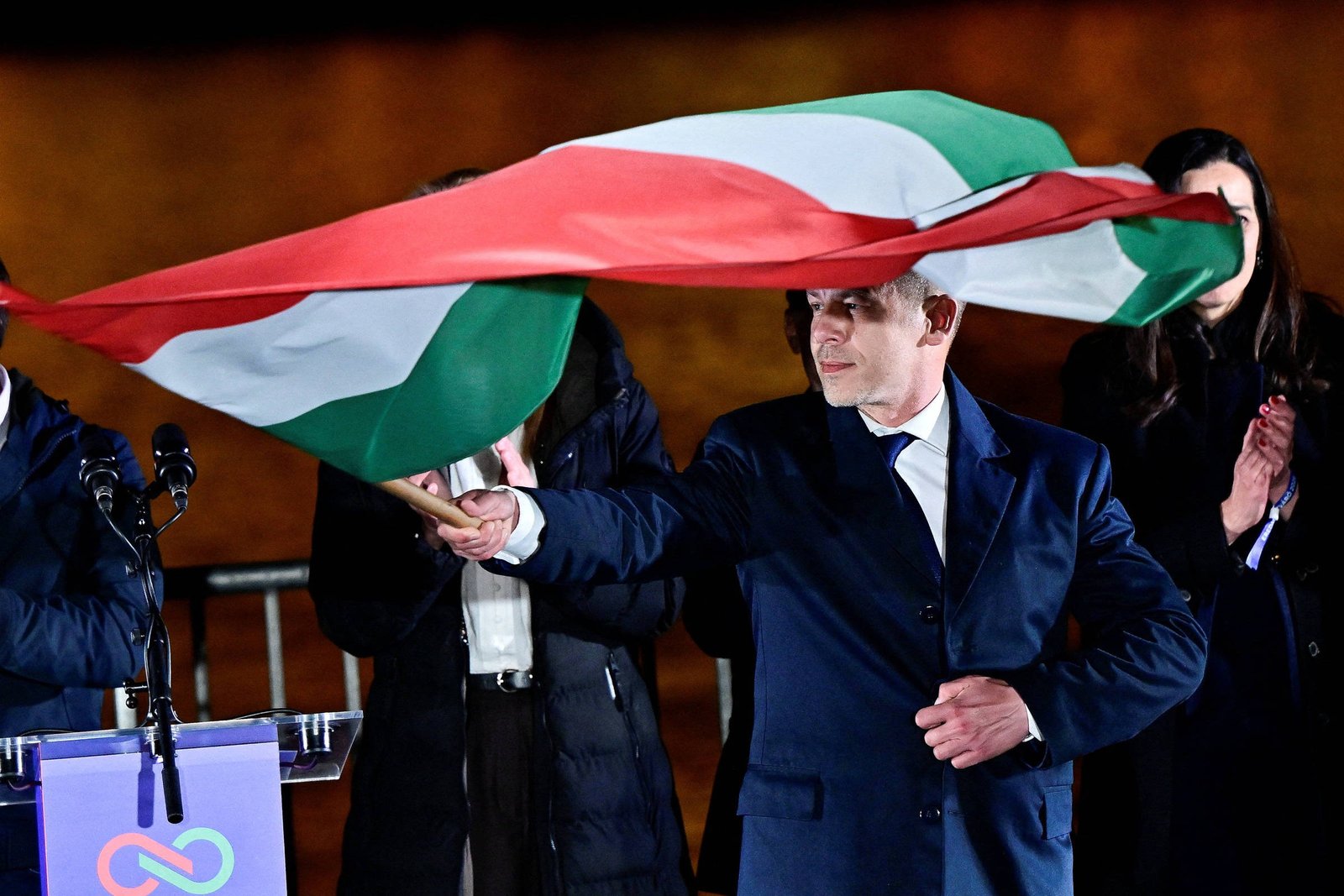
On Sunday night (12), the Viktor Orbán era has come to an end. After 16 years in power, the prime minister acknowledged the defeat of his party, Fidesz, in the elections in Hungary. This is no small feat: over the course of four parliamentary terms, the electoral system was entirely remodeled to favor him.
After the landslide victory of 2010, which gave Fidesz a two-thirds majority in Parliament, Orbán announced the construction of a illiberal democracywith the systematic dismantling of institutions responsible for limiting power. What followed was a profound political, social and cultural transformation, carefully inscribed in the constitutional text of a new Constitution, promulgated in 2012.
Orbán’s regime has always been pragmatic in maximizing power and has never hidden its inspirations. His constitutional project was inspired by Russian examples and was shaped amid tense relations with European institutions, while maintaining the prime minister as a close ally of the Russia.
Over these years, Hungary also managed to export this highly adaptable constitutional repertoire to other European allies. The fact that many of these measures openly violate European human rights standards appears to have made them even more attractive.
In 16 years, Orbán went from being the eccentric exponent of illiberal democracy in a small post-communist country to becoming a global icon of autocratization coated with nationalist-Christian values — admired by figures such as donald trumpJD Vance, the Bolsonaros and Vladimir Putin.
Orbán’s recipe was carefully constructed through the formation of transnational networks of conservative and Christian political actors, intellectuals and influencers. The political calendar included international conferences on demography, cultural festivals aimed at mobilizing youth, prayer breakfasts, ministerial meetings at the White House and, of course, the great showcase of international conservative politics: CPAC, in United Stateswith its developments in Hungary and Poland.
This election turned into a first-class carnival of national conservatism, as the Orbán government worked tirelessly to help build a new world order. The show included an edition of CPAC Hungary, led by Javier Milei. In one of the panels, Eduardo Bolsonaro railed against his father’s judicial conviction for attempting a coup d’état.
Days later, Vance appeared in Budapest to reaffirm to Hungarian voters Trump’s support and admiration for the Orbanist project. At the same time, Fidesz’s campaign efforts relied not only on Russian disinformation but also on a specialized team of election consultants operating out of the Russian embassy in Budapest.
Sunday’s winner, the Tisza party, led by Péter Magyaris a newcomer to the political scene. Magyar himself comes from Fidesz social circles, and Tisza’s platform is pro-European, although socially conservative. Magyar is by no means a progressive, and the Hungarian Parliament remains divided between the right-wing opposition on the one hand and the ultra-right camp on the other.
For now, Tisza functions more like a political movement than a modern, disciplined party. Its victory is due, to a large extent, to the tireless work of its main leader and tens of thousands of activists who mobilized voters in the interior of the country — a traditional stronghold of support for Fidesz.
Magyar’s campaign promised a change of regime, a firm stance against corruption and in favor of transparency in public accounts; functioning public services and a more equitable redistribution of resources; and a return to Europe.
If he really wants to restore constitutional democracy, Tisza will have to reverse the hypertrophy of Executive powers, including emergency powers; face the task of disarming a captured Constitutional Court; repeal laws that demonize civil society organizations and LGBTQIA+ people; and revisit the concentration of media ownership and editorial control in the hands of Orbán’s allies, restrictions on freedom of assembly, and electoral reforms that redrawn districts to favor his political camp.
Orbán and the Fidesz political machine will be a difficult legacy to succeed. The economic situation is dramatic: resources are in the hands of businessmen and oligarchs aligned with Fidesz, in something often described, bluntly, as a mafia state, while public services deteriorate.
The funds of European Unionif they are released, they could provide some breathing space, but they will not solve the new government’s cash problems, worsened by Hungary’s dependence on Russian oil. Joining the European Union not only means having access to resources, but also returning to operating under rules and restrictions that the Hungarian team in Brussels will need to relearn.
Tisza’s projected two-thirds majority in Parliament will facilitate the passage of legal and constitutional reforms. But the temptation of almost unlimited power is difficult to resist, and the politics of transparency can easily turn into the politics of revenge, especially when tempers run high.
When Viktor Orbán publicly acknowledged Fidesz’s defeat on Sunday, the Tisza camp reacted, at first, with an almost disconcerting silence. The celebration took a few moments to take shape. On the streets of Budapest, the well-known cry of “Dirty Fidesz!” was replaced by “Europe! Europe!”, the soundtrack of a regime change, exactly 23 years after the referendum that sealed Hungary’s entry into the European Union.