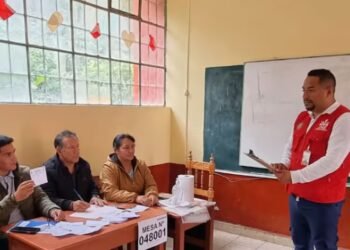
The General Elections 2026 is just around the corner in Peru, and more than 27 million eligible citizens will go to the polls to choose their next political rulers: president and two vice presidents, representatives before the Andean Parliament, as well as senators and deputies. Prior to this important election day, the National Election Jury (JNE) will organize the long-awaited presidential debate, in which the 35 candidates for Pizarro’s seat will participate with the aim of convincing the electorate with their best proposals, such as citizen security and the fight against corruption. Faced with this, the National Office of Electoral Processes (ONPE) warned the population about the fines they could receive if they do not go to vote this April 12. In the following note, we tell you all the details.
Next Sunday, April 12, will be an important date in the history of Peru, because new authorities are elected, among them the president of the republic, who will govern the country for the next five years. In that sense, the National Office of Electoral Processes (ONPE) reported that citizens will be able to find out their voting location and if they were selected as a polling station member through their official platforms (LINK). However, if on election day the person who occupies a position as head or substitute decides not to attend to perform their duties, they will receive a fine of S/ 275. Although they have the opportunity to justify their absence through excuses or formal justifications before the ONPE or the National Elections Jury (JNE).
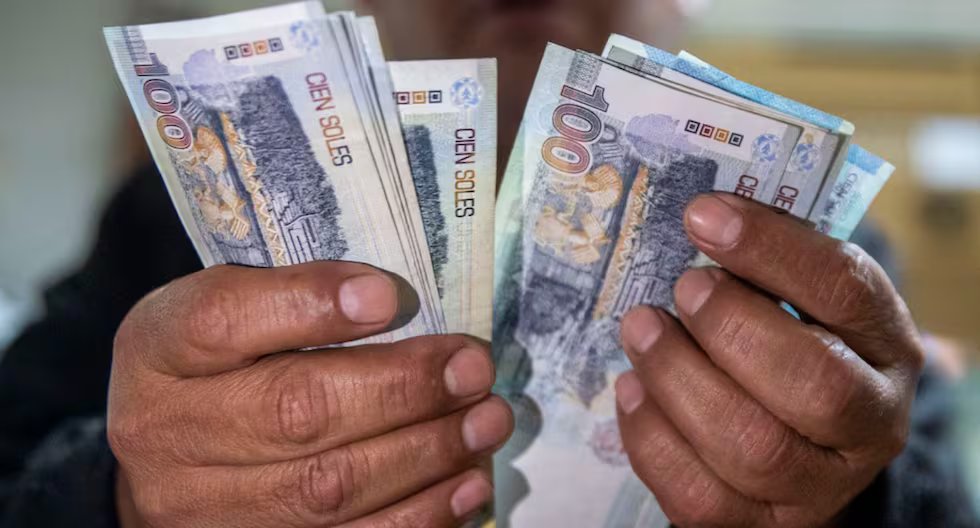
Thus, as for citizens who do not go to their polling place to cast their vote, they will also be subject to a financial penalty that will depend on the classification of the voter’s district, according to Law 28859. That is, if a person lives in an area considered extreme poverty, the fine amounts to S/ 27.50, while those who reside in communes considered poor, the fine is S/ 55. In the case of living in a district considered non-poor, The fine reaches S/ 110. Finally, to find out if a person has an electoral fine, the JNE made available a web page (LINK) that allows you to know with just your ID if you were sanctioned.
After the draw for table members was held, in which 834,660 citizens were elected, the National Office of Electoral Processes (ONPE) specified that there are a series of sanctions for those who fail to comply with this important task. However, there are cases in which a series of formal excuses can be presented to be exempt from this work, such as a notable or serious physical or mental impediment; the need to leave the national territory; be pregnant or breast-feeding children up to 2 years of age on the date of the election.
That’s not all, another reason is being over 65 years old; or be included in any of the incompatibilities provided for in article 57 of Law No. 26859, referring to the impediments to being a board member. If these factors are met, an excuse will have to be presented to the ONPE within five business days after the final publication of the list. For their part, for citizens who reside in other countries and who, for some reason, cannot carry out this civic work and cannot vote, a waiver of voting can be obtained before the National Elections Jury through the Consular Office.
Although voters can vote with their expired DNI, Reniec has promoted a campaign to promote the use of electronic DNI, offering special rates until December 31, 2026.
For those over 17 years of age, the costs of renewal, duplication or correction of the document have been set at 30 soles, while for minors the procedure has a value of 16 soles.
This measure has shown positive results, with more than 2 million electronic DNIs issued so far this year, providing Peruvians with a modern and secure option for identification, according to América TV.