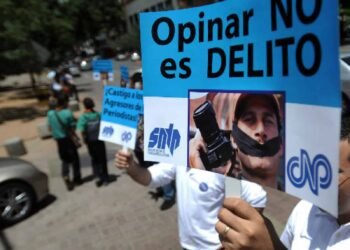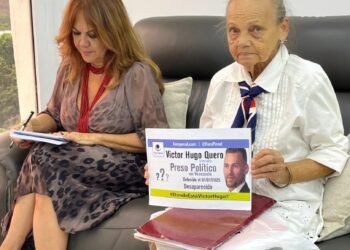
On January 3, 2026, Delcy Rodríguez’s administration as president in charge of Venezuela began. Its first 100 days were evaluated by experts and human rights defenders under a mixture of expectation and uncertainty; the balance reflects a duality between political detente measures and the permanence of an institutional apparatus designed to restrict fundamental freedoms.
Civil society organizations warn that, although the visibility of repressive practices has decreased, the mechanisms of social and judicial control have not been dismantled.
The evaluation of this period focuses on compliance with international recommendations and the demands of victims of human rights violations. Experts agree that the Rodríguez administration has prioritized the projection of an image of normalization and reconciliation before the international community, especially to make relations with external actors more flexible. However, the absence of a definitive democratic architecture and a profound judicial reform keeps the sustainability of the changes announced by the Executive in doubt.
Beatriz Borges, lawyer and coordinator of the Justice and Peace Center (Cepaz), and Oscar Murillo, general coordinator of the NGO Provea, in an interview for Effect Cocuyo, analyze the current state of citizen freedoms, the justice system and the situation of political prisoners. Both defenders emphasize that the political will for change must be measured through the institutionalization of guarantees and not only through isolated gestures that can be reversed.

The repressive scaffolding
The approval of the Amnesty Law and the release of some citizens detained for political reasons represent the most visible milestones of Rodríguez’s administration. However, human rights defenders point out that these measures are insufficient as long as the judicial system remains subordinate to the executive branch.
Oscar Murillo highlights that, despite the importance of these freedoms for families, the process has been partial. “Hundreds of people remain behind bars and others have been denied amnesty by the courts in charge, which proves that the urgent task of dismantling the repressive framework and stopping the instrumentalization of the justice system for political purposes has not yet begun in Venezuela,” he said.
The persistence of judicial restrictions on the beneficiaries of these measures is another point of concern. Many of the citizens who have left the detention centers do not enjoy full freedom, but rather face precautionary measures that limit their public actions. Beatriz Borges explains that “many are still prohibited from leaving the country, from testifying publicly, from holding positions,” and adds that in recent weeks “the rate of release has dropped significantly.”
For the Cepaz coordinator, judges and prosecutors continue to act under political guidelines, a situation that shows that the persecution structure remains intact.
The lack of transparency in the application of procedural benefits prevents a clear evaluation of the scope of the amnesty. Murillo warns that there are no independent mechanisms to monitor compliance with the law, which allows the justice system to maintain control over flawed processes.
The interim management, according to experts, has made announcements of rectification and dialogue, but has not repealed the legal instruments used for criminalization, such as the State Decree of External Commotion or the laws that fence civic space.
International scrutiny and the instrumentalization of justice
For experts, the relationship between the Delcy Rodríguez administration and international human rights protection organizations is maintained under a logic of political convenience. Although there is an opening for the entry of technical missions, both defenders of fundamental rights denounce that it is an instrumental link.
Beatriz Borges affirms that “presence is allowed when it is convenient and it is blocked when these organizations make the power uncomfortable.” In this context, he points out, the work of the UN Fact-Finding Mission is crucial to document that patterns of persecution have not disappeared, although they have lowered their public profile to avoid international reprisals.
For Borges, the increase in the number of testimonies given by victims before international organizations reflects a search for justice that does not find an answer in the country’s institutions. The lawyer points out that “the international justice organizations for victims remain closed and there are no open internal investigations, there is no recognition of these crimes and there are no mechanisms that help this process of justice, truth and reparation.”
The expert maintains that the measures adopted by the interim government seek to project communication success without addressing the structural impunity that protects those responsible for serious violations.
For its part, the expectation for the full establishment of the office of the UN High Commissioner and the continuity of the investigations of the International Criminal Court (ICC) mark the agenda for the coming months. The international community, says Borges, is urged not to interpret the releases as a sufficient sign of openness. The defenders’ warning is clear: “without verifiable judicial reform and the independence of powers, the progress recorded may be mere makeup that precedes a new contraction of civic space.”
The criminalization of work demands
Beyond civil and political rights, Rodríguez’s management faces the demand for Economic, Social, Cultural and Environmental Rights (Desca). The situation of workers and pensioners remains precarious that has not been resolved with recent economic announcements.
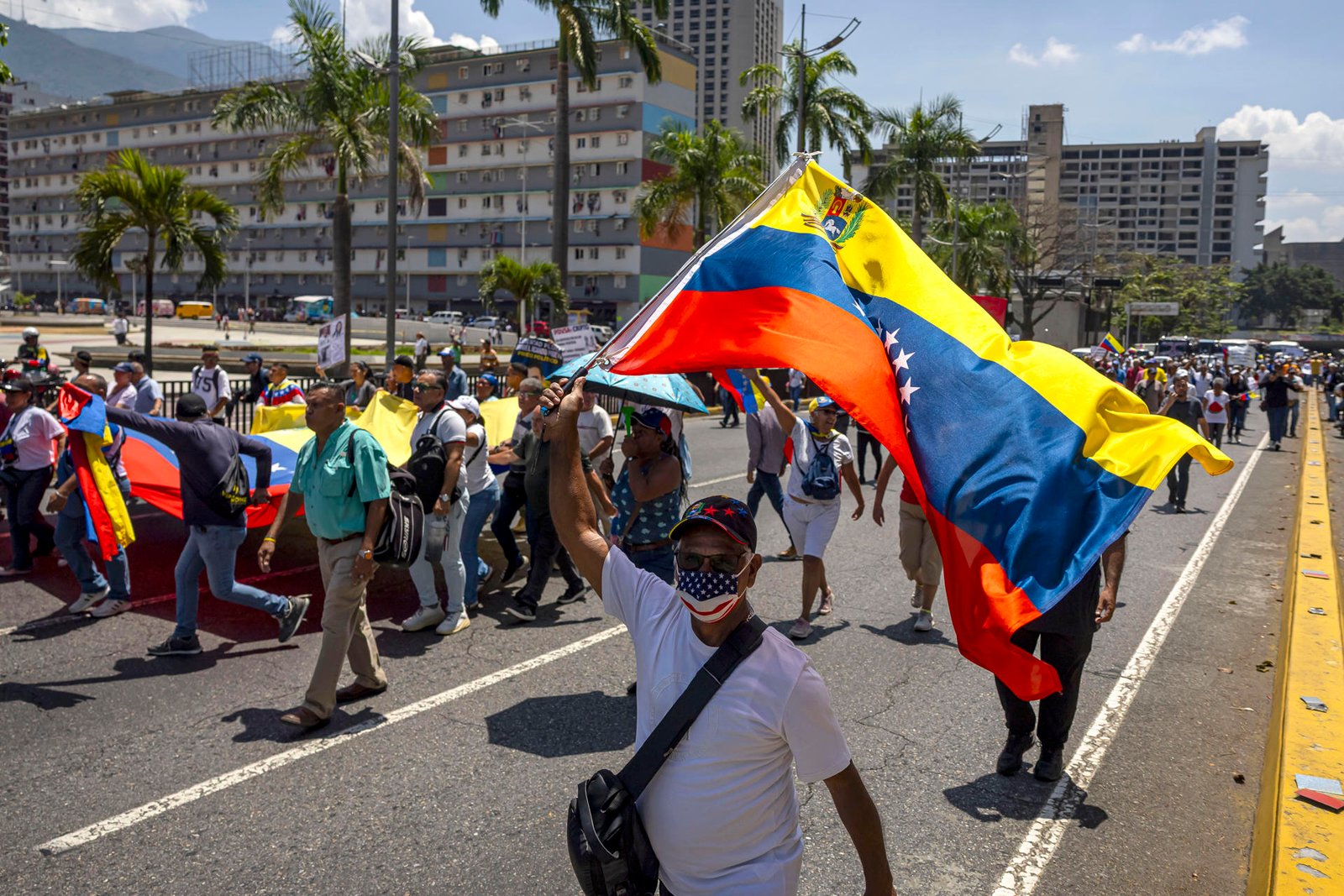
Oscar Murillo highlights that the will of the State is questionable after the repression registered in union demonstrations: “After the announcement of a salary increase made by Delcy Rodríguez last Wednesday and the repression registered in the union march this Thursday, doubt about the will of the State to fulfill its debt with social rights continues to grow,” he noted.
The absence of a clear methodology for setting the minimum wage, which should be based on tripartite social dialogue, deepens distrust in the economic management of the interim. According to the Provea coordinator, there is no manifest intention to recover labor institutions, which would imply repealing restrictive regulations such as the Onapre Instructions and Memorandum 2792.
“The urgent reconstruction of workers’ remuneration and old-age and retirement pensions should be a priority on the official agenda,” says Murillo, and emphasizes that the new political moment must translate into tangible improvements for the population.
Finally, the risk of normalization of the crisis is one of the greatest concerns for human rights organizations. Experts warn that the change in leadership in the Executive does not by itself guarantee respect for freedoms if the “anti-society” laws that restrict the right to association are not dismantled.
The democratic transition, they conclude, necessarily requires transitional justice, accountability and the calling of elections with verifiable guarantees, elements that to date are not part of a solid institutional reform under the current administration.