La Ceiba, Atlantis
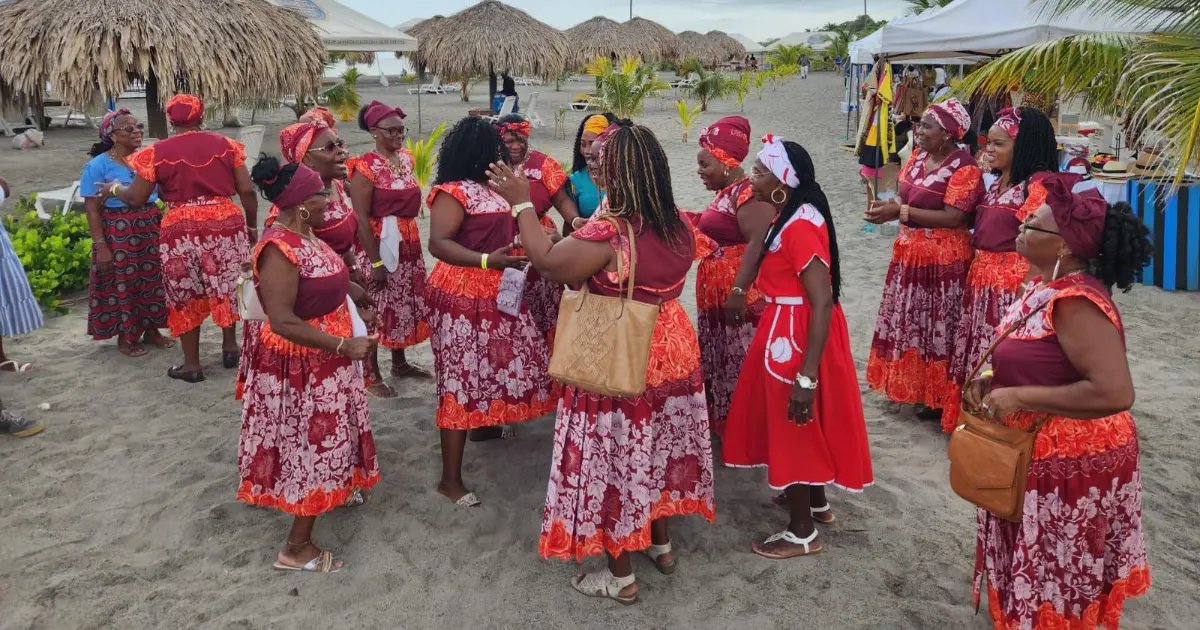
This Sunday, April 12, the garifuna community commemorates 229 years of presence in Honduras, remembering the 1797 journey from the Saint Vincent Island. However, beyond the cultural celebration, the anniversary finds this town facing multiple challenges for their survival.
Gregoria Jiménez, president of thea Community Ethnic Development Organization (Odeco), pointed out that the Honduran State maintains a historical debt that is not resolved with ceremonial acts, but with policies of real inclusion.
One of the main complaints of the Garifuna leadership is exclusion in decision-making spaces. “You don’t see a minister or leaders in other high positions in the Garifuna community because they are excluded. The exclusion occurs precisely in the positions where the direction of the country is decided,” said Jiménez.
Likewise, the conflict over land continues to be one of the most critical points. According to the leader, the communities continue to be victims of the dispossession of their ancestral territories and the exploitation of natural resources.
Added to this is the state’s non-compliance with the rulings issued by the Inter-American Court of Human Rights (IA Court), in cases such as Triunfo de la Cruz and Cayos Cochinos. “There are already rulings in favor of the communities and there is no response from the State to comply with these sentences,” he lamented.
Loss of identity
Garifuna leaders warn that the economic crisis and insecurity are driving an exodus that threatens to weaken the cultural legacy of this town. Migration, they point out, causes new generations to lose contact with their traditions, customs and mother tongue.
The defense of territory has become a high-risk activity. “Several leaders have had to leave the country after receiving death threats for protecting their lands. The legacy is in danger that we can hand over to new generations,” concluded Jiménez.
Demands to the new government
Given this panorama, the Garifuna people propose an agenda to the administration of the President Nasry Asfurafocused on political inclusion, with the appointment of Garifuna representatives in high-level positions.
They also propose the establishment of a direct dialogue with the Government, as well as guarantees of legal security and improvements in the road access to communitiess, currently in precarious conditions.
Iriona dresses up
The community of San José de la Punta, in the municipality of Iriona, department of Colón, will be the epicenter of the commemoration.
The activities will begin this Saturday, April 11, with a general assembly, in which leaders from different communities will discuss the main challenges of the Garifuna people.
The meeting will conclude with the drafting of a manifesto that will be delivered to the authorities, in which demands such as the improvement of the hospital infrastructure and the strengthening of intercultural bilingual education.
Sunday, April 12, the central day of the commemoration, will feature the participation of Garifuna leaderslocal and departmental authorities, as well as special guests. The activities will include traditional dances and the tasting of ancestral cuisine.
“This anniversary is an opportunity to remind the country that we are still here, but also to demand that the state budget reaches our communities in the form of decent schools and health centers,” said one of the organizers of the event.
Hundreds of people from nearby communities are expected to participate in the commemoration to celebrate the heritage of a people who, since their arrival in 1797, have struggled to preserve their identity in the face of various challenges.