Havana/The Cuban energy crisis has opened a void in one of the country’s most sensitive industries and China is moving to fill it. While the Canadian Sherritt has suspended operations in Moa due to lack of fuel, the Cuban Government presents the arrival of Chinese technology at the Comandante Ernesto Che Guevara plant as a sign of continuity in a sector that has been operating at the limit for years. What is at stake is not only a specific investment, but a rearrangement of the external weight in the exploitation and commercialization of Cuban nickel.
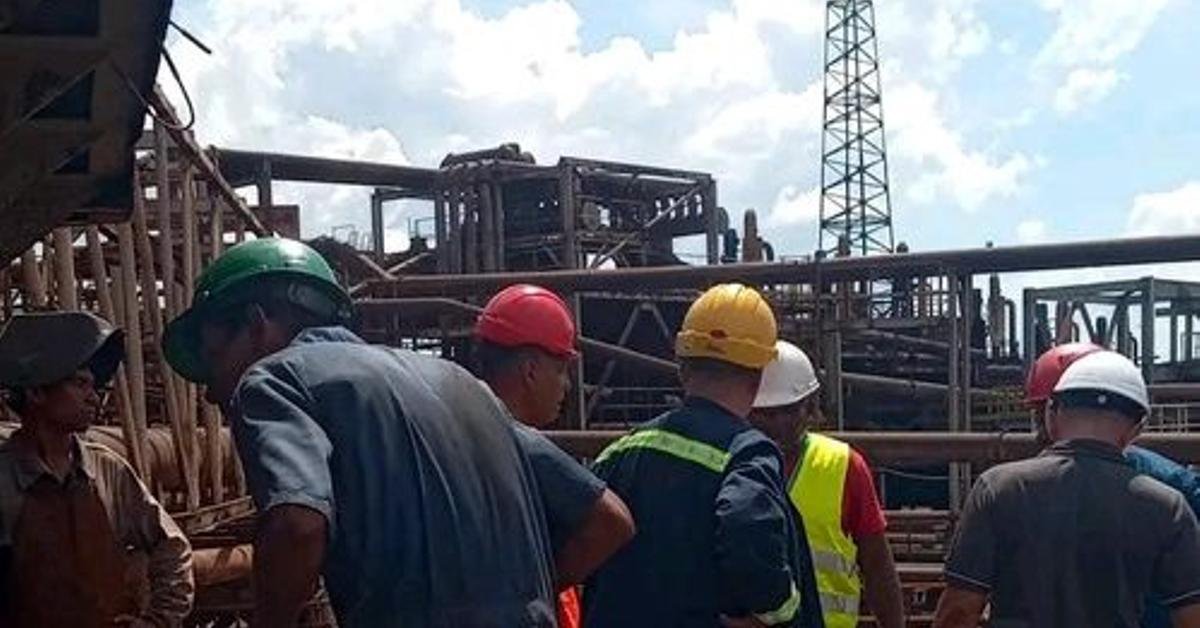
The official press presented this week the assembly of a settler of Chinese origin in the leaching and washing area of the Moa plant, in Holguín, and framed it within a technological modernization program. It did not report how much the equipment cost, who manufactured it, under what conditions it was purchased, or how much it will increase the efficiency of the process. In Cuba, strategic industrial investments are often announced as political gestures rather than as projects subject to public scrutiny.
The new information is notable because it comes at the most delicate moment for Sherritt in years. In February 2026, the Canadian company reported that it had reduced or stopped activities in Moa due to fuel restrictions and warned that a prolonged stoppage makes any restart more expensive and complicated. Sherritt maintains its participation in the joint company Moa Nickel SA, but the operational crisis has reduced its visible weight on the ground and has exposed the fragility of a model that is too dependent on imports, subsidized energy and logistical stability.
In 2024, China was the main destination for Cuban exports of “nickel mattes” and other intermediate nickel products, with 53.1 million dollars
In this context, China appears less and less as a distant partner and more and more as the practical support that Havana needs to sustain the industry. This is not, at least for now, a formal corporate replacement of Sherritt. It is something more gradual and perhaps more important. Beijing gains influence where the Canadian company loses its ability to maneuver, especially as a buyer of the mineral, a supplier of equipment and an actor willing to maintain a strategic relationship with an industry that Cuba cannot let fall.
China has long occupied a central place in that gear. In 2018 Cuba aspired to produce more than 50,000 tons per year of nickel and cobalt combined. The production of the Ernesto Che Guevara plant was exported mainly to China, while that of Pedro Soto Alba, operated in association with the Canadian Sherritt, was sent to Canada. China was, at least for an important part of Cuban nickel, the main destination market.
The commercial data Recent data from the Observatory of Economic Complexity reinforce that trend. In 2024, China was the main destination for Cuban exports of “nickel mattes” and other intermediate nickel products, with 53.1 million dollars, ahead of the Netherlands, with 35.4 million. The figure confirms that the link with Beijing can no longer be described as complementary. In a key part of the business, China is today the most important buyer.
The relationship between both countries in this sector, however, did not begin now. The most ambitious precedent dates back to 2004, when Cuba and China signed 16 cooperation agreements that included a promise of investment of more than $500 million to complete an abandoned ferronickel plant in the east of the country. According to the United States Geological Survey (USGS), this package also contemplated the supply of 4,000 tons of nickel annually to China between 2005 and 2009 and the creation of a joint company to explore and develop mineral deposits. As has happened so many times in the Cuban economy, the distance between the announcement and the result was considerable. It was later recognized that the Camarioca project ended up leaving the orbit of China Minmetals.
Sherritt has not disappeared from the map, but the combination of the energy crisis, productive paralysis and external dependence has weakened its immediate prominence
In statements to 14ymediobusinessman William Pitt has linked the deterioration of Sherritt in Cuba to both the collapse of the international price of nickel and the growing financial burden of its operations on the Island. In April 2024 warned that a metric ton of nickel was trading at $17,439, well below the $23,894 a year earlier, and maintained that this drop was forcing mining companies to cut investments in Cuba. One year later, when commenting on the company’s annual reportstressed that although in 2024 Sherritt extracted 30,331 tons of nickel and 2,206 tons of cobalt, its income fell to 109.9 million dollars, 29% less than in 2023.
In May 2025, in addition, the company recorded a loss of 40.6 million dollars in the first quarter, while its nickel production fell from 3,597 to 2,947 tons, its nickel sales fell from 87.8 to 75.7 million dollars and the Cuban State kept frozen the payment of some 107 million dollars that it owed to the Canadian company. For Pitt, behind those losses There is not just a bad price cycle, but a combination of blackouts, fuel shortages, falling global demand, lack of personnel and the general deterioration of the Cuban state partner.
Sherritt has not disappeared from the map, but the combination of the energy crisis, productive paralysis and external dependence has weakened its immediate prominence. China, on the other hand, strengthens its position through a less visible and more effective means. It purchases, supplies equipment, maintains cooperation and places itself at the center of an industry that the Cuban Government needs to preserve to obtain foreign currency. According to the USGS, mineral products accounted for about a third of Cuban exports in 2023, a proportion too high to allow nickel to sink without external help.
The installation of the settler alone does not rescue the industry nor does it amount to a large wave of investment. But it does work as a symptom. At the moment when the Canadian government slows down and the Cuban State cannot support the comprehensive modernization of the sector with its own resources, China occupies the available space.