On the night of the 19th, when finishing work after an interview with Sheetinvestor Vladimir Timerman, 46 years old, had an almost two meter tall bodyguard waiting for him at the entrance of his office in São Paulo.
A fund manager at Esh Capital, Timerman returned to private security at the request of friends, who came together to pay the expenses. If it were up to him alone, he would continue without protection — partly because he says he has nothing to fear, but also because he claims he can’t pay.
“I’m broke,” he said, attributing the financial situation to the judicial blocking of funds from Esh Capital. The day before, the investor was in Brasília, testifying, as a witnessto the Organized Crime CPI, where he repeated complaints about misdeeds by investors and the negligence of control bodies.
Timerman was there because of the Master Bank case. He reported that the true owner of the liquidated institution is not Daniel Vorcarobut the businessman Nelson Tanureone of the targets of Operation Compliance Zero.
Tanure said that Timerman presented “lessons” to the CPI senators and that he “was never a partner, controller or beneficiary, direct or indirect” of Master.
Timerman and Tanure have been in disputes since 2021, surrounding the actions of Alliança Saúde (then Alliar). The first was part of the minority group, and the second bought a stake that would allow him to control the company. Timerman reported to the CVM (Securities Commission) that Tanure practiced insider trading (use of privileged information), but the complaint was archived.
In the Alliance, Timerman practiced what already done successfully in companies such as Smiles/Gol, Dimed/Panvel, seeking to interfere in management through minority stakes, a modality called “activism” in the market. In recent years, Esh’s owner has become the country’s loudest activist manager.
Timerman thus illustrates his line of action: “You can be a passenger and at the mercy of whoever drives the car or sit in the driver’s seat. An activist manager is someone who wants to participate in decisions, take direction and implement improvements within a company.”
After the Alliance, Esh would enter into a new conflict with another company controlled by Tanure, Gafisa. There was damage on both sides: in an action by the construction company —alleging greenmail, a type of blackmail on the administrators—, the Court granted a precautionary measure (preventive and provisional, but in force for two years) blocking the Esh Theta fund, the main one from Timerman’s management company.
The value under Esh’s management was R$12.5 million in February, according to data from Anbima. A 2021 report from Valor reported that, adding the main fund and other exclusives, Esh was approaching R$1 billion under management — only Esh Theta came close to R$200 million. The drop, says Timerman, is due to the devaluation of Gafisa shares, the reputational damage that led to redemptions and losses with other investments and costs
Furthermore, the judicial measure blocked the assets of Esh Theta shareholders and prohibited new contributions.
In turn, the manager again denounced Tanure for “insider trading”. Last January, after the Court accepted a complaint from the Federal Public Ministry, Tanure became a defendant for alleged use of privileged information in the purchase of the developer Upcon by Gafisa. Tanure’s defense called the MPF’s complaint “stupid”.
In the middle of the war, Tanure sued Timerman for stalking, for messages published on what was then Twitter (now X). Without mentioning Tanure’s name, Timerman used terms such as “bum”, “thug” and “cuckold”. He said he was not referring to disaffection.
In this action, Timerman was convicted in the first instancein March 2025, the sentence of one year, 10 months and 15 days in prison, replaced by community service. The manager is appealing.
“He (Timerman) never called Tanure, never sent an email, never sent a DM on He calls for “a clearer regulatory framework to protect minority whistleblowers in publicly traded companies.”
Another precautionary measure prevents the manager from talking about Tanure and Gafisa.
During the dispute with the construction company, Timerman connected the company to Master, saying that part of Gafisa’s money had been diverted to the bank. Since 2023, it has alerted the Central Bank and Federal Police about the problems. That’s why he was summoned to testify at the CPI.
In justification, the commission’s rapporteur, senator and former delegate Alessandro Vieira (MDB-SE), wrote that Timerman’s testimony “proves to be an indispensable piece for the instruction of the work”, given the manager’s “deep technical and historical knowledge” of the Master scheme.
He further stated that for years Timerman reported fraud and manipulation at the bank, “when such warnings were treated as mere eccentricities.” “However,” said the senator, “the outbreak of Operation Compliance Zero (…) and the liquidation of Master (…) validated the focus of Timerman’s complaints (…)”.
Vieira echoed what few in the market dared to say. In an article published in February in his newsletter, analyst and consultant Ricardo Schweitzer classified the manager as an “anti-hero” and “the man who said it before everyone else.”
“Don’t ask me to say that Timerman is a saint. He isn’t. Don’t ask me to say that his methods are beyond reproach. They aren’t. Don’t ask me to say that I would have done what he did. I didn’t. What I can say is that when the entire market preferred silence, it preferred noise. And the noise, this time, resonated,” Schweitzer wrote.
In other words, the owner of Esh was already known in Faria Lima long before the Master scandal, but, obviously, the case increased his notoriety exponentially. In an acute phase of the conflict with Tanure/Gafisa, in 2024, Timerman claims to have received anonymous death threats. He used private security for the first time, also paid for by a friend, according to the account. The protection ceased, he says, because the supporter experienced financial difficulties.
This time, he describes, the exposure of the Master case and the CPI revived the fear of the group that crowdfunded to pay the bodyguard. Timerman comments that his family, friends and associates “are terrified.” “(They say): ‘They’re going to kill you’, and I say, what’s the point in killing me? All the information that I have, my lawyers and my partners have, there’s no point in killing me.”
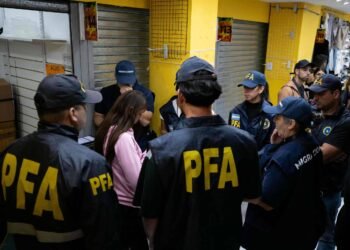
It’s a tense moment, but not as tense as the one at the end of 2024, when, following an anonymous complaint that he had embezzled money from his own fund and sent it to an offshore company in Malta, Timerman was the target of a search and seizure warrant — the police were at his home and office.
“I never had an offshore account. They took my passport, it was the worst moment of my life. It’s violent for the police to enter your house. My family was very affected, I felt very bad”, he recalls. The investigation found no evidence of crime, and the case was archived.
Timerman estimates he has responded to “dozens” of lawsuits in recent years, most of which have been filed. In addition to persecuting Tanure, he was convicted in another case of slander against the manager Daniel Alberini, from CTM Investimentoswhich he is also appealing.
According to a survey by UOL, he responds to nine cases — between civil and criminal, including the two convictions that he is trying to reverse in the second instance — and has 14 victories, including a criminal complaint for slander filed by Daniel Vorcaro. In this process, Master’s banker was defended by Viviane Barci de Moraes, wife of minister Alexandre de Moraes, of the STF — in the same period, Moraes denied Timerman’s appeal to the court.
Regarding so many disputes, Timerman interprets: “The objective was to break me financially in person, make my business unviable and destroy my reputation.” These are useless investments, he says. “I have a duty to my clients to follow through, they trusted me with their money. I’m going to say, ‘I’m sorry, they hit me really hard, I’m scared’? I’m not that person, (I’m) a rugby player,” he says, referring to the sport he played in his youth. He finishes with one of his many sayings: “The good thing about having already been to hell is that you know the way back.”
He says he learned lessons from rugby for his management career. “Never give up, be tough, but loyal. And trust people. But trust is only lost once.”
Even with the funds blocked in court, he states that he set up a strategic litigation and investigation and collections consultancy, which would have allowed him to start “getting his head out of the mud in the last few months”.
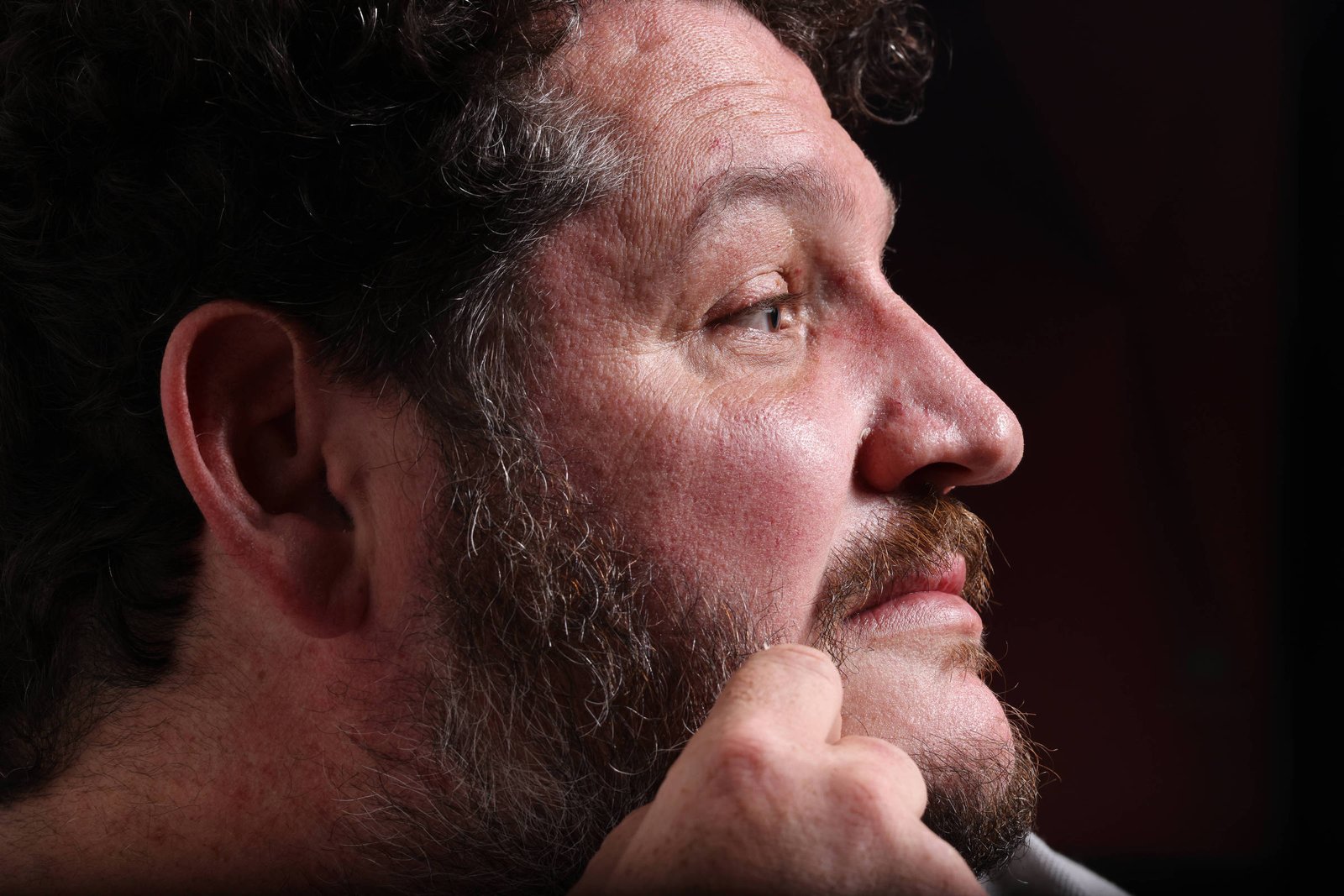
It’s not just fervent activism that sets Timerman apart from a conventional “farialimer.” When testifying at the CPI, he wore the only suit he had in his closet — the same one he wore when he got married. He usually wears worn jeans and shirts and goes barefoot in the office. His beard is scraggly. Smokes profusely.
Son of the infectious disease specialist Arthur Timermana progressive humanist (and one of the founders of the Corinthian fans Gaviões da Fiel), received his name as a tribute to Vladimir Herzogmurdered by the dictatorship, and was raised without orthodoxy — which helps to understand how he chose a liberal profession. He has already defined himself as “the most communist among capitalists”.
“I had a socialist education, but I learned to think with my head. A psychoanalyst friend of ours says that I only went into the financial market to spite my father”, he jokes.
The eldest of three children, graduated in electrical engineering from USP, Vladimir is the brother of a psychiatrist, psychotherapist and writer Natalia Timermanauthor of the novels “Empty Cup” and “The small chances“, and naval engineer Gabriela Timerman. In “As Pequenas Chances”, Natalia deals with her father’s death — the final days, the elaboration of grief.
Vladimir says that the novel is his sister’s version of that moment, but not his, and was against publication. Therefore, in the book, the firstborn’s name was changed (he became Simon) — those of the other relatives were kept as in real life.
The author-narrator of “The Little Chances” says that, on his deathbed, his father told Simon to “stop smoking, to take care of himself, to stay calm.”
Did the firstborn heed the requests? “Man, I stopped smoking for a long time. I came back when this thing broke. As for being calmer… I’m calm, I’m resolved. After the CPI, they told me: your father must be proud of you. We’re human, too human. I’m not perfect.”