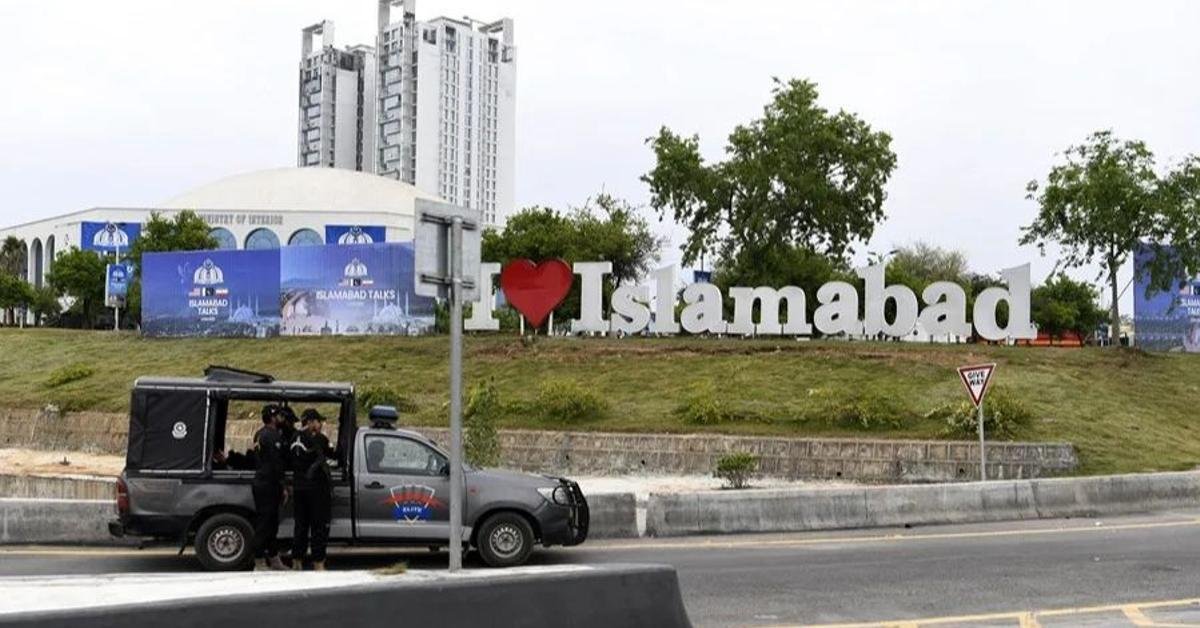
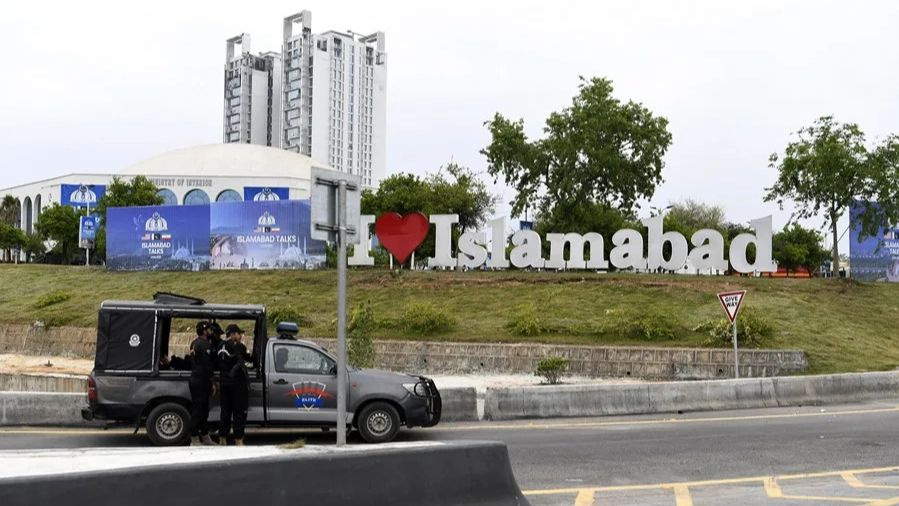
Islamabad/Iran assured this Saturday that the negotiations with the United States, planned in Islamabad, could only lead to an agreement if Washington defends its own interests and not those of Israel. “If we negotiate in Islamabad with representatives of ‘America First’, it is likely to reach an agreement that is beneficial for both parties and for the world,” Iranian First Vice President Mohamad Reza Aref wrote in X, a few hours before the start of contacts between the delegations of both countries in the Pakistani capital. Aref made clear, however, what he considers Tehran’s main red line: “If we confront representatives of ‘Israel First’, there will be no agreement.”
The Iranian leader also warned that, in this scenario, the Islamic Republic would maintain its confrontational posture. “Iran will inevitably continue its defense even more firmly than before, and the world will face greater costs,” he said.
For his part, the president of the Iranian Parliament, Mohamad Baqer Qalibaf, who heads his country’s delegation, assured upon his arrival in Islamabad that Tehran is coming with “good will,” although he insisted that he does not trust the United States. “We have good will, but we do not trust the United States due to the experiences of the last talks,” he said, alluding to the nuclear negotiations of 2025 and last January, which, he maintained, ended in Israeli-American offensives against Iranian territory.
“We have good will, but we do not trust the United States due to the experiences of the last talks”
The Foreign Minister, Abbas Araqchí, and the Secretary of the Defense Council, Ali Akbar Ahmadian, also participate in the Iranian delegation, along with other senior officials from the military and financial sphere.
The US representation is made up of the vice president, JD Vance; special envoy Steve Witkoff, and Jared Kushner, advisor and son-in-law of Donald Trump, as well as Pentagon officials.
At an event held this Saturday in Madrid against the “imperialist aggressions” of the United States and Israel, the Iranian ambassador to Spain, Reza Zabib, and the representative of the Cuban embassy, Víctor Morales, met with Palestinian spokespersons. During the meeting, both diplomats attacked Washington, defended resistance to foreign pressure and supported the right of their countries to respond to a possible escalation.
“We cannot back down, it means resisting the position and moving forward even if they are trying to step on us,” said an official from the Cuban Embassy in Madrid.
The third secretary of the Cuban embassy in Madrid, Víctor Morales, assured during the debate that the Island will follow “the example of Iran” in the event of a conflict with the United States. “We are a people of peace, but in case of conflict, we are prepared. We will follow the example of Iran, we will resist,” he stated. The diplomat added that the Cuban revolution is based on the “moral” and “social values” of the people in the face of what he described as a new “aggression” from Washington to prevent the arrival of fuel to the Island and put pressure on countries that try to supply it. “We cannot back down, it means resisting the position and moving forward even if they are trying to step on us,” he said.
For his part, the Iranian ambassador to Spain, Reza Zabib, insisted this Saturday that Tehran is coming to the talks with “good will”, although without trust in the United States. “On two previous occasions they attacked us while we were in diplomatic negotiations,” he told the press before participating in an event against the “imperialist aggressions” of the United States and Israel.
The Iranian ambassador also stated that it would be “stupid” to use a nuclear weapon against Iran.
The diplomat maintained that Iran arrives at the meeting with two scenarios on the table: the diplomatic route, which it defined as its preferred option, and military defense, in case contacts fail. “We are prepared for two options: first, diplomacy, which has always been our preference, and second, the defense of our nation,” he stated.
Regarding Israel’s role, the ambassador assured that it has “undermined any peace effort” and accused the Hebrew State of betting only on “war, violence, murders, crimes and genocide.” He also reiterated that Iran does not recognize Israel, which he defined as an “entity” based on occupation and apartheid.
The Iranian representative also warned that his country is in a position to defend “every corner” of its territory, including the Strait of Hormuz, which he described as legally open and only closed “to aggressors.” Still, he expressed confidence that the talks could move forward if the US side accepted a compromise on the points raised by Tehran.
In a subsequent debate, the ambassador also stated that it would be “stupid” to use a nuclear weapon against Iran, although he maintained that, even in that scenario, his country would continue to resist. “I don’t see them committing that stupidity because, if they use that weapon, they will open the door to others who also have it,” he declared.