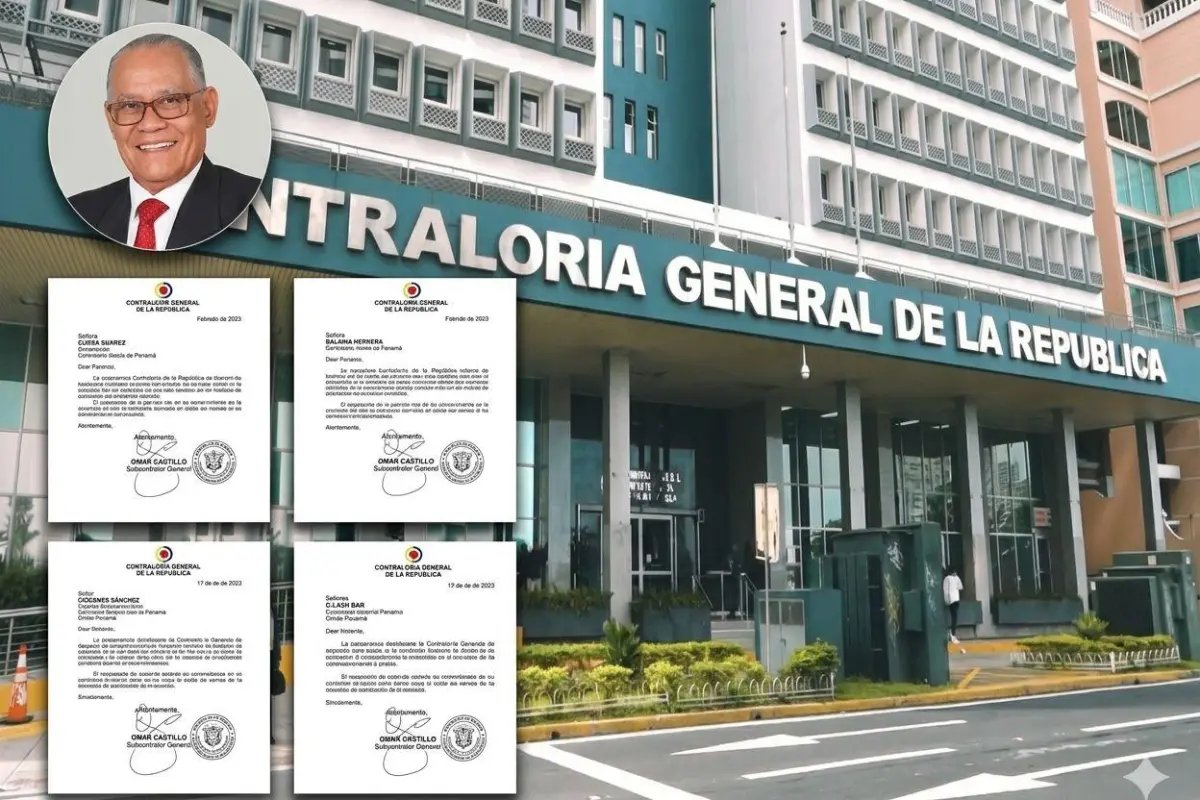
“We request that you give us a copy of the documents that support the purchase of 100 heifers in the province of Panama…”reads one of the letters that have circulated on social networks in recent days, attributed to the Comptroller General of the Republicbut that the entity itself confirmed as false.
Various documents, dated between March 18 and 29, 2026, use official letterheads, signatures attributed to the deputy controller and legal references to request personal, commercial and property information from different people, including figures from the political, teaching and business spheres.
In one of the cases, addressed to the teacher leader Diogenes Sánchezit is requested to support the purchase of livestock with documents such as payment receipts, transfers and contracts.
Among the recipients there is also Balbina Herrerapolitical leader and former presidential candidate, who was requested information related to the sale of a property in the province of Panama, including purchase and sale contracts, transfers and other supporting documents.
On that same line, the name of Elisa Suárez de Gómezto whom a note was sent in which he was asked to support the sale of a property located in the province of Chiriquí, by delivering documents such as purchase and sale contracts, payment receipts and transfers, under the argument of an ongoing audit.
Another letter asks a commercial establishment for information about the frequency with which a client receives services, including access to video surveillance of the premises.
In all cases, the documents establish a period of five business days to deliver the required information and provide supposedly official telephone contacts.
In the documents, the sender is identified as “Omar Castillo”with the position of deputy comptroller general, whose signature appears on the notes that request information under legal support. A similar structure is repeated in the letters: articles of the Constitution and current laws are cited to justify data requests, such as livestock purchases, real estate transactions or even records of services in businesses, with the argument that the information “record as evidence in an ordered audit”.
The Comptroller General of the Republic (CGR) detected the circulation of these letters and clarified that they were not issued by the institution, which raises questions about their origin, scope and purpose.
The use of official formats, legal references and names of officials raises concerns about possible attempts to obtain sensitive information through deception.
The case also raises questions about how many similar documents could be circulating undetected and what the objective behind their dissemination would be.