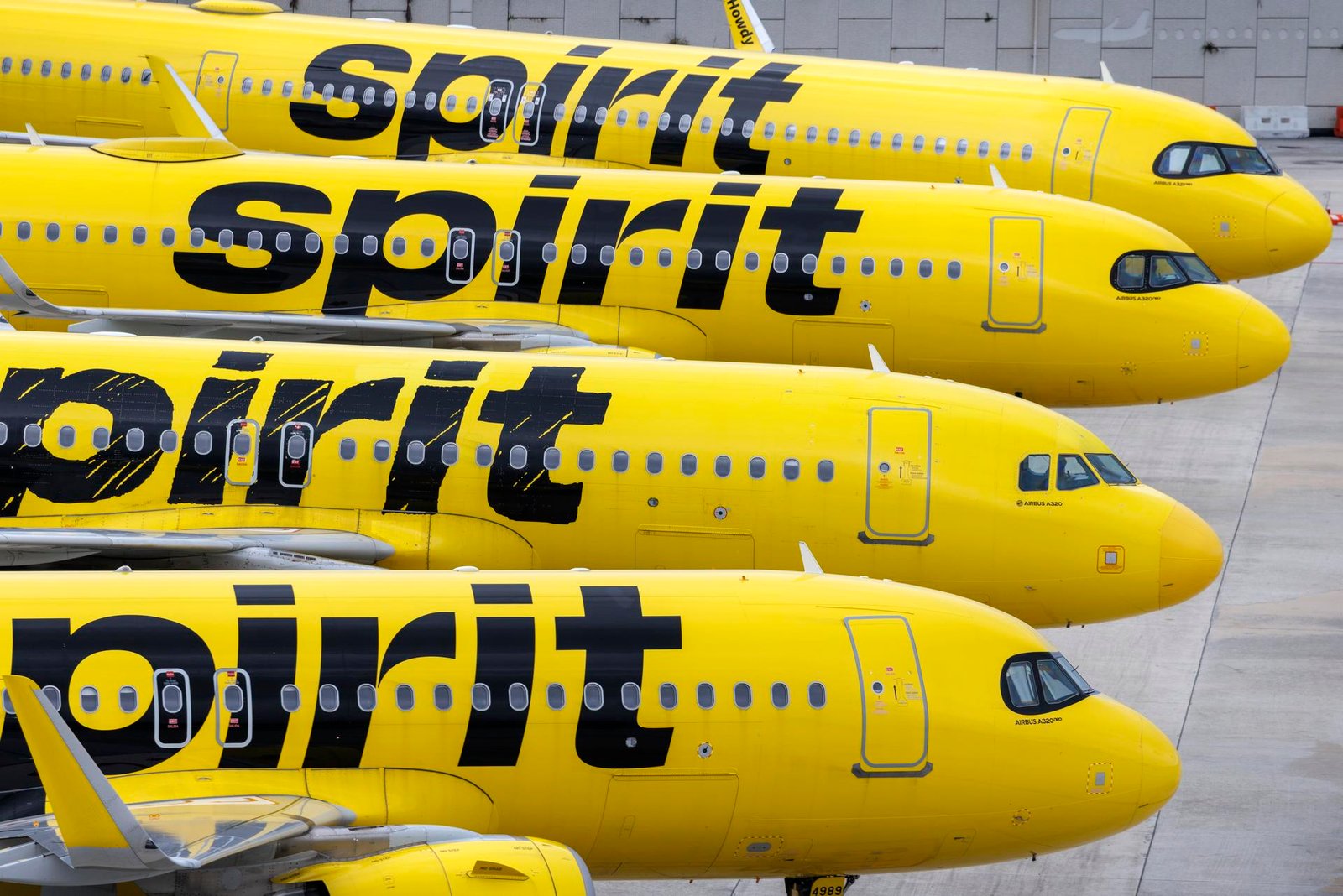
The bankruptcy of Spirit Airlines It will decrease Nicaragua’s competitiveness as a tourist destination, by limiting for a time the availability of seats to connect the country with the United States. It will also cause ticket prices to increase. The simple application of the law of supply and demand means that, as there are fewer companies offering a service, the price of that service is higher.
Spirit Airlines was an Ultra Low-Cost Carrier (ULCC), which began flying to Managua in 2007. The company’s commercial strategy included using alternative airports at low-demand times, where the fare basically covered the cost of air transportation. No extras or luxuries. Everything else was paid for outside.
“This low-cost mechanism works for people who travel practically with a backpack and who don’t care where they are going to sit it,” explained Alfredo Gutiérrez, former president of the Nicaraguan Association of Tour Operators. The requirements change when it comes to a business or tourism trip, because in those cases “there is always luggage involved,” adds the businessman. And luggage is paid separately at the ULCC.
Still, Spirit had its clientele, and those passengers will have to look for alternatives. And if it comes to flying directly to destinations within the United States, the options are Avianca, United and American. All three are offering options, even if those options are not available to everyone.
Avianca offered the “option of return without charge of air fare to those who have already flown the outbound route, have a return ticket with Spirit to the original destination, and have been affected. This option is subject to availability and the conditions of the protection plan,” the company said.
In this case, passengers must arrive at the airport on the same day of their original trip (or one day before), to be relocated to Avianca flights that have availability, in order of arrival. This alternative applies to those who have tickets issued by Spirit between May 2 and 16, 2026.
The plan covers flights between Fort Lauderdale (Florida), and several cities in Colombia, as well as the capitals of Peru, Guatemala, Honduras and Costa Rica. Nicaragua is not included.
United for its partinformed Spirit customers who had tickets to fly between May 2 and 16, 2026, that “we are capping fares on most United one-way flights that Spirit also flies.”
In parallel, American implemented special rates on Spirit routes where they also offer direct flights. American operates at 70 of the 72 airports Spirit flew to, and 67 of the specific routes the now-bankrupt airline operated. The company reported that they are evaluating the need to increase the number of seats, “including the use of larger aircraft and the addition of flights on critical routes, to provide support to the largest possible number of affected passengers.”
Even less competitiveness
Nicaragua is a country with little air connectivity. In addition to the two Americans (American and United), the Panamanian Copa, the Colombian Avianca, as well as Sansa (Costa Rica), Aeroméxico, and Conviasa from Venezuela arrive in the country. Apart from a few charter flights, there is little else that the country receives.
In contrast, El Salvador and Panama have their own regional hubs; Costa Rica and Guatemala have intercontinental connections, all of which responds to the powerful tourism industry of each of those countries.
Nicaragua, on the other hand, is still unable to come close to the notable achievement of 2017, when the country received almost two million tourists, according to the 2019 Annual Reportprepared by the Central Bank. Although that number reached 1.2 million in 2023, the following two years were marked by declines: 1,086,000 in 2024, and 1,079,000 in 2025.
A source from the tourism sector, who asked to remain anonymous, explained that “the indices have been declining… in terms of tourist arrivals, an area that has practically stagnated. If there was a slight improvement in terms of income, it was because costs have risen,” he added.
Hence, this source concludes that Spirit’s bankruptcy “will definitely be an additional impact to the decadent data that shows tourist activity in Nicaragua“He says this thinking that the market will see the price of tickets rise.
“The more competition there is, the more seats available to travel to a destination, the costs become cheaper, but when the availability of seats is reduced, the tickets go up in price,” he stressed.
Gutiérrez also sees it this way because he knows, as a former owner of a travel agency, that the airlines’ actions will be based on a free market model.
“If a certain number of passengers go from having three options to having only two, those who remain will look for ways to earn a piece of the pie from the passengers who no longer have the third option,” he illustrated. The remaining airlines will push their marketing teams to try to capture as many of those customers.
From the perspective of businessmen who remain in the tourism sector, Spirit’s bankruptcy is a new cause for concern because it reduces the number of seats. “As there is less supply of seats, and more expensive tickets, Nicaragua’s competitiveness decreases compared to other countries in the region, which have more flights arriving to their countries at lower costs.”
Meanwhile, there is total silence on the subject from the authority in the sector, the Nicaraguan Institute of Torrismo (Intur).