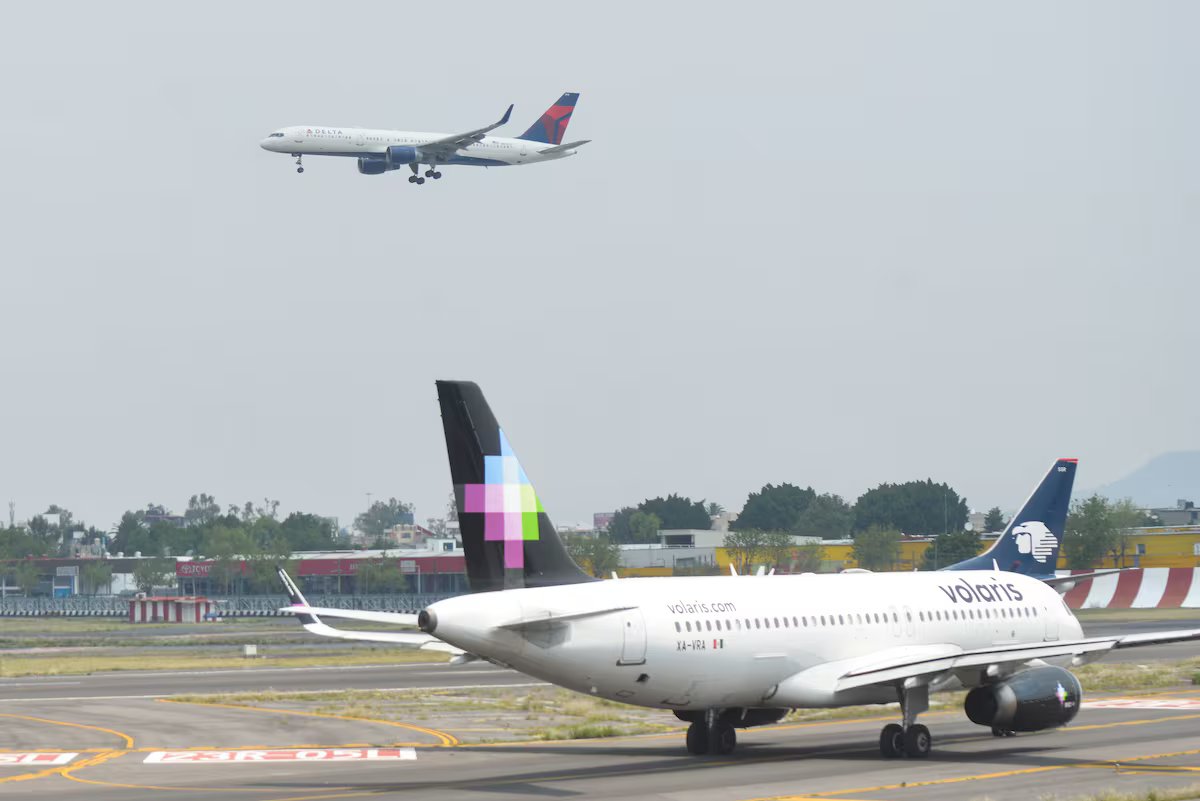
After months of negotiations, Mexico will give in to the requests of Donald Trump’s Government on aeronautical matters. US Transportation Secretary Sean Duffy said Tuesday that Mexico has addressed the handful of US concerns regarding the 2015 bilateral air agreement. It will ensure that US airlines have fair access to operate slots, called slotsat the Mexico City International Airport (AICM). This decision opens the door for Washington to remove the veto on Felipe Ángeles Airport (AIFA) and reactivate the 13 routes that were canceled in October 2025 as a protest against the alleged non-compliance of its southern neighbor in this sector.
“Under President Trump’s leadership, we prioritize U.S. interests and enforce our air transportation agreements around the world. By holding Mexico accountable, it has finally agreed to comply with the agreement and cease their anti-competitive practices. This is a step in the right direction, but we need to see these promises translated into action. Until then, our restriction on Mexican airlines will remain in force,” said Sean P. Duffy, US Secretary of Transportation (DOT). The agreement takes place less than two months before the 2026 World Cup, to be held in both countries.
The United States argues that Mexico has not complied with the bilateral agreement since 2022, when it abruptly terminated the slots of US airlines and forced their air cargo companies to relocate their operations to the AIFA. “By restricting the slots and requiring cargo operations to be moved out of Mexico City, reneged on its promise, destabilized the market and left U.S. companies with millions of dollars in additional costs. In response to this noncompliance, the Department took regulatory action to eliminate 13 Mexican airline routes to the United States, freeze the growth of combined Mexican airline services between the United States and the AICM, and prohibit Mexican passenger airlines from transporting cargo,” the US Department of Transportation detailed.
For the United States, the memorandum of understanding with Mexico is a first step; however, the crucial part will be the implementation of the established commitments and reforms. “Mexico committed, among other things, to carrying out a capacity declaration process in accordance with international best practices, ensuring that US airlines have fair and transparent access to request and operate slots in the AICM and modifying its slot policies to align them with international best practices. Mexico must implement the reforms before the Department of Transportation can reconsider the restrictions imposed on Mexican airlines,” it adds.
The Mexican authorities also reported that the negotiation made progress on the inclusion of the AIFA in the Air Transport Agreement signed with the United States. In terms of air cargo, conditions were also established to guarantee equitable access to the airport infrastructure of the AICM and the AIFA, expanding operational options and strengthening logistical connectivity between both countries. “A bilateral working group will be formed that will monitor and provide technical follow-up to the implementation of these commitments and, subsequently, evaluate the regulatory measures in force in the United States,” indicates the Mexican Ministry of Transportation.
The flag airline of the Latin American country, Aeroméxico, celebrated the progress of negotiations with the United States. The company assured that this binational dialogue will benefit the national industry. On the other hand, the National Chamber of Air Transport (Canaero) stated, in writing, that it was the correct route to regain the competitiveness of the Mexican airline industry.
The preliminary memorandum between Mexico and the United States comes just a week after the congested capital terminal will increase its operations per hour from 44 to 46. The order of the Federal Civil Aviation Agency (AFAC) gave approval to this expansion of flights after considering the remodeling works at the aerodrome. According to Mexican authorities, the measure is temporary for the summer and winter periods of 2026, but could be applied in subsequent seasons. With this order, the Government of Claudia Sheinbaim changes the flight reduction policy implemented in the previous six-year term at the AICM. This airfield receives more than 44 million passengers each year, while its neighbor AIFA barely exceeds seven million travelers annually.