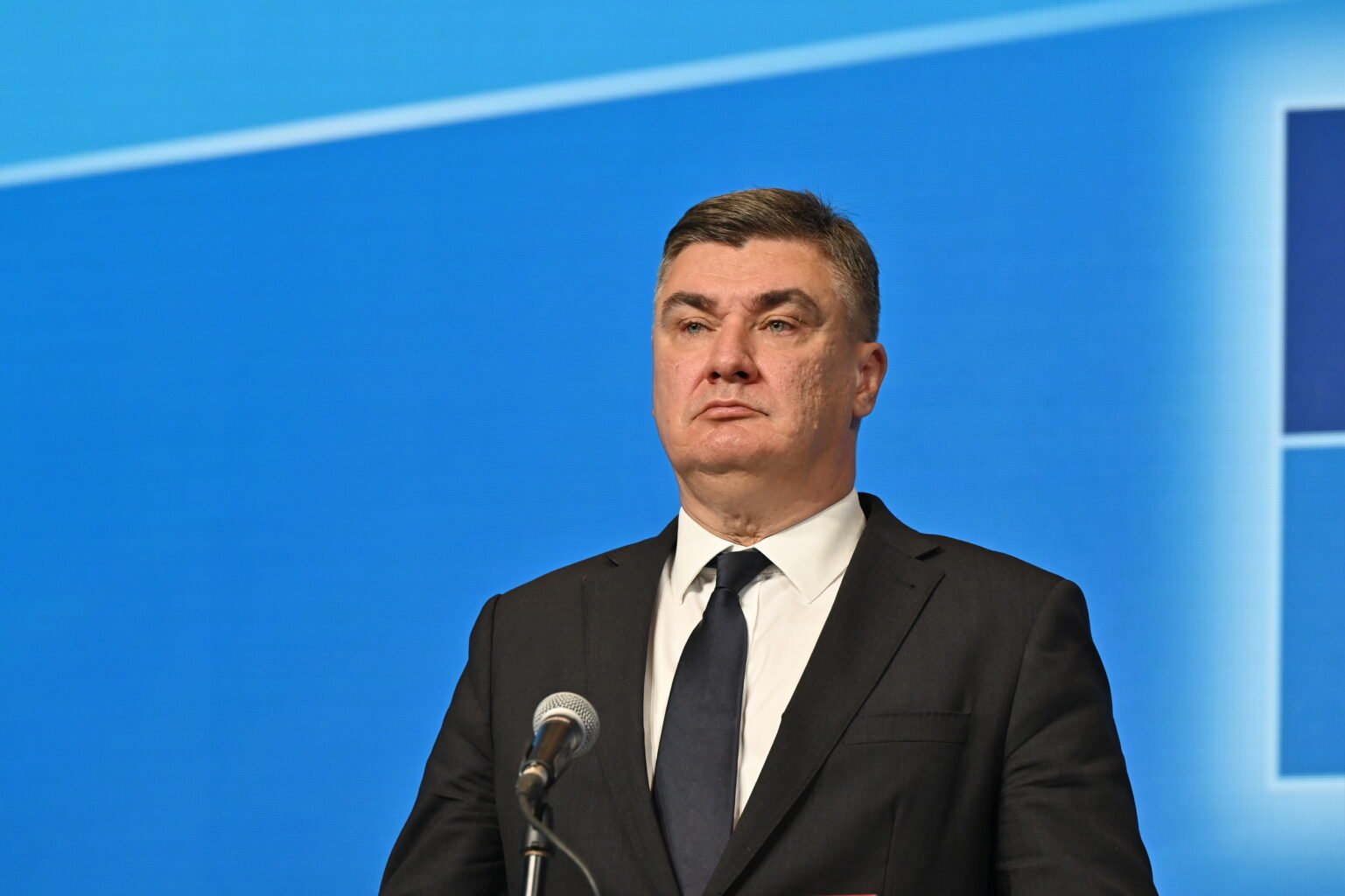
Reason: A series of statements by the President of Croatia, Zoran Milanović, about how small states are gradually becoming pawns in large alliances
- The European Union as a whole may produce enough food, but the question is who in that whole profits and who becomes dependent. And it’s not just food in question, but much more, and it concerns smaller countries in larger systems… Namely, when a country stops producing basic goods, it loses not only its economic power but also its political autonomy
The Croatian President Zoran Milanović recently came out again with several views that resounded loudly in the Croatian, regional and world public. His words sound like an alarm, which should not only be heard but should also act as an awareness and mobilization. The diagnosis, findings and messages of the Croatian president are not only of an economic nature, but represent an essentially multifaceted political review that refers to the gradual loss of sovereignty. Milanović directly points out for his country that “Croatia went from being a country that produced ‘such-and-such’ food to being dependent on imports” and that “this is not a random economic mistake, but a consequence of a system in which national policies are subordinated to broader rules and interests.” The European Union as a whole may produce enough food, but the question is who in that whole profits and who becomes dependent. And it’s not just food in question, but much more, and it concerns smaller countries in larger systems… Namely, when a country stops producing basic goods, it loses not only its economic power, but also its political autonomy.
Economic dependence: the first step towards the loss of sovereignty
The President of Croatia, Milanovic, in his statements to the public these days clearly states that the majority of citizens live on salary and spend the most on food. When food is imported, every crisis abroad becomes a crisis at home.
Within large systems like the EU, small economies are often pushed into the role of markets rather than producers. The big members dictate rules, standards and subsidies that suit them, while the smaller ones adapt, often to their own detriment, says Milanovic.
Military and political subordination: NATO as an example
Milanovic’s statements on military issues are even harsher. His question “how do we correct other people’s brilliant plans” reveals the core of the problem in military alliances like NATO. When a major power cannot resolve a conflict, small allies are expected to participate, with no real influence on decisions. It is not a partnership, but a hierarchy.
Additionally, his criticism of the presence of foreign warships in Croatian waters raises an even more serious question: Does the state of Croatia even have control over its own territory?
According to him, even constitutional procedures are being bypassed to please allies. It is a clear signal that formal sovereignty exists, but the essential one is disappearing.
Milanovic: We are occupied! Is his finding an oversizing
or reality?
– When the president of a country declares “we are occupied”, it does not necessarily mean a classic military occupation. It is a political metaphor for a situation in which decisions are made outside the state, the economy depends on external centers, and security policy is dictated by others. In such conditions, sovereignty becomes declarative and not real – say our interlocutors, diplomats, who were asked for their opinion on this topic.
Our interlocutors, inspired by the speech of Croatian President Milanović, say that the example of Croatia is not isolated. It is a warning to all countries that integrate into large systems.
Lessons for all small states
According to our interlocutors, it is important that four pillars remain monolithic during integration into larger (Euro-Atlantic) systems. First, the country entering into a larger and more powerful union should not give up its production of goods. Namely, economic independence is the basis of political independence, according to the interlocutors.
Second, special attention should be paid to the so-called “shared” competences, that is, what is called common policy often means the loss of national control. Third, military alliances are not equal. In translation, this always means that the big powers decide, the small ones execute. And fourth and last, but not least, is that the Constitution must be above all!
– If the Constitution is circumvented, reshaped, changed, etc. in the name of some kind of “cooperation”, then the state has already given in – point out our interlocutors, who fully agree with the brave statements of Croatian President Milanović.
Integration or assimilation?
Integration is not a problem in itself. The problem arises when it turns into assimilation, that is, when the state stops making its own decisions and becomes part of someone else’s system of interests.
Croatia, through the words of its president, today seems to be an example of how control is gradually being lost, not through force, but through agreements, compromises and “strategic partnerships”.
– In connection with all this, the question that remains is simple, but essential, and that is whether small states enter these alliances as partners or as subcontractors of foreign policy – our interlocutors, career diplomats, point out at the end of the briefing. PR