Thursday, May 7, 2026
    The GeoStrategic Consensus
    No Result
    View All Result
    • Login
    • HOME
    • AMERICAS
      • Argentina
      • Brazil
      • Canada
      • Chile
      • Colombia
      • Costa Rica
      • Cuba
      • Dominican Republic
      • Ecuador
      • El Salvador
      • Greenland
      • Guatemala
      • Honduras
      • Mexico
      • Nicaragua
      • Panama
      • Paraguay
      • Peru
      • United States
      • Uruguay
      • Venezuela
    • ASIA-PACIFIC
      • Australia
      • Brunei Darussalam
      • Cambodia
      • China
      • Federated States of Micronesia
      • Fiji
      • Indonesia
      • Japan
      • Kiribati
      • Laos
      • Malaysia
      • Marshall Islands
      • Mongolia
      • Myanmar
      • Nauru
      • New Zealand
      • North Korea
      • Palau
      • Papua New Guinea
      • Philippines
      • Samoa
      • Singapore
      • Solomon Islands
      • South Korea
      • Taiwan
      • Thailand
      • Timor-Leste
      • Tonga
      • Tuvalu
      • Vanuatu
      • Vietnam
    • CARICOM
      • CARICOM – Non-English
        • Haiti
        • Suriname
      • CARICOM Associates
        • Anguilla
        • Bermuda
        • British-Virgin-Islands
        • Cayman-Islands
        • Curacao
        • Turks-and-Caicos
      • CARICOM English
        • Antigua and Barbuda
        • Barbados
        • Belize
        • Dominica
        • Grenada
        • Guyana
        • Jamaica
        • Montserrat
        • Saint Kitts and Nevis
        • Saint Lucia
        • Saint Vincent and the Grenadines
        • The Bahamas
        • Trinidad and Tobago
    • EURASIA
      • Armenia
      • Azerbaijan
      • Balarus
      • Georgia
      • Kazakhstan
      • Kyrgyzstan
      • Moldova
      • Russia
      • Tajikistan
      • Turkmenistan
      • Ukraine
      • Uzbekistan
    • EUROPE
      • Albania
      • Andorra
      • Austria
      • Bosnia and Herzegovina
      • Bulgaria
      • Croatia
      • Cyprus
      • Czech Republic
      • Denmark
      • Estonia
      • Finland
      • France
      • Germany
      • Greece
      • Holy See
      • Hungary
      • Iceland
      • Ireland
      • Italy
      • Kosovo
      • Latvia
      • Liechtenstein
      • Lithuania
      • Luxembourg
      • Malta
      • Monaco
      • Montenegro
      • Netherlands
      • North Macedonia
      • Norway
      • Poland
      • Portugal
      • Romania
      • San Marino
      • Serbia
      • Slovakia
      • Slovenia
      • Spain
      • Sweden
      • Switzerland
      • United Kingdom
    • MIDDLE EAST AND NORTH AFRICA
      • Algeria
      • Bahrain
      • Egypt
      • Iran
      • Iraq
      • Israel
      • Jordan
      • Kuwait
      • Lebanon
      • Lybia
      • Morocco
      • Oman
      • Palestinian Territories
      • Qatar
      • Saudi Arabia
      • Syria
      • Tunisia
      • Turkey
      • United Arab Emirates
      • Western Sahara
      • Yemen
    • SOUTH ASIA
      • Afghanistan
      • Bangladesh
      • Bhutan
      • India
      • Maldives
      • Nepal
      • Pakistan
      • Sri Lanka
    • SUB-SAHARAN AFRICA
      • Angola
      • Benin
      • Botswana
      • Burkina Faso
      • Burundi
      • Cabo Verde
      • Cameroon
      • Central African Republic
      • Chad
      • Comoros
      • Cote d’Ivoire
      • Democratic Republic of the Congo
      • Djibouti
      • Equatorial Guinea
      • Eritrea
      • Eswatini
      • Ethiopia
      • Gabon
      • Gambia
      • Ghana
      • Guinea
      • Guinea Bissau
      • Kenya
      • Lesotho
      • Liberia
      • Madagascar
      • Malawi
      • Mali
      • Mauritania
      • Mauritius
      • Mozambique
      • Namibia
      • Niger
      • Nigeria
      • Republic of the Congo
      • Rwanda
      • Sao Tome and Principe
      • Senegal
      • Seychelles
      • Sierra Leone
      • Somalia
      • South Africa
      • South Sudan
      • Sudan
      • Tanzania
      • Togo
      • Uganda
      • Zambia
      • Zimbabwe
    • HOME
    • AMERICAS
      • Argentina
      • Brazil
      • Canada
      • Chile
      • Colombia
      • Costa Rica
      • Cuba
      • Dominican Republic
      • Ecuador
      • El Salvador
      • Greenland
      • Guatemala
      • Honduras
      • Mexico
      • Nicaragua
      • Panama
      • Paraguay
      • Peru
      • United States
      • Uruguay
      • Venezuela
    • ASIA-PACIFIC
      • Australia
      • Brunei Darussalam
      • Cambodia
      • China
      • Federated States of Micronesia
      • Fiji
      • Indonesia
      • Japan
      • Kiribati
      • Laos
      • Malaysia
      • Marshall Islands
      • Mongolia
      • Myanmar
      • Nauru
      • New Zealand
      • North Korea
      • Palau
      • Papua New Guinea
      • Philippines
      • Samoa
      • Singapore
      • Solomon Islands
      • South Korea
      • Taiwan
      • Thailand
      • Timor-Leste
      • Tonga
      • Tuvalu
      • Vanuatu
      • Vietnam
    • CARICOM
      • CARICOM – Non-English
        • Haiti
        • Suriname
      • CARICOM Associates
        • Anguilla
        • Bermuda
        • British-Virgin-Islands
        • Cayman-Islands
        • Curacao
        • Turks-and-Caicos
      • CARICOM English
        • Antigua and Barbuda
        • Barbados
        • Belize
        • Dominica
        • Grenada
        • Guyana
        • Jamaica
        • Montserrat
        • Saint Kitts and Nevis
        • Saint Lucia
        • Saint Vincent and the Grenadines
        • The Bahamas
        • Trinidad and Tobago
    • EURASIA
      • Armenia
      • Azerbaijan
      • Balarus
      • Georgia
      • Kazakhstan
      • Kyrgyzstan
      • Moldova
      • Russia
      • Tajikistan
      • Turkmenistan
      • Ukraine
      • Uzbekistan
    • EUROPE
      • Albania
      • Andorra
      • Austria
      • Bosnia and Herzegovina
      • Bulgaria
      • Croatia
      • Cyprus
      • Czech Republic
      • Denmark
      • Estonia
      • Finland
      • France
      • Germany
      • Greece
      • Holy See
      • Hungary
      • Iceland
      • Ireland
      • Italy
      • Kosovo
      • Latvia
      • Liechtenstein
      • Lithuania
      • Luxembourg
      • Malta
      • Monaco
      • Montenegro
      • Netherlands
      • North Macedonia
      • Norway
      • Poland
      • Portugal
      • Romania
      • San Marino
      • Serbia
      • Slovakia
      • Slovenia
      • Spain
      • Sweden
      • Switzerland
      • United Kingdom
    • MIDDLE EAST AND NORTH AFRICA
      • Algeria
      • Bahrain
      • Egypt
      • Iran
      • Iraq
      • Israel
      • Jordan
      • Kuwait
      • Lebanon
      • Lybia
      • Morocco
      • Oman
      • Palestinian Territories
      • Qatar
      • Saudi Arabia
      • Syria
      • Tunisia
      • Turkey
      • United Arab Emirates
      • Western Sahara
      • Yemen
    • SOUTH ASIA
      • Afghanistan
      • Bangladesh
      • Bhutan
      • India
      • Maldives
      • Nepal
      • Pakistan
      • Sri Lanka
    • SUB-SAHARAN AFRICA
      • Angola
      • Benin
      • Botswana
      • Burkina Faso
      • Burundi
      • Cabo Verde
      • Cameroon
      • Central African Republic
      • Chad
      • Comoros
      • Cote d’Ivoire
      • Democratic Republic of the Congo
      • Djibouti
      • Equatorial Guinea
      • Eritrea
      • Eswatini
      • Ethiopia
      • Gabon
      • Gambia
      • Ghana
      • Guinea
      • Guinea Bissau
      • Kenya
      • Lesotho
      • Liberia
      • Madagascar
      • Malawi
      • Mali
      • Mauritania
      • Mauritius
      • Mozambique
      • Namibia
      • Niger
      • Nigeria
      • Republic of the Congo
      • Rwanda
      • Sao Tome and Principe
      • Senegal
      • Seychelles
      • Sierra Leone
      • Somalia
      • South Africa
      • South Sudan
      • Sudan
      • Tanzania
      • Togo
      • Uganda
      • Zambia
      • Zimbabwe
    No Result
    View All Result
    Agentially
    No Result
    View All Result
    Home EUROPE Malta

    What type of economy and society?

    The Analyst by The Analyst
    May 7, 2026
    in Malta
    What type of economy and society?


    READ ALSO

    Safer on the road than on the pavement

    Regime change – The Malta Independent

    The richest five men in the world have doubled their fortunes over the last five years, while close to five billion people have become poorer.  A couple of weeks ago, the Central Bank of Malta regaled us with the news that least 10% of households in Malta can be classified as millionaires in terms of net wealth.  Glory to Mammon, we have beaten even the USA, whose millionaires, according to Swiss bank USB’s 2025 Global Wealth Report, are approximately 7.2% of the population.

    Such disparities need to change.  Our economies should, instead, work for the fulfilment of all people’s rights   ̶   economic, social, and human.  These obligations should guide global economic governance, putting participation, justice, equality, and non-discrimination at the heart of the financial architecture in all countries.

    As the world becomes more unequal, human rights actors are calling for a shift towards a “rights-based economy” or a “human rights economy”.  Somewhat less grand is the “social rights economy” implicit in the EU’s social market economy.  We are well short of any of these. If anything, in the last five years we have seen a retrenchment.

    As we prepare for the next general election, people will be asking themselves which party best represents what they would like to see for Malta.  Their decision will be based on a mix of personal and public-interest motives: economic development, good jobs, low inflation, well-being, environmental protection, and God-knows what else. Some will vote on a single issue; others on a wide array of them.  Hopefully, the more public-spirited will give social and human rights their due importance.

    I am not a utopian.  I realise that Europe’s governments are facing an ever-intensifying cycle of crises that threatens to swamp them.  They are being battered from all sides: by persistent inflation, rising inequality, job precariousness caused by technology, climate change and extreme weather events, and ruthless wars in Ukraine and the Gulf.  How can they navigate their way around them?  No one is spared, not even Malta.  We love to think that we are not affected since economic growth remains very strong.  Wrong: what we should ask is whether we could have done better, absent the crises. 

    However, I firmly believe that the answer to inequality, democratic backsliding and geopolitical upheaval is a bigger genuine commitment to a rights-based economy.  Back in 2011, Joseph Muscat claimed that the Labour Party had become the home for liberals. His pro-business leanings were well-known.  The word “socialism” was nowhere to be heard. That doesn’t mean that some of his policies weren’t inspired by socialist ideals, but he preferred to emphasise his neo-liberal values.  His legacy lives on in today’s PL, though Prime Minister Robert Abela recently told party delegates that “we are proud to be called socialists, and proud to be leftist”.    

    Now, it is fair to say that human rights and neoliberalism are historical companions. However, it is fallacious to equate neoliberal movements with human rights or social rights movements since they are advancing different values altogether.  They all defend the right to private property and respect individuals, but on the practical level, the former pursues the interests of the rich and property holders, whereas the latter two focus on different sets of rights   ̶   the right to sustainable, resilient, just, and inclusive societies.

    Human or social rights proponents concentrate on reducing inequality, fostering social cohesion and intergenerational justice, and enhancing democratic stability.  At the same time, they value trust in institutions and public authorities at all levels of governance. Investing in social rights means investing in the democratic stability and security that can adequately protect social rights.

    This is where I part company with Premier Abela’s statement.  Kudos for civil liberties, well done for economic rights, but conk-out for governance.  The harsh verdict on the last concept comes because I am speaking of action on the ground, not dead letters, or hype.  For me, progress is not merely a matter of economic success.  It has to do with eschewing arbitrary action by the government and public entities, unethical behaviour, financial losses, regulatory violations, reputational damage, poorly functioning authorities, and corruption.

    It was the great promise of the 2013 Manifesto. We believed.  I and some others actually worked for it.  But what a great let-down it was.  A few pieces of mostly dead legislation and weak policies do not change the picture.  The descent into bad governance is illustrated by the low rankings obtained by the country in 2024 versus 10 years earlier.  In Transparency International’s Corruption Index, we have lost 17 places worldwide (5 in the EU) to rank 60th and 17th respectively.  In the World Bank’s Governance indicators, we have lost 4.4 pts in Voice and Accountability, 6 pts in regulatory quality, 5.2 pts in rule of law, and 11 pts in control of corruption. In the Fund for Peace’s Fragile States Index, our ranking has slipped 12 pts.

    Why can’t the PL fully embrace and practise the tenets of Socialist International’s model of transparency and good governance?  Yes, good governance is a critical component of modern socialist thinking, which emphasises that economic equality must be paired with democratic accountability, transparency, and the rule of law.  It is not just socialist thinking.  We’ve had tonnes of advice from the Council of Europe, the European Commission, the IMF and the OECD.  It seems to me that our response is half-hearted and grudging.   

    A lack of transparency and governance inevitably leads to social exclusion, which fosters insecurity and mistrust, which in turn feed democratic backsliding and disillusion with politics.  Successive surveys of public attitudes and opinion polls attest to this in Malta.  Conversely, social rights reinforce the foundation for resilience against social risks, for the humane management of the digital and green transitions at work, and for democratic stability.

    Enough said about that, but I have to return to my introductory words.  A more just society cannot be achieved by economic progress alone.  The PL has introduced many social benefits.  It needs to build further on the concept of social investment, cementing social inclusion, gender equality, and fiscal stability.  

    One concept which regrettably has been totally neglected is the workplace, which remains an economic policy ‘black box.’   The advance of new technologies, especially artificial intelligence, makes it imperative to open up that box and address the profound power imbalance highlighted by George Theodosis, vice-president of the Council of Europe’s Economic Committee of Social Rights.  Theodosis says that “there is a need to place people at the centre of social and economic change,” underlining human oversight and rights for workers to contest decisions.

    Left-of-centre people are demanding more ambitious politics.  They are disgusted at the disproportionate privileges of the 1% or 10%.  I am not sure how many of them would be familiar with Thomas Piketty’s Capital in the Twenty-First Century, but many surely subscribe to the view that inequality is a social crisis to be reckoned with.  It worries us that we have the seventh highest Gini coefficient of equivalised disposable income in the EU and that it has risen by three percentage points since 2014.

    How much social care should be provided to citizens?  When can the state say that it cannot afford it anymore? How much should the State invest in healthcare relative to other priorities?  To answer these questions, we need to make sure what we mean by equality.  Status equality is one thing, distributional equality another.   I could treat two persons unequally because of the kind of persons they are (one is disabled and the other isn’t), giving the former an advantage over the other.  That is status equality, whereas distributional equality and especially equality of outcomes would force me to look at how income and wealth – and more broadly, the good things in life – are affecting the two of them.

    Human rights have little to say about inequalities of income and wealth directly.  The declarations and treaties that bear on economic and social rights only look at entitlements to a certain amount of a good or service – but they do not mention equal distribution. Human rights are just not egalitarian in distribution – even on paper, let alone in practice.  The main question is who captures the gains of economic growth.  Every year we have many more goods and much more money as a society, but the rich capture most of it.  That’s why the Gini coefficient goes up.

    The concepts I have talked about do not prescribe a particular economic model which we should follow.  Whether one calls it the care economy, just transition, wellbeing economy, or social and solidarity economy, the important thing is to provide a normative framework to strengthen economic policymaking.

    Last month the government unveiled an ambitious long-term national strategy   ̶   Malta Vision 2050   ̶   setting out a 24-year roadmap aimed at transforming the country’s economy, public services, infrastructure, and environment while shifting its focus from rapid economic expansion to quality of life and sustainability.  The document is strewn with references to accountability and good governance, but is it a harbinger that none of the hundred KPIs or so mentioned in the document have a good governance target?

    While the PN welcomed the “positive” elements of the Vision, it referred to certain shortcomings that could undermine the Vision’s credibility and effectiveness, including “weaknesses in governance and the rule of law.”  We now have to wait for the PN’s electoral manifesto to find out what it proposes and determine whether the electorate could trust them with doing a better job.

    Malta is well-positioned to develop an economy that prioritises people over profit.  According to the 2026 Global Social Progress Index published by Social Progress Imperative, we rank 27 out of 171 states on non-economic aspects of social performance.  Based on 57 drivers of social and environmental progress, Malta scores 83.3 out of 100.  The question is whether there is the will to develop innovative solutions to the pressing challenges of our age.


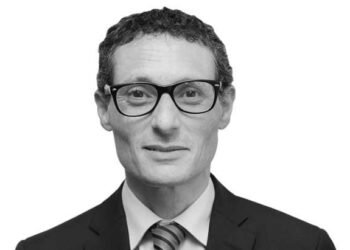
    Frans Camilleri is an economist. He studied at Oxford and University of East Anglia, is a former corporate head at Air Malta, and has served on various public and private boards.


    Source link

    Related Posts

    Safer on the road than on the pavement
    Malta

    Safer on the road than on the pavement

    May 7, 2026
    Regime change – The Malta Independent
    Malta

    Regime change – The Malta Independent

    May 7, 2026
    The Maltese language – The Malta Independent
    Malta

    The Maltese language – The Malta Independent

    May 7, 2026
    When more tourists mean less value
    Malta

    When more tourists mean less value

    May 7, 2026
    A postcolonial metro line – The Malta Independent
    Malta

    A postcolonial metro line – The Malta Independent

    May 7, 2026
    Wellbeing, ARUC, and Malta’s reputation
    Malta

    Wellbeing, ARUC, and Malta’s reputation

    May 7, 2026
    Next Post
    Books to read in May 2026: the best upcoming novels, essays and short stories

    Books to read in May 2026: the best upcoming novels, essays and short stories

    POPULAR NEWS

    Justin Bieber fans flood Coachella festival for headlining show – Entertainment

    Justin Bieber fans flood Coachella festival for headlining show – Entertainment

    April 20, 2026

    Over 600 flee homes as Army, NPA clash in Negros Occidental

    April 21, 2026

    Ex-DPWH exec recalls P800-M ‘delivery’ to Zaldy Co 

    April 20, 2026

    Former PM Paluckas suspends party membership, to waive immunity over criminal probe

    April 24, 2026
    Pres. Ali challenges CARICOM to transform into health research powerhouse

    Pres. Ali challenges CARICOM to transform into health research powerhouse

    April 23, 2026

    EDITOR'S PICK

    Spanish Miguel Barreno returns after spending more than six months detained by ICE in the United States

    May 6, 2026

    LPG tanker bound for India crosses Strait of Hormuz – Reuters

    May 3, 2026
    Peace Corps Volunteers Return to Palau, Marking a New Chapter in Partnership

    Peace Corps Volunteers Return to Palau, Marking a New Chapter in Partnership

    May 7, 2026
    Finland advances plans to tighten foreign students’ income requirements, language proficiency rules | Yle News

    Finland advances plans to tighten foreign students’ income requirements, language proficiency rules | Yle News

    May 6, 2026

    Recent Posts

    • Shaping a Peaceful Pacific: PFF Marks World Press Freedom Day and Announces New Chair
    • Zelensky promised a mirror response to Moscow’s strikes ahead of the declared ceasefire
    • Vahan Kostanyan discussed with the US Deputy Secretary of State the steps being taken towards the implementation of the TRIPP project
    • Turkmenistan cracks down on misleading advertising and street vendors

      © 2026 Agentially - Navigating shifting sovereignties and global risk .

      Welcome Back!

      Login to your account below

      Forgotten Password?

      Retrieve your password

      Please enter your username or email address to reset your password.

      Log In
      No Result
      View All Result

        © 2026 Agentially - Navigating shifting sovereignties and global risk .

        This website uses cookies. By continuing to use this website you are giving consent to cookies being used. Visit our Privacy and Cookie Policy.