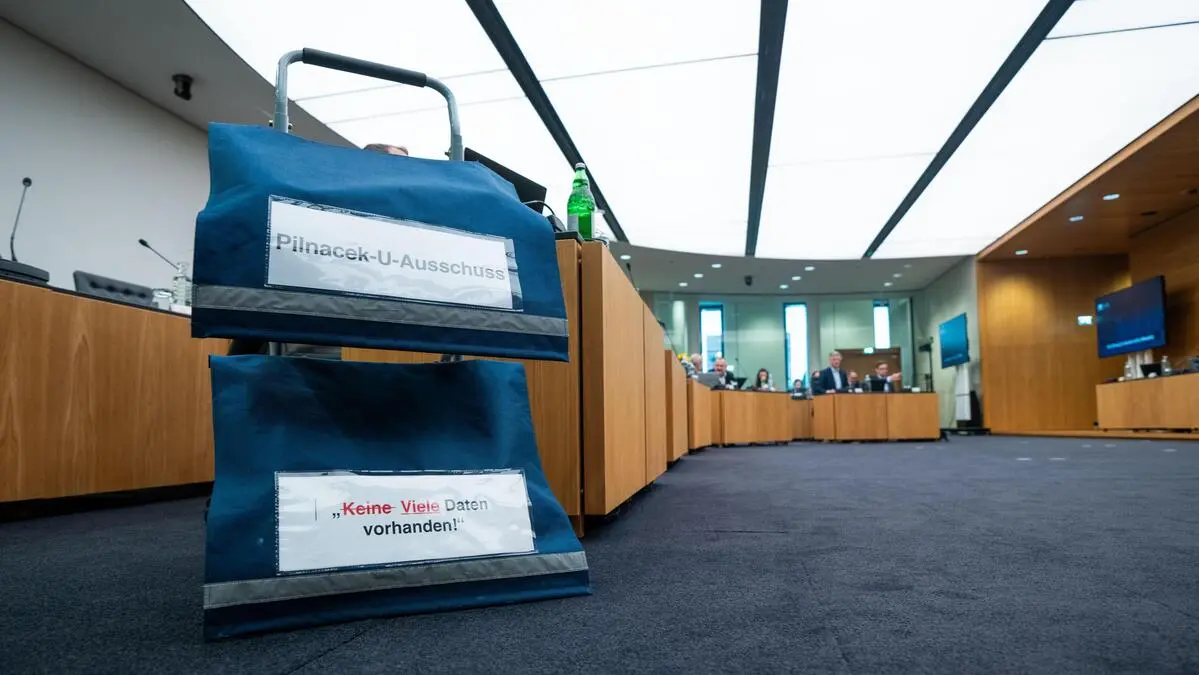
At the center of the interviews are once again questions about the seizure of Christian Pilnacek’s cell phone by police officers.

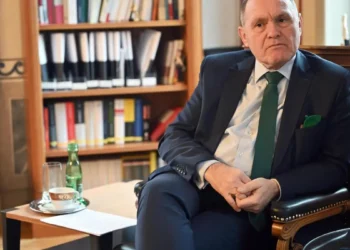
Pilnacek-U Committee APA / APA / Georg Hochmuth
The parliamentary committee of inquiry into the case Pilnacek dedicated itself to questioning additional investigators on Wednesday. The detective who was accused of having picked up personal items from the justice section chief’s girlfriend and handed them over to the widow’s lawyer instead of securing them as evidence had his say. Previously, a senior public prosecutor familiar with the case had defended the authorities’ actions overall.
On the day Pilnacek’s body was found, the investigator and a colleague picked up, among other things, his cell phone and car keys as well as other items, which resulted in an investigation into abuse of office that has since been discontinued. The officer defended the actions before the U-Committee because, from a criminal police perspective, they were not evidence. For him, Pilnacek’s suicide was “out of doubt”. Bodies in the water were “part of the daily business” of the Lower Austria State Criminal Police Office.
The chief investigator also defended himself against “constructed allegations” in his opening statement. No items were demanded or secured from the women who lived in the same house with Pilnacek at the time. Rather, the roommates asked “on their own initiative” what should happen to the items and asked the officials to hand the items over to Pilnacek’s widow, Caroline Listto hand over. This was then arranged.
The officers complied with the request because the items were “not relevant to the police,” the respondent continued, because: “A cell phone doesn’t tell me the cause of death.” The subsequent investigations by the Economic and Corruption Public Prosecutor’s Office (WKStA) were “personally very stressful and formative” for the man. A former chief investigator in the case has now even given a new career direction, the man reported. He also criticized the Ombudsman’s dealings with the investigators, their independent representatives, Christoph Luisserhad carried out an examination in advance of the U-Committee.
As expected, the ÖVP was happy to take the ball and once again criticized an alleged campaign against police officers in the U-committee. The official denied anything like political influence on the investigation – actually the core question of the U-Committee. At the end of the survey, he also presented the U-Committee with an older decree from the Ministry of the Interior that regulates the handling of deaths that affect public figures. It states, for example, that such cases must be reported immediately.
The senior public prosecutor was also questioned in detail on Wednesday about why numerous corrections were made to the WKStA’s project report, in which the investigations against the officials were recommended to be stopped. Although he shared the result, the reasoning was legally wrong in certain points, he said. The legal question about abuse of power was missing. According to the Code of Criminal Procedure, it is at the discretion of the officers whether they recognize that the cell phone is relevant to criminal investigations. If, as in this specific case, the working hypothesis is suicide, then the last contacts are the most interesting; these would have already been had with the statements of the friend and her roommate. From his point of view, seizure would have been permissible.
Regarding the question of why the proceedings into Pilnacek’s death were withdrawn from the Krems public prosecutor’s office and transferred to the Eisenstadt public prosecutor’s office, the senior public prosecutor said that there had been no errors on the part of the Krems public prosecutor’s office. But this came under so much fire as a result of media reports that there was an “apparent bias,” according to the respondent, who emphasized that she had only been responsible for the case since February 11, 2025. In an instruction, however, a colleague wrote about Kremser’s “unruly” behavior. People were “eaten” there.
The day ended early in the evening in the U-Committee. Interviews with the head of the Lower Austrian State Criminal Police Office, Stefan Pfandler, and the widow of the deceased justice section chief are scheduled for Thursday. It is questionable, however, how fruitful their survey will be after List tries to achieve conditions. The lawyer for the President of the Graz Regional Court for Criminal Matters has requested that the public be excluded. If that doesn’t work, List wants to have questions about her private life and reporting about it banned. (APA)