The paper calls for a national strategy to “contain Islamism”.

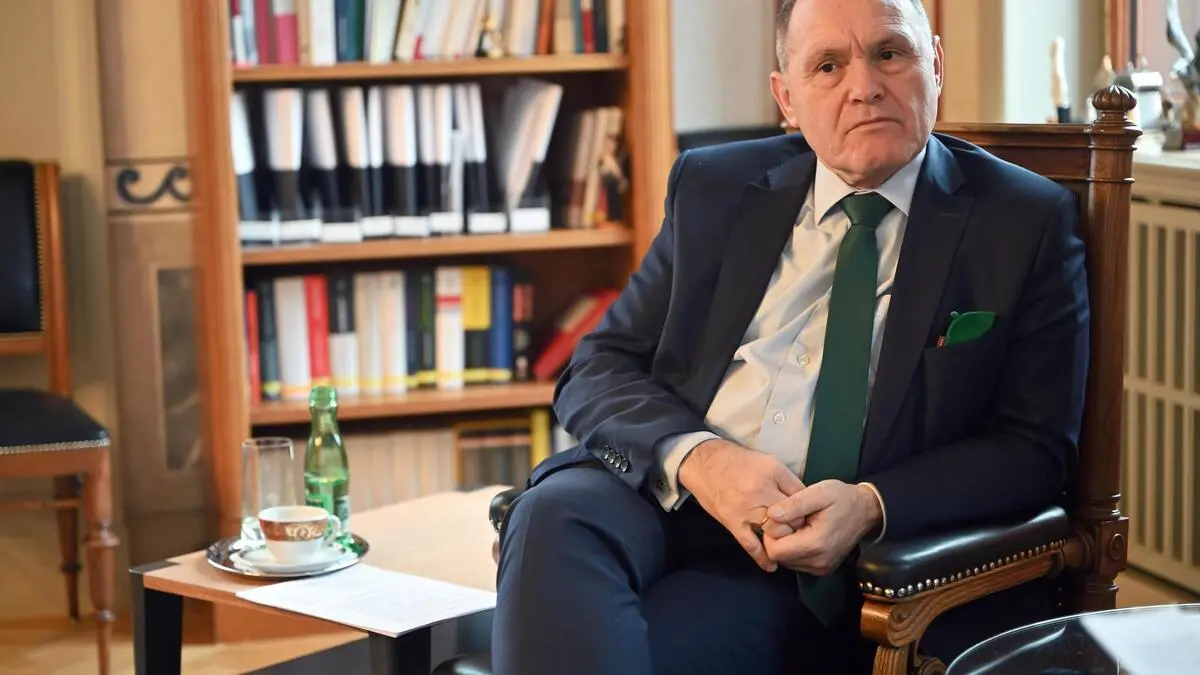
Wolfgang Sobotka, President of the ÖVP Academy Press / Clemens Fabry
The ÖVP party academy presented its concept for the fight against “political Islam” on Wednesday. “We are not concerned at all with the Muslim religion, it is deeply rooted in us,” emphasized the President of the Tivoli Campus, Wolfgang Sobotka. The paper, which was created under the leadership of terror expert Nicolas Stockhammer, calls for the development of a national strategy and calls for the Islamic Religious Community (IGGÖ) to be held more accountable.
The former National Council President emphasized at the beginning that two things are essential in the fight against “political Islam”: the confrontation with anti-Semitism – “because our Jews are currently being challenged primarily by representatives of political Islam” – and the strong LGBTIQ+ hostility that Sobotka attributes to radicalized Muslims. However, the term “Islamophobia,” which he called “a fighting term to make discourse impossible,” should be rejected. In the paper, Stockhammer speaks of a “woke Islamism”: Islamist actors would “wield the Islamophobia club as a blockade of discourse under the seal of a post-colonialist narrative”.
Especially as a result of the terrorist attack Hamas There was an increase in anti-Semitic and Islamist incidents in Israel on October 7, 2023. Sobotka also expects further demonstrations and incidents in connection with the song contest in ten days.
Several researchers have been working on the “policy paper” since the fall, but their names are not being mentioned – for their safety, as Sobotka emphasized. Stockhammer assured: “There were also Muslim researchers there.”
In 30 pages, Stockhammer speaks of a “hybrid threat”, namely “hard power Islamism” and “soft power Islamism”. The first group includes violent people with the aim of eliminating the rule of law – violently if necessary. The second tries to bring an “Islamist agenda into liberal societies” through legal and political measures. This includes the Muslim Brotherhood, against which Stockhammer is calling for stronger action.
In addition to a national strategy to “contain Islamism” analogous to the existing strategy against anti-Semitism, the paper proposes the establishment of a “non-partisan multi-stakeholder expert committee” with representatives from, among others, the Office for the Protection of the Constitution, the Office of Cultural Affairs and institutions such as the ÖIF or the Documentation Center for Political Islam. The paper also mentions suggestions that have already been implemented, such as regularly carrying out a risk analysis.
According to the ÖVP Academy paper, residence and immigration law should be evaluated and the expansion of the powers of the intelligence services should be examined again. Last year, the federal government agreed to monitor messenger services for high-risk individuals. In addition, the implementation of “specialized courts, judges, experts and public prosecutors” should be examined.
Among numerous other measures listed – not all of them new – there is also the “reminder of the responsibility of the IGGÖ” as an umbrella or supporting organization. We should cooperate with social media platforms, for example to ensure that radical content is deleted more quickly.
When asked about the prison as a place of radicalization, Stockhammer was not enthusiastic about the ÖVP’s move to lower the criminal responsibility limit. “It happens again and again that prisoners are grouped together because of membership in a terrorist organization,” he criticized a well-known problem. Organizations like DERAD or Neustart do good work, but as is often the case, there is a lack of money.
One of the most important points is prevention, on the one hand in schools and on the other hand on the Internet. “Counter-influencers”, such as Muslims who refute the radical theses of relevant online preachers, play an important role here. (APA)