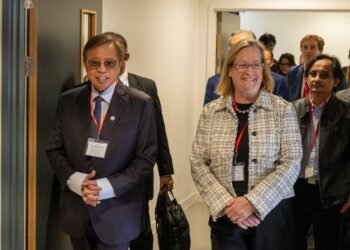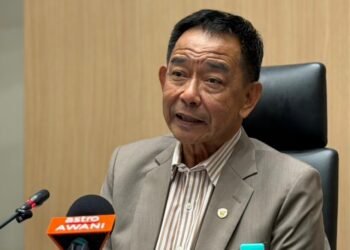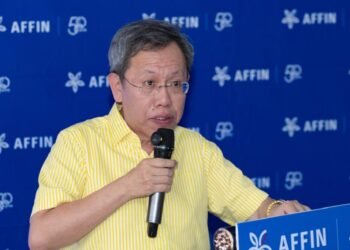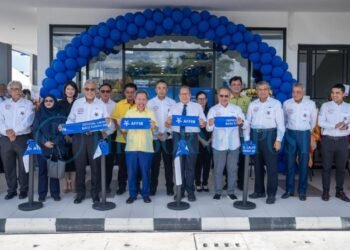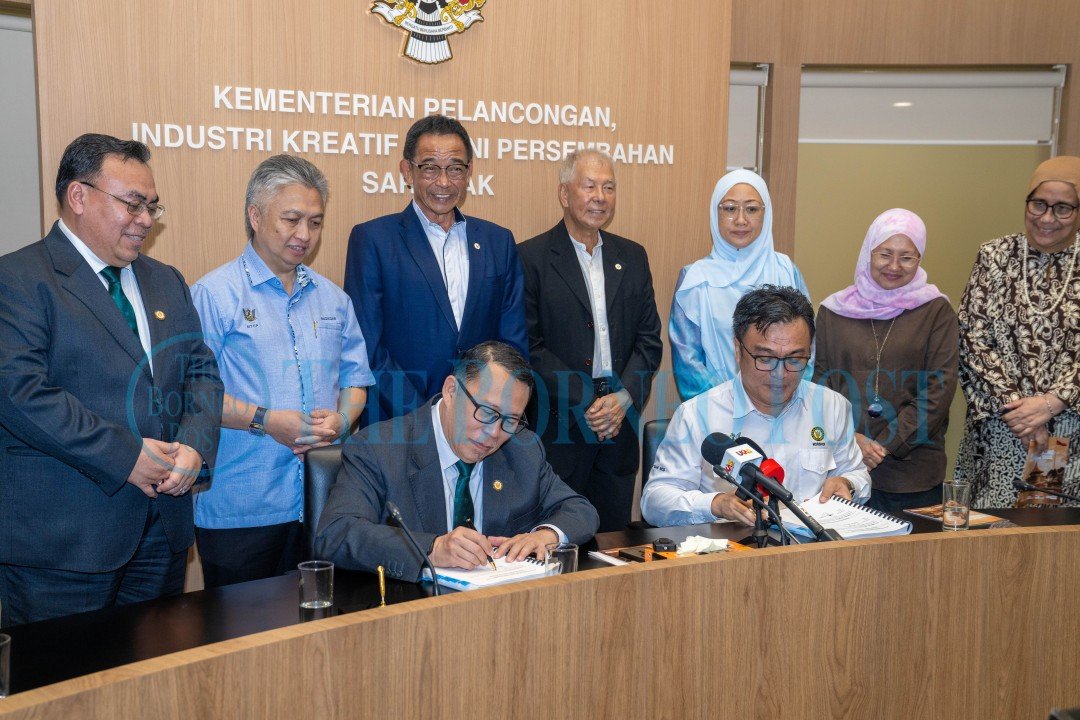

(Seated, from left) Ramzi and Morshidi signing the handover documents witnessed by (back, from left) Hilmy, Snowdan, Abdul Karim, Ting and Sabariah. – Photo by Chimon Upon
KUCHING (May 6): The Old Kuching Smart Heritage (OKSHE) initiative has been transferred from the Kuching North City Commission (DBKU) to the Ministry of Tourism, Creative Industry and Performing Arts, in a move aimed at strengthening its development as a smart heritage tourism project.
OKSHE, formerly known as Old Kuching Heritage (OKH), is one of the 47 strategic initiatives under the Sarawak Digital Economy Strategy 2018–2022, aimed at integrating heritage preservation with smart technology and sustainable urban development.
The handing over of duties was witnessed by State Tourism, Creative Industry and Performing Arts Minister Dato Sri Abdul Karim Rahman Hamzah and his deputies Datuk Snowdan Lawan and Datuk Sebastian Ting Chiew Yew at the ministry’s office in the MASJA2 Complex here on Tuesday.
Permanent secretary to the ministry Morshidi Fredrick represented the ministry, while DBKU was represented by its director Ramzi Abdullah.
Also present as witnesses were DBKU Mayor Dato Hilmy Othman and OKSHE adviser Datu Sabariah Putit.
In his welcoming speech, Hilmy said Old Kuching Heritage (OKH), as it was known then, continues to be strengthened as a key driver in heritage preservation based on smart technology and sustainable urban development in Sarawak.
“In February 2019, the initiative was rebranded as Old Kuching Smart Heritage (OKSHE) in line with the Sarawak Digital Economy Agenda and the state’s socio-economic development.
“Subsequently, on May 6 2019, the role of Chairman of the OKSHE Committee was handed over to the Deputy State Secretary (Performance Transformation and Service Delivery) to further strengthen governance and the implementation of the initiative.
“Since 2023, OKSHE has been placed under the supervision of the DBKU following the transfer of its functions and operations, which took effect on March 1 2023.
“During this period, DBKU enhanced the implementation of OKSHE through a smart technology-driven heritage preservation approach and sustainable urban development,” he said.
He added that OKSHE is an initiative under the Sarawak Digital Economy Framework 2018 to 2022 aimed at strengthening the state’s tourism sector by leveraging technology to preserve, promote and enrich the historical and cultural heritage of the Old Kuching urban area.
“This initiative aspires to transform Old Kuching into a leading Smart Heritage City, while driving the economic growth of the local community and enhancing the quality of life of the people.”
Hilmi said various programmes had been implemented under four components — Kampung Heritage, Riverfront Heritage, Business Heritage and Heritage Trail — including the E-Penambang Project, Gema Warisan Tradisi Programme, Kuching Heritage Lights and Floral Festival, OKSHE Festival, Heritage Workshops, and the Urban Art Mural Project at Lot 42 and 59 Dock Lane.
He also said DBKU had continued strengthening the initiative since 2023.
“Since 2023, DBKU has implemented various OKSHE projects. Among the initiatives undertaken to strengthen the preservation of the city’s identity is the implementation of the Old Kuching Heritage Trail Signage, which includes the installation of three directional signboards and 25 historical heritage building signboards,” he pointed out.
He added that this effort not only improves navigational clarity for visitors, but also enriches the historical exploration experience through the delivery of structured, modern information rooted in local heritage values.”
DBKU has also carried out kampung beautification efforts under the Green Kampung Heritage initiative through signage installations in Kampung Boyan, Kampung Sourabaya, Kampung Gersik and Kampung Bintangor Kecil.
“DBKU expresses its highest appreciation to all parties who have contributed to the success of OKSHE throughout the period under its administration, and hopes that close cooperation with the ministry will continue to be strengthened in elevating Kuching as an internationally recognised smart heritage tourism destination,” he said.
Abdul Karim, meanwhile, said the programme will be reactivated to ensure heritage preservation remains relevant alongside development.
The transfer, he said, would enable the development of high-impact initiatives.
“The transfer of OKSHE to the ministry is expected to open opportunities for the development of high-impact programmes, including interactive digital content, more immersive visitor experiences and active local community engagement,” he said.
He added that a collaborative approach between the government, industry and community would continue to be the key driver in ensuring the sustainability and success of this initiative.
He also hoped OKSHE would strengthen Kuching’s heritage tourism identity.
“The implementation of this project is believed to generate long-term spillover benefits, including stimulating local economic growth through increased tourism activities and community businesses, while strengthening the identity and sense of belonging among the community towards its heritage values, ensuring that the historical treasures of Kuching city continue to be preserved in a continuous, sustainable and well-planned manner, so that they remain relevant and become a valuable legacy for future generations,” he said.
During a later press conference, Abdul Karim said the ministry would further develop OKSHE.
“The tourism sector in the last 10 years has been thriving despite occasional challenges like the Covid-19 pandemic.
“Of late, the sector has raked in RM1 billion per month in receipts but the turnover went directly to hotel and transportation industries among the players,” he said.
He advised stakeholders to innovate tourism offerings by not offering the same products or items over and over again but to come up with new packages and ideas.
He also urged the Sarawak Museum to display more artefacts.
“This call would also apply to the Sarawak Museum since only 20 per cent of items were on display while another 80 per cent of them were in the store rooms,” he added.
He further suggested expanding heritage tourism zones.
He also advised the OKSHE committee and the permanent secretary to the ministry to look into zones and buildings other than the OKSHE to be restored and/or developed further into tourism packages.
He said legislative support was also needed.
“They also need to look into proper legislation for empowerment purposes otherwise it would be difficult for all to move forward in the near future,” Abdul Karim said, citing India Street, Masjid India precinct, and Kuching Open Air Market as areas with potential for restoration.