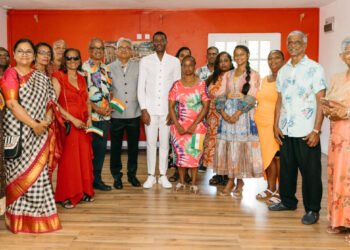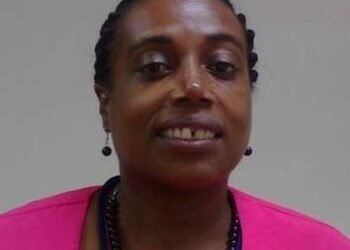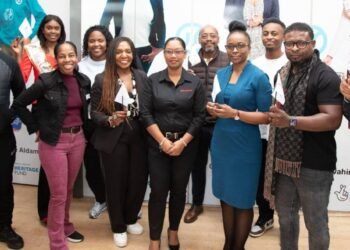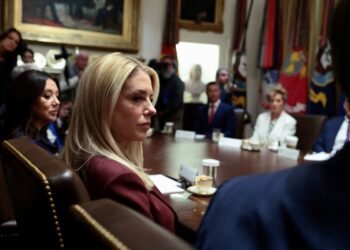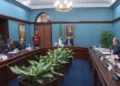
At the invitation of pavilion curator Krista Thompson, PhD, the Grenada delegation visited The Bahamas pavilion on Monday, 4 May to show regional solidarity and view In Another Man’s Yard, featuring works by John Beadle (1964-2024), Lavar Munroe and the Spirit of (Posthumous Collaboration).
After a 13-year gap, Thompson said this year’s pavilion is part of an effort to make the country’s appearance at La Biennale repeatable and sustainable. In 2015, funding to support Beadle at the pavilion disappeared in 2015, however, after he died a year and a half ago, a group provided this platform for him.
Of the pavilion, Thompson said, “This is a great opportunity to show off 2 artists at the top of their game and who also speak to the visual culture of The Bahamas.”
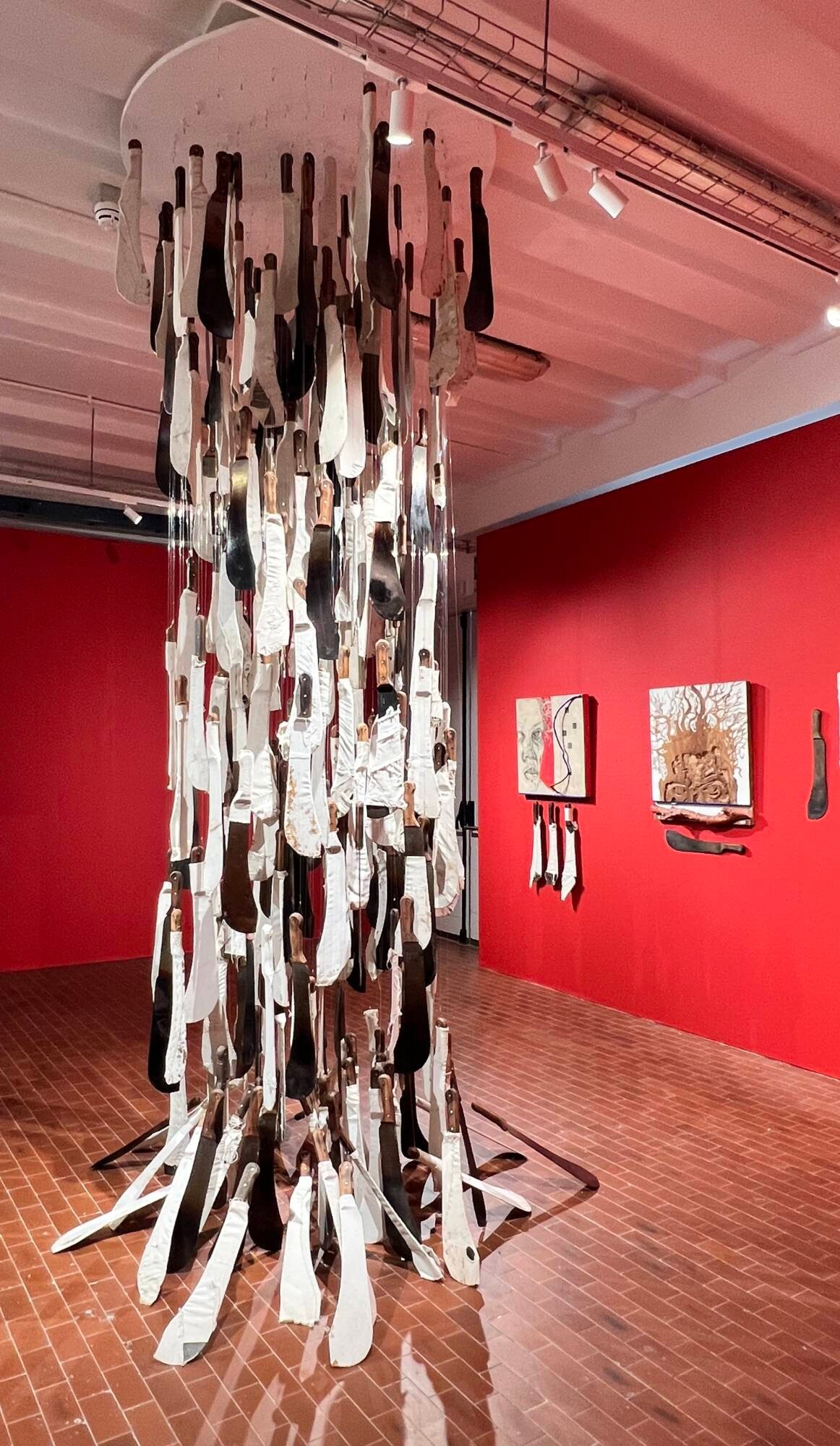
Beadle and Munroe background in Junkanoo culture and the pavilion works referencing this tradition, cast “a different light and a history of collaboration intrinsic to that form, and of collaboration in contemporary art.” Installations transform cardboard, newspaper and sails from abandoned Haitian sloops — to reframe and represent Junkanoo, the national cultural festival of The Bahamas, which was inscribed in 2023 on the UNESCO Representative List of the Intangible Cultural Heritage of Humanity.
Thompson said the pavilion highlights 2 Bahamian artists who represent the best of what is going on in its very robust artistic community and serves as a commemoration of John Beadle, with the people he worked with and mentored. She said this is “a love letter, a grieving, a celebration of John and the driving force and energy of the pavilion, honouring one of our own.”
The Bahamas pavilion is presented under the aegis of the Ministry of Youth, Sports and Culture. Thompson is hopeful this exhibition will travel and be shown within the Bahamian context, and notes that while the language may be familiar to Bahamian students, they may also see a disconnect between Junkanoo as artistic and heritage. For regional students, Thompson suggested they “look for the visual traditions and languages intrinsic to your environment that you can draw on as a source to think more broadly and creatively about your artistic vision and expression,” and discover what other things in society can inform how you want to think of your individual visual language as you develop it.”
For Grenadian students, similar sources of creative expression include the ShortKnee, Moko Jumbie, and Carriacou’s Shakespeare Mas, which was shown at La Biennale Arte 2022, and inscribed on the UNESCO Representative List of the Intangible Cultural Heritage of Humanity in 2024.
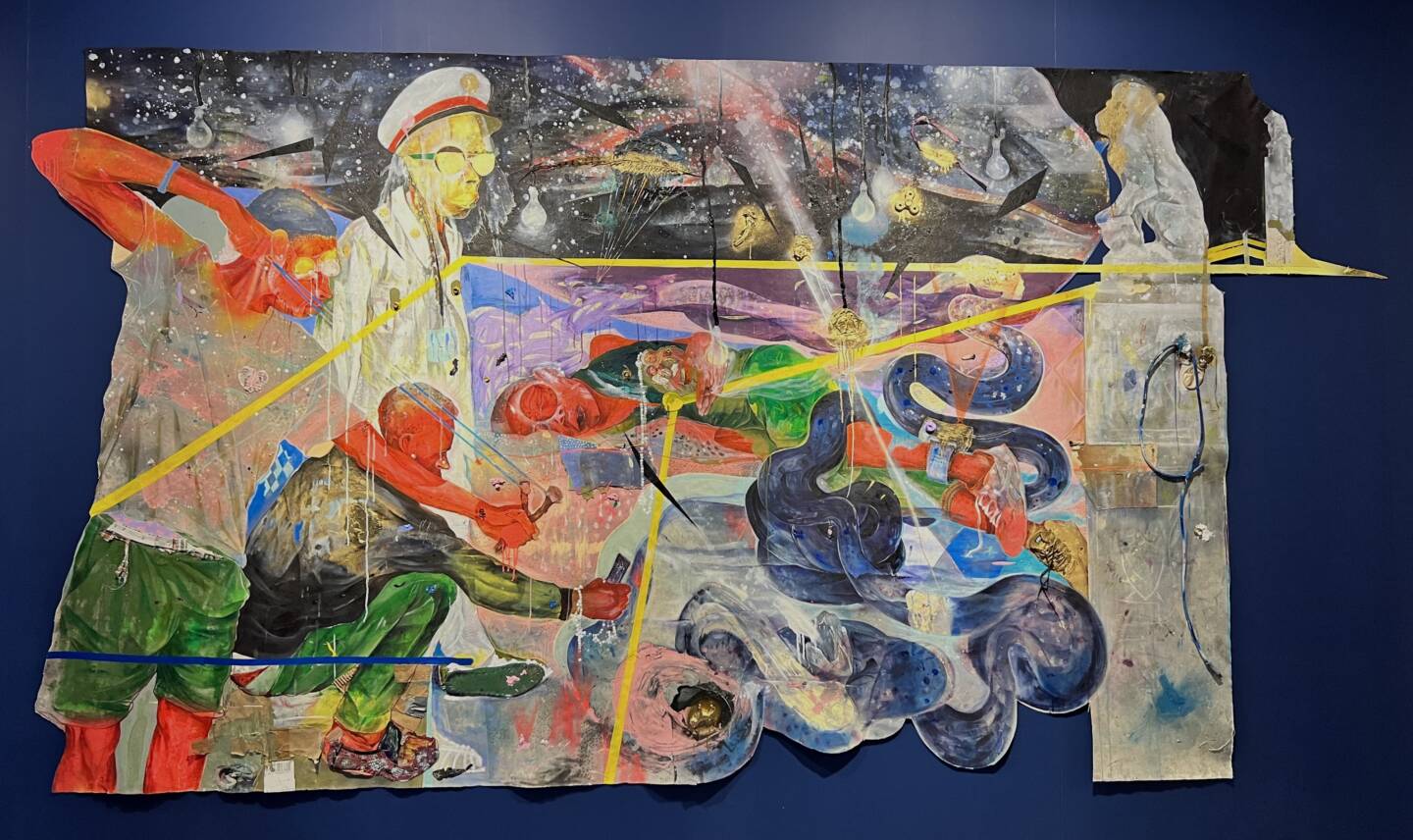
The artworks comprise common materials found in the Caribbean space and show the power of transforming unwanted, discarded, or undervalued materials to bring different perspectives. The label on Monroe’s WWJD, 2020, reads like a shopping list: acrylic and spray paint, sneakers, balloons, staples, extension cord, cardboard, boxer shorts, fabric, blunts, toys and collage on cut canvas. Beadle’s Inverted Tree — Man for Hire 2003, and In Another Man’s Yard, 2006, both repurpose machetes, common agricultural tools, as artistic devices.
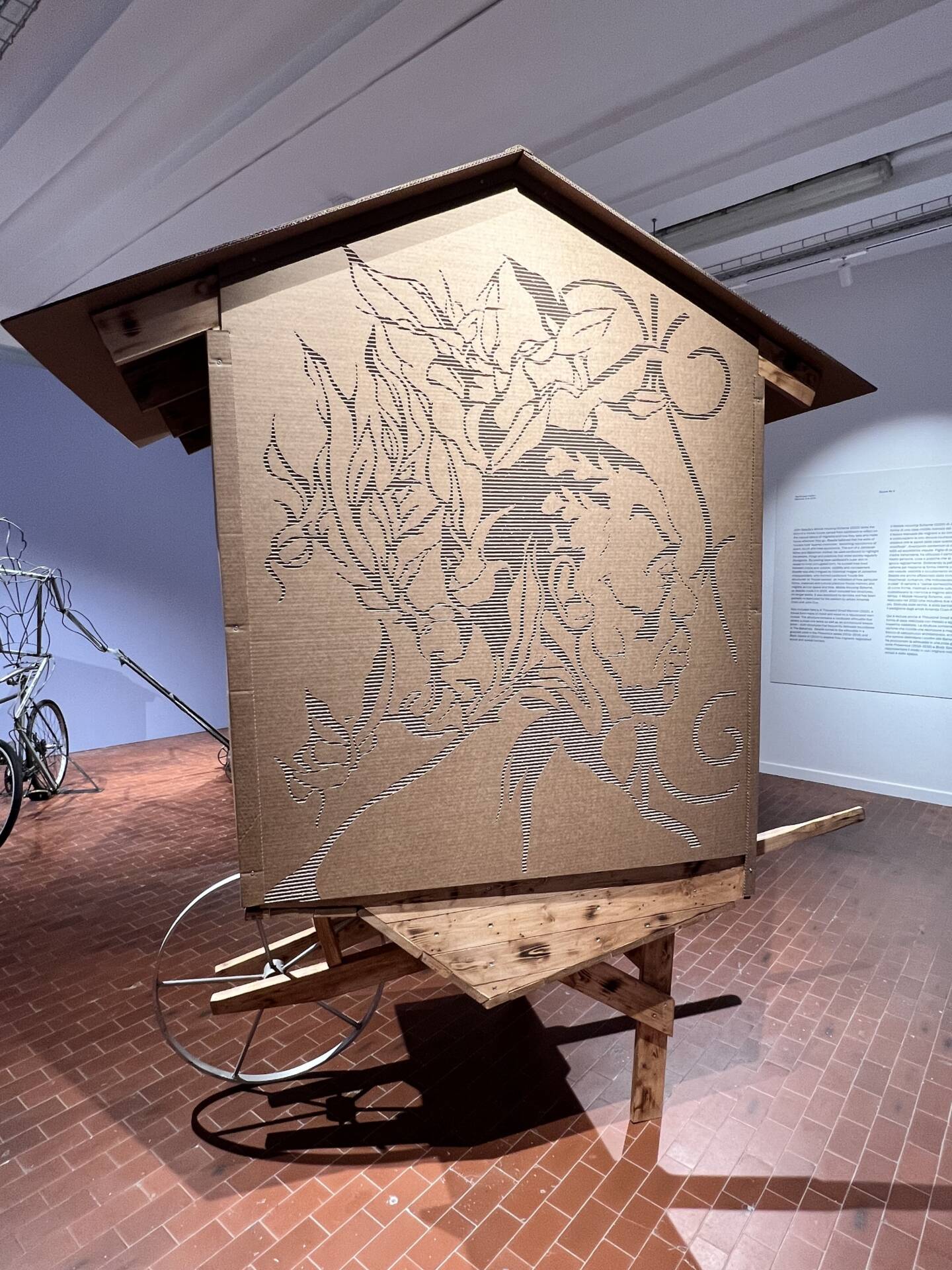
Beadle’s Live Load, 2020, made with cardboard, salvaged wood and rope, positions a 7-foot rudder of a boat as the fulcrum of trade and migration. His Mobile Housing Scheme (2020), re-fabricated for the pavilion by artists Amanda Crain and John Cox, as the original was destroyed by termites, is a house carved from cardboard set on a wheelbarrow, reminding one of similar situations once seen in Grenada, of houses moved and relocated as need arose, on the back of trucks.
In congratulating Thompson and The Bahamas pavilion team, Grenada pavilion commissioner Susan Mains stated, “The Grenada delegation wholeheartedly supports the efforts of The Bahamas pavilion. Showing up as a region only gives us strength.”
Grenada Pavilion