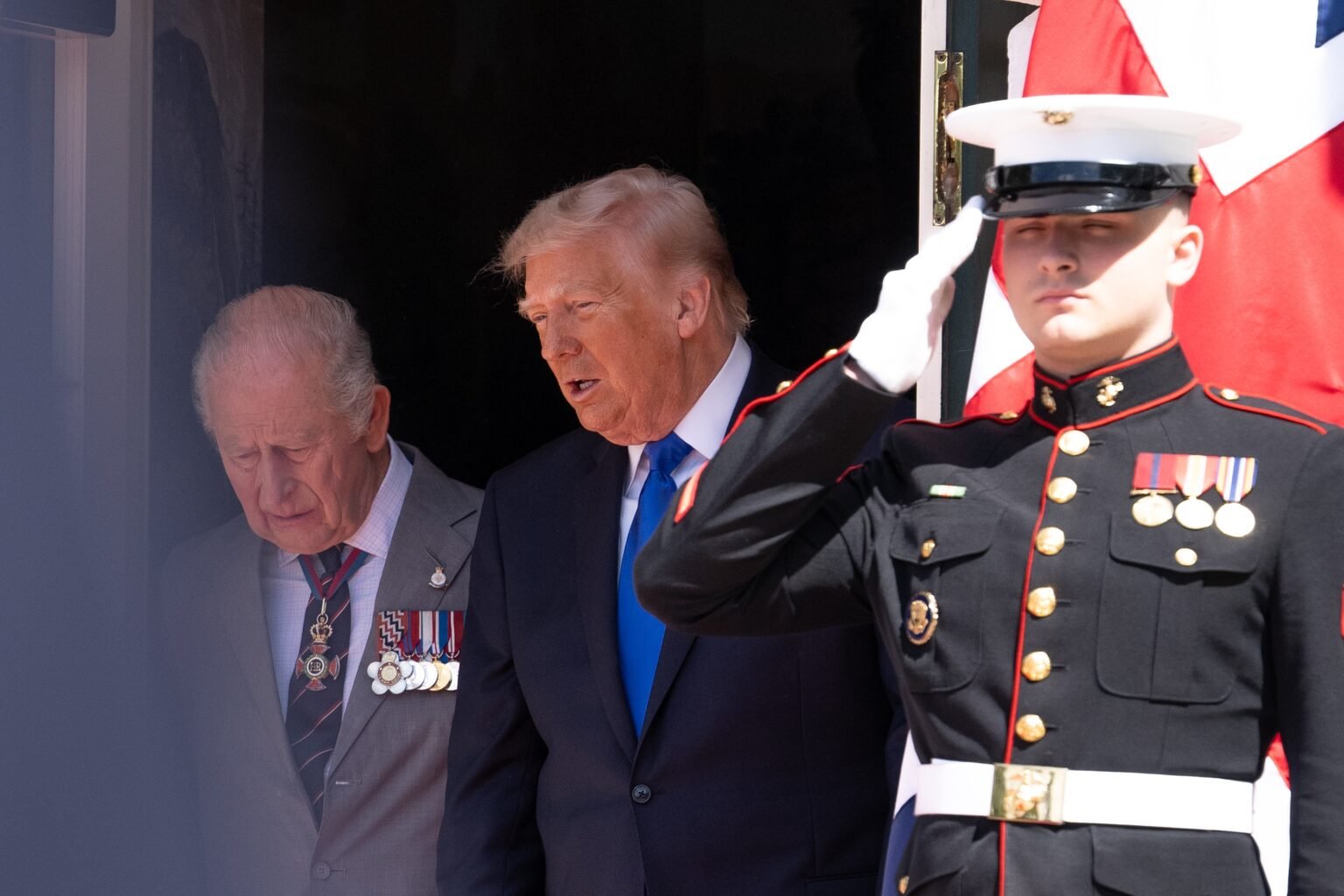
Occasion: The visit of King Charles III to the USA and his meeting with the US President Donald Trump
- Military cooperation between the United States and Great Britain is not disappearing, but it is clearly transforming. The relationship moves from automatic conformity to more intense negotiations and occasional conflicts. A visit by King Charles III may help maintain the diplomatic heat, but the substantive differences will depend on political decisions in Washington and London. In an era of global instability, the “special relationship” remains important, but it is clearly no longer unconditional
Military and security cooperation between the United States and the United Kingdom has been considered a pillar of the Western security architecture for decades. From joint operations in Iraq and Afghanistan to intelligence cooperation under the Five Eyes, the two countries often act as a single bloc.
But the latest tensions around the Strait of Hormuz signal that the “special relations” are not immune to geopolitical clashes and different strategies.
The Strait of Hormuz was a test of the alliance, but who failed the test?
Following the escalation of conflicts in the Middle East, Washington openly sought support for a more aggressive approach in securing the key energy corridor. The American position boils down to a demonstration of force and guaranteeing freedom of navigation even at the cost of new military risks.
On the other hand, London (together with Paris) advocates a more moderate approach, multinational patrols and de-escalation after the end of the conflict.
American critics, who called these initiatives literally – “stupid”, show a deep difference in strategic culture. Namely, the United States insists on quick, decisive military action, and Great Britain is trying to balance between military force and diplomatic maneuvering.
This clash is not only tactical but also conceptual, and that in the field of how to manage crises in a changed multipolar world.
The role of Donald Trump in the personalization of foreign policy
Donald Trump’s policy is again putting the transatlantic relationship under pressure. His rhetoric towards allies, including Britain, is often direct and confrontational.
– Unlike previous administrations, which insisted on coordination and consensus, Trump promotes bilateral agreements instead of multilateralism, financial and military “fair distribution” and quick decisions without lengthy diplomatic processes. In that context, the British strategy looks like an attempt to preserve the traditional system of alliances, as they have historically long imposed the principle of hegemony and imperialism, in accordance with the historical development of civilization and circumstances, that is, social formations and periods, say our interlocutors, university history professors.
Structural reasons for the divergences
The current disagreements are not an isolated incident. According to our interlocutors, disagreements between Washington and London are the result of deeper processes.
– First of all, the differences are crucial and, in their essence, ideological. Trumpism as an ideology, if you can call it that, is essentially the opposite of London’s liberal policies, which were more compatible with Washington when the US administration was from the Democrats, not the Republicans. Furthermore, the differences are also due to the changed global balance of power, attempts at increased autonomy of European allies, internal political pressures in both countries and, of course, different assessments of risk and escalation. Great Britain, especially after Brexit, is trying to define a new global role, now closer to Europe than to the USA – say our interlocutors, adding that London is reactivating again with various mechanisms to show its supremacy, both political and economic-financial and military and educational, especially towards the Old Continent, and also in the Balkans.
Implications for NATO and the wider West
The tensions between the two key powers, the United States and the United Kingdom, also have implications for NATO. If London and Washington fail to align their strategies, it could lead to the fragmentation of the “Western joint crisis response”, and then to the strengthening of regional initiatives and new pacts, parallel to NATO, such as the JEF (Joint Experimental Force), but also reduced predictability in military operations.
Can the British monarchy be a diplomatic bridge?
The visit of Charles III and his meeting with Trump raises an interesting question.
Namely, can the power of the British monarchy help stabilize relations?
Although the king does not have a direct political role, his influence is reflected in the so-called “soft diplomacy” and trust building, then in symbolic confirmation of the historical partnership, as well as in opening communication channels in sensitive moments.
The meeting can be interpreted as an attempt by London to “soften” tensions and preserve the strategic dialogue with Washington.
Whether this communication channel will succeed remains to be seen in the coming period, and not only for possible “future agreements on the external plan” but also internally, in America, where Trump recently accused the judges of the Supreme Court of unprincipledness and connection with royalist structures from Britain with an imperialist background, connected and joined in a “conspiracy” with the aim of its overthrow.
Whether Trump will also soften in that field after the visit of King Charles III remains in the future to register his moves and draw a conclusion. RS