
In one of the remarkable paradoxes in today’s world, a country may be subjected to a large-scale attack without its citizens hearing a single explosion, and without a single tank moving across its borders. It could start with a phishing email, a doctored video, or a sudden glitch in a critical network. This type of conflict is what is known today as the digital Cold War.
In this type of conflict, wars are not formally declared, nor are clear lines of contact drawn, yet operations continue on a daily basis. Attacks CyberHacking operations and disinformation campaigns have become routine tools used by countries to achieve strategic gains without sliding into a direct military confrontation. The result is a state of perpetual engagement, conducted in the shadows, but with tangible effects on the economy, politics, and security.
This scene is not limited to theoretical analysis, but is confirmed by documented and repeated incidents in international reality. Perhaps what is happening between the United States and China is a clear example of this type of conflict, as security reports in recent years revealed cyber attacks targeting government institutions, companies, and sensitive infrastructure in the United States, and were attributed to parties linked to China, exploiting vulnerabilities in widely used software.
On the other hand, China accuses the United States of carrying out electronic espionage operations on its networks, including… Breakthroughs Targeting strategic data and vital infrastructure. However, this example does not represent an isolated case, but rather falls within a wide series of similar incidents that affected multiple countries, and included attacks on energy networks, hacks into government systems, and digital disinformation campaigns linked to political crises, which reflects the breadth of this conflict and its recurrence across more than one arena.
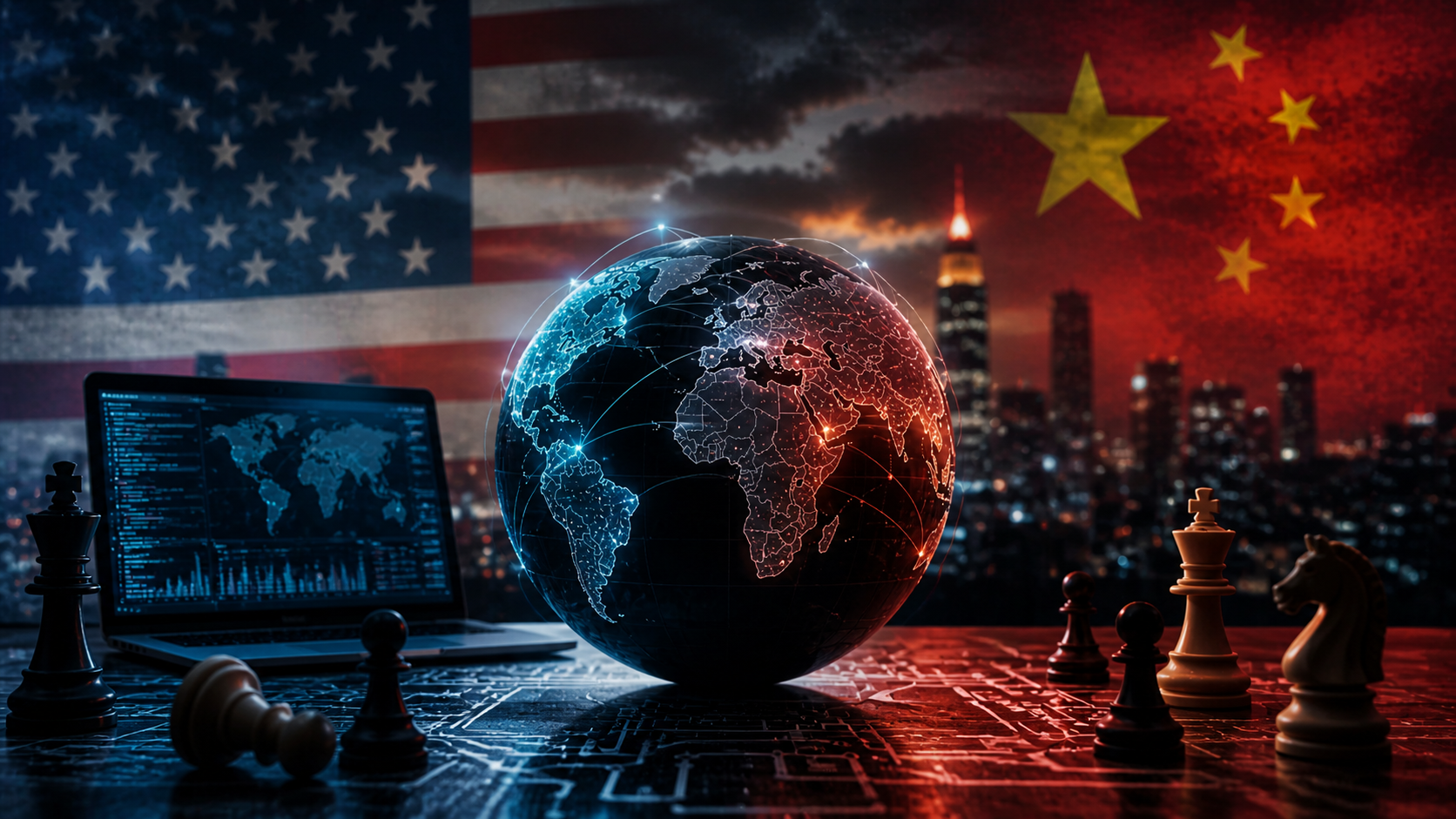
An emoji designed with artificial intelligence
What is noteworthy is that the nature of the goals themselves has changed. The focus is no longer just on infrastructure or government systems, but has extended to include the cognitive domain.
Influencing public opinion, undermining confidence in institutions, and manipulating information have become central elements in this conflict. With the development of technologies such as deepfakes, it has become possible to produce content that is difficult to distinguish from the truth, increasing the complexity of the scene and deepening the uncertainty.
He plays artificial intelligence It plays a pivotal role in this equation, accelerating the pace of the conflict and increasing its intensity. It enables more precise and adaptable attacks, while at the same time enhancing defense capabilities through data analysis and threat prediction.
This shifting balance between attack and defense makes the digital space a highly fluid environment in which it is difficult to establish stable rules of engagement.
In parallel, the world is moving towards a kind of digital division, with each group of countries seeking to build its own technological system, with its own standards and rules. This trend does not only reflect a technical competition, but also carries within it deep political and economic dimensions, and reinforces the logic of the blocs, but in a space different from that which the world knew during the traditional Cold War.
What increases the sensitivity of this conflict is the difficulty of definitively determining responsibility. Attacks are often carried out through complex layers of camouflage, making responding to them risky. In the absence of clear international rules, the possibility of miscalculation exists, which may push towards uncalculated escalation.
The digital Cold War does not appear to be just a metaphor, as much as it reflects a reality that is gradually taking shape in international relations. It is a pattern of conflict that goes beyond traditional fronts, operates silently, but extends in every direction, and continues without a clear time limit.