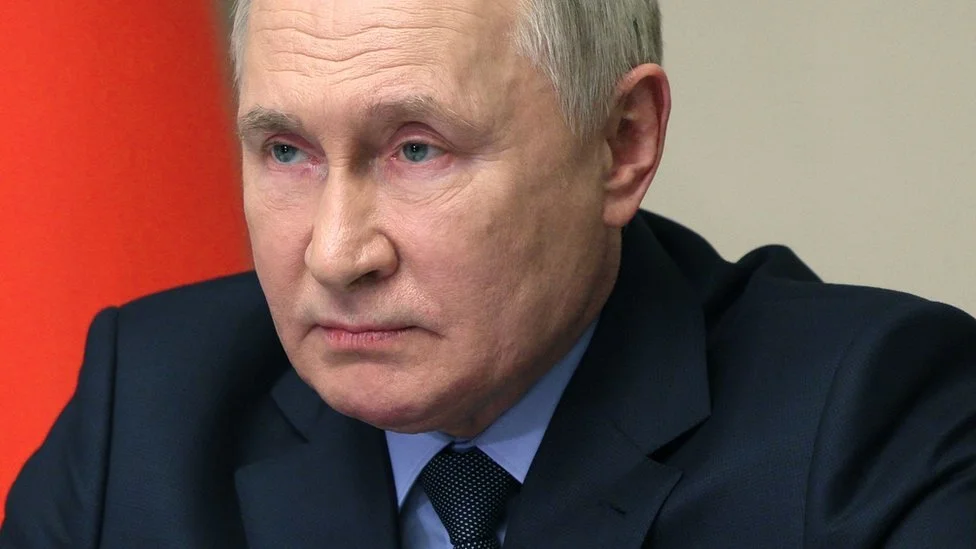
Tatjana Stanovaya, a senior fellow at the Carnegie Center for Russia and Eurasia and founder of the political analysis company R. Politik, has published a new analysis of the situation within the Russian leadership, pointing to the changes and pressures affecting the system. According to her, there is a shift within Russia, because the system is facing accumulated challenges. Among them are growing internal tensions, relations between elites, rumors of a possible coup d’état, but also increasingly pronounced control resulting from the fear of losing it.
All this, as he states, is taking place at a time when the country is exposed to Ukrainian attacks and assassinations. He points out that these processes are taking place in the context of worsening international circumstances, including the situation in the Middle East, relations around Iran, the situation in the United States of America and the increasingly pronounced militarization of Europe.
Stanovaya states that there could be a change, because more and more actors within Russia are facing a new reality in which the existing model no longer suits their interests. He warns that, without changes, the survival of certain actors could be called into question. The analysis also states that doubts are growing among the elites about the existence of a clear plan of President Vladimir Putin, although it was previously believed that he controls all key processes. According to her, it is now being questioned whether such a plan exists and what consequences it could have.
He also points to a change in Moscow’s international position, emphasizing that Russia, after a long period of observing the moves of other actors, is now the subject of a similar approach. Stanovaja states that there is a growing belief within the system that the current management model does not produce results and causes damage, and that tolerance towards the current situation is decreasing.
She adds that different actors interpret these changes in different ways, while, according to her assessment, no significant reactions are seen at the top of the state. Meanwhile, Russia’s economy is dealing with the consequences of an attack on its energy infrastructure. Ukraine’s drone strikes have damaged a number of refineries, leading to reduced exports and fuel supply problems on the domestic market.
Apart from the economic consequences, the changes are also visible in a symbolic sense. This year’s Victory Day parade on Red Square will be significantly reduced, without the usual columns of armored vehicles and heavy military equipment. Instead, the appearance of infantry units is planned.
Such organization of the parade is interpreted as an indicator of the state in which the Russian army is, considering the losses on the battlefield.