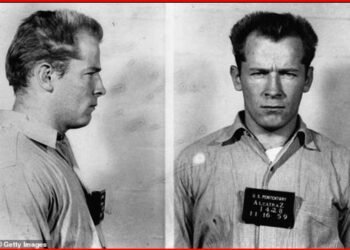
The government in Serbia and the Serbian secessionists in Bosnia-Herzegovina are fighting for war criminal Ratko Mladić to be released from prison “to die peacefully at home”. The mayor of Belgrade calls the butcher of the Balkans a “hero”. The President of Serbia is worried about the fate of Mladic. The Serbian Minister of Justice presented guarantees for his release in The Hague. The glorification of Mladic shows that the government in Serbia has not repented of the crimes committed during the wars in the Balkans.
1.
Ratko Mladic is a war criminal. When the most barbaric people of the 20th century are mentioned (such as Stalin, Hitler or Osama Bin Laden), Mladic will be on this list. He has been sentenced by the UN Tribunal in The Hague to life imprisonment for the genocide against the Bosnian population in Srebrenica, for the killing of over ten thousand people during the siege of Sarajevo, as well as for tens of thousands of other crimes in Bosnia-Herzegovina – including taking hostages of the UN peacekeeping blue helmets. The genocide against Bosniaks was the first in Europe since World War II. Ratko Mladić was the commander of the Bosnian Serb military forces in the period 1992-1995.
2.
For several days now, Ratko Mladic’s family members have been alarming the public in Serbia and in the Serb-majority part of Bosnia-Herzegovina, claiming that he is seriously ill and should be released from prison in The Hague, where he is serving his sentence. The subsequent institution of the UN Tribunal for the former Yugoslavia has so far rejected this request.
Meanwhile, for the mayor of Belgrade Aleksandar Shapiq, a member of the ruling party of the autocratic president Aleksandar Vucic, there is no doubt: “Mladic is a hero”. Even Vucic himself has spoken in favor of Mladic’s release, saying that he does not understand why someone is not allowed to spend his last days outside the cell. The Serbian Minister of Justice presented guarantees for his release in The Hague.
The Youth Initiative for Human Rights, a non-governmental organization in Serbia, has announced that it has filed a complaint with the Commissioner for the Protection of Equality in Serbia against the mayor of Belgrade, Aleksandar Shapiq, noting that he has published a photo of Ratko Mladic on social networks with the message that he is a “Serbian hero”. The publication, according to the Youth Initiative for Human Rights, constitutes hate speech and a severe form of discrimination against the Bosnian and Croat people. The initiative requires the reaction of the competent institutions and the condemnation of all groups of councilors in the Belgrade City Assembly. Like many other requests, this too will be ignored both by the mayor of Belgrade and by other institutions.
3.
The glorification of Mladic has become part of everyday life in Serbia and in the Serb-controlled republic of Bosnia-Herzegovina. He is called a hero, even a great Serbian hero; graffiti with his name (“Ratko Mladić – Hero”) appears on the facades of houses. His victims are not mentioned. Convicted war criminals are often invited to TV shows. An activist who threw eggs on a mural with Mladic’s portrait in Belgrade was sentenced to prison. Demands by human rights activists for the removal of Mladic murals in Serbia – over 300 according to independent media – are ignored by the authorities. Two Bosnian Serb students who praised Mladic were awarded study places and scholarships in Belgrade.
4.
According to the chief prosecutor of the International Residual Mechanism for Criminal Tribunals, Serge Brammertz, an atmosphere of war crimes denial has been created in Serbia. Associations of victims of the war in Bosnia protested against the possible release of Mladic and warned that this would be a “great injustice”. The Chief Prosecutor of Croatia, Ivan Turudić, announced that the release of Ratko Mladić would be a very bad message, regardless of his state of health. “I would never release him, but we know that there have been cases when people who were in a much better state of health than Ratko Mladic have been released from The Hague prison. I will not mention them by name,” Turudic told Croatian media. “I think it would be a very bad message if a man, who in fact has not even given an account for all the crimes, and I don’t even know if he has given responsibility for any crime he committed in Croatia, should be released, no matter how sick he is. I am sure that in prison he has the proper medical care”, said Turudić.