She progressed Carla Simon (b. 1986) and after Berlinale made it to Cannes. The debut of the Spanish director “Summer 1993.” it had its premiere in 2017 at the Berlin festival, as well as the runner-up “Alcarras”, which was awarded the Golden Bear there in 2022. Simonica’s third (perhaps the biggest) film “Romeria” competed for the Palme d’Or in 2025, and was also nominated for six Goyas, the Spanish Oscars.
If “Alcarras” highlighted Simón as the new hope of Spanish cinema, “Romeria” confirms that title, and even more. After three quality films, it can be said that Simón is currently the leading Spanish director. Simón conveys to the screen very personal bittersweet stories with a lot of human empathy and refined visuals (sun-bathed shots in the peach colors of summer), and as an author she is interested in family ties, that is, the motifs of childhood and growing up.
“Summer 1993” was about a little girl who, after the death of her parents, adjusts to life in the countryside with her uncle and aunt, without mom and dad. At the center of the story of the anti-capitalist “Alcarras”, premiered here at the ZFF and titled after the town where the director grew up, was the uncertain future of the family after their peach orchards are threatened to be replaced by solar panels. “Romeria” is a sequel of sorts to “Summer 1993”, and the title refers to the Spanish word for pilgrimage.
Protagonist Marina (great debutante Llúcia Garciadeservedly nominated for best new actress at the Goya Awards), who just turned 18, is like a grown-up version of six-year-old Frida. Both lost their parents due to addiction, i.e. AIDS, after all, like Simón, only the older Marina wants to find out more about the mom and dad she didn’t know, so that the director would, metaphorically, clear up the family history once and for all.
Like Simón, Marina was born in 1986, she plans to study film, but before that she has to get her grandparents’ signature for a scholarship, i.e. be recognized as the daughter of her father who did not marry her mother, so she is an illegitimate child. Marina goes on a personal pilgrimage to Vigo, a small town on the Spanish coast of the Atlantic Ocean, where her parents were born, to meet her grandparents and other relatives.
She took with her a camera and her mother’s diary written from 1983 to 1986, but she soon realizes that what she thought she knew about her parents contradicts the stories of relatives, such as Uncle Lois (Tristán Ulloa) who says that “love and drugs are not a good combination”, targeting her father and mother. Her father died later than she thought, in 1992, not 1987, while her conservative grandfather (José Ángel Egido) tried to cover up his son’s addiction to heroin and hide him from the world. As it were, he gave him up because of that and the child out of wedlock – Marina.
Also, it seems that he blames his partner, Marina’s mother, for his son’s drug addiction and death, whom she looks a lot like (“spitted”), but he also feels remorse, so he gives his grandson a huge amount of money to atone for his sins. The director explores family dynamics anew and questions whether sharing the same blood makes us part of the same family and what our parents were like when we were young.
One feels that through Marina, Simón is exorcising her own demons of the past in search of catharsis, but her subtle, sensitive direction centered around the introspection and contemplation of the main female character manages to invest the viewer and make “something very personal” universal and relatable.
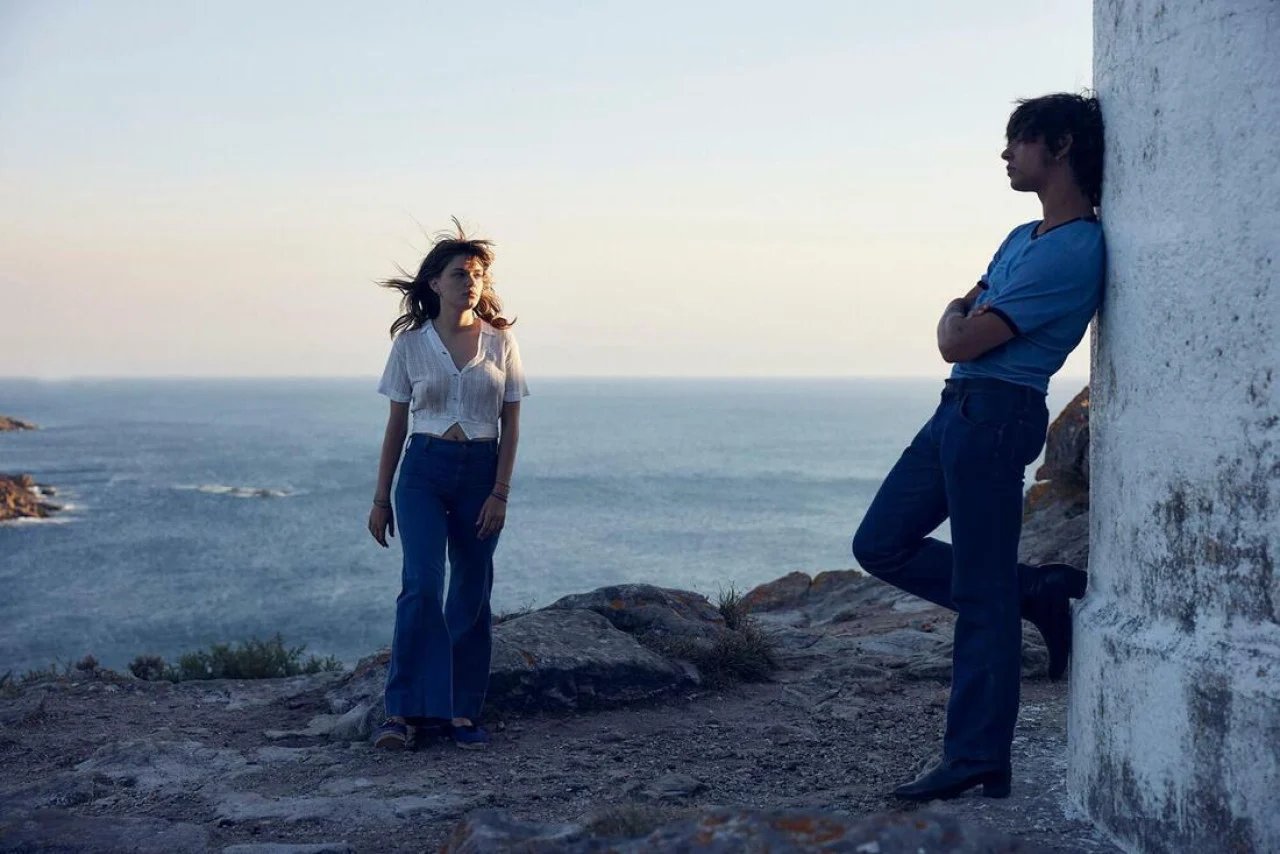
And not only that, with a meditative rhythm and mesmerizing visuals of the sea, coast and ships reminiscent of the Maltese pearl “Luzzu”, with the addition of underwater shots, “Romeria” at times transcends a family drama and becomes something more – a (meta)film about the passage of time and memory, and in the end a piece of magical realism. The camera aesthetic is excellent in evoking the early 2000s and eighties, with the cameraman doing the lion’s share of the work. Hélène Louvert (“Never, rarely, sometimes, always”, “Lost daughter”, “Chimera”; also filmed the Croatian “Murina”).
The “grainy” recreation of the eighties is particularly impressive, when the story goes back in time and follows the love and addiction of Marina’s father and mother (also played by Garcia). The film seems to break the scenes from “From Here to Eternity” and “The Blue Lagoon” in a hallucinatory way (bodies intertwined with algae), blurring the line between reality and fantasy. Maybe everything is just Marina’s imagination. **** ⅓