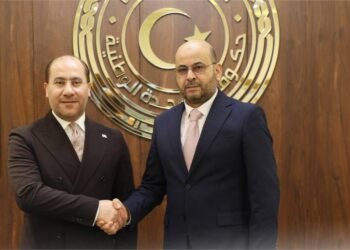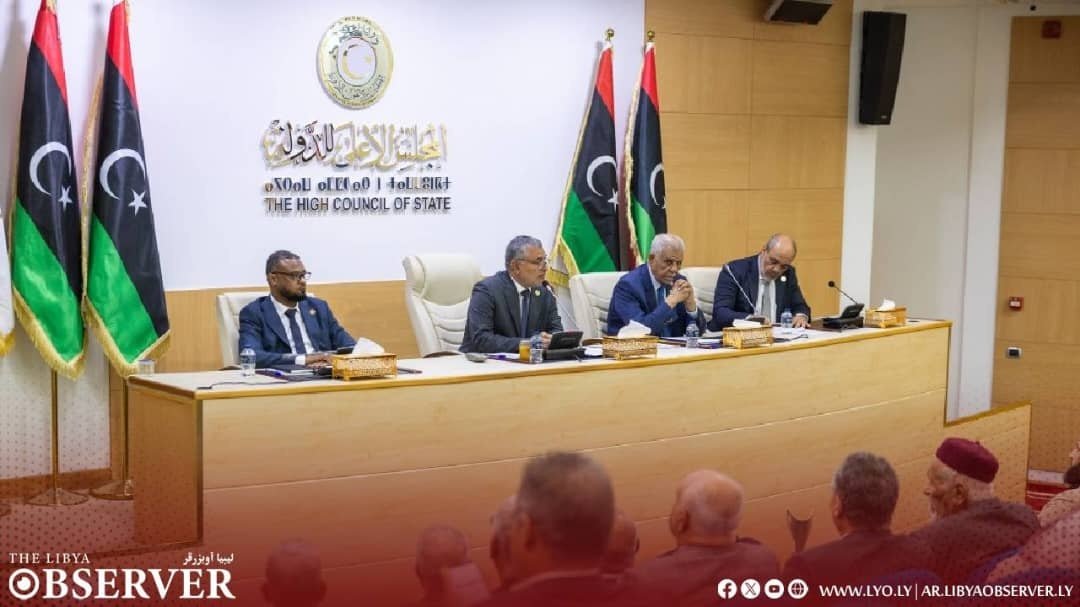
The High Council of State expressed strong dissatisfaction with what it described as “overreach” by the United Nations Support Mission in Libya (UNSMIL), accusing it of violating the legal and institutional frameworks governing the council’s work. This comes after recent meetings held in Rome, in which two council members: Ali Abdulaziz and Abduljalil Al-Shawsh; participated in an unofficial capacity, creating the impression that they were representing the council in political tracks related to Libya.
In an official statement issued on Saturday, the council stressed that the two mentioned members were neither assigned nor authorized by it in any capacity, emphasizing that no political participation or position reflects the will of its members unless it is issued through formally convened sessions with quorum and in accordance with its internal regulations. The council also cited its Decision No. (4) of 2026, which explicitly prohibits any member from participating in internal or external political arrangements without direct authorization, describing the decision as “in force and binding,” and noting that the UN mission had been formally notified of it previously.
The statement criticized what it called the mission’s “unilateral approach” in selecting individuals and entities to speak on behalf of Libyans, arguing that such practices exceed the principle of “Libyan ownership of the political solution” and ignore established references, foremost among them the Libyan Political Agreement and the roadmap adopted in Tunis and Geneva. The council warned that attempts to impose parallel tracks or form committees outside legitimate frameworks have historically only led to further delays, wasted time, and a more complicated political landscape.
It also accused the UN mission of straying from its role as a facilitator and supporter, becoming instead a party that disrupts the scene, fuels division, and undermines prospects for national consensus. It denounced the mission’s disregard for the consensus reached between committees of the High Council and the House of Representatives regarding the file of the High National Elections Commission; an agreement reached in the presence of the deputy head of the mission and signed by the heads of both councils, raising serious questions about the criteria used by the UN in dealing with national understandings.
The High Council of State reaffirmed the invalidity of any efforts to form electoral bodies or draft laws in violation of the provisions of the Libyan Political Agreement and the understandings reached in the Bouznika talks on sovereign positions. It stated that any outcomes resulting from the Rome meetings are “null and void,” calling on its members to strictly adhere to internal regulations, and urging the UN mission to review its approach, respect institutional sovereignty, and engage only through officially recognized channels in a manner that serves the aspirations of the Libyan people.