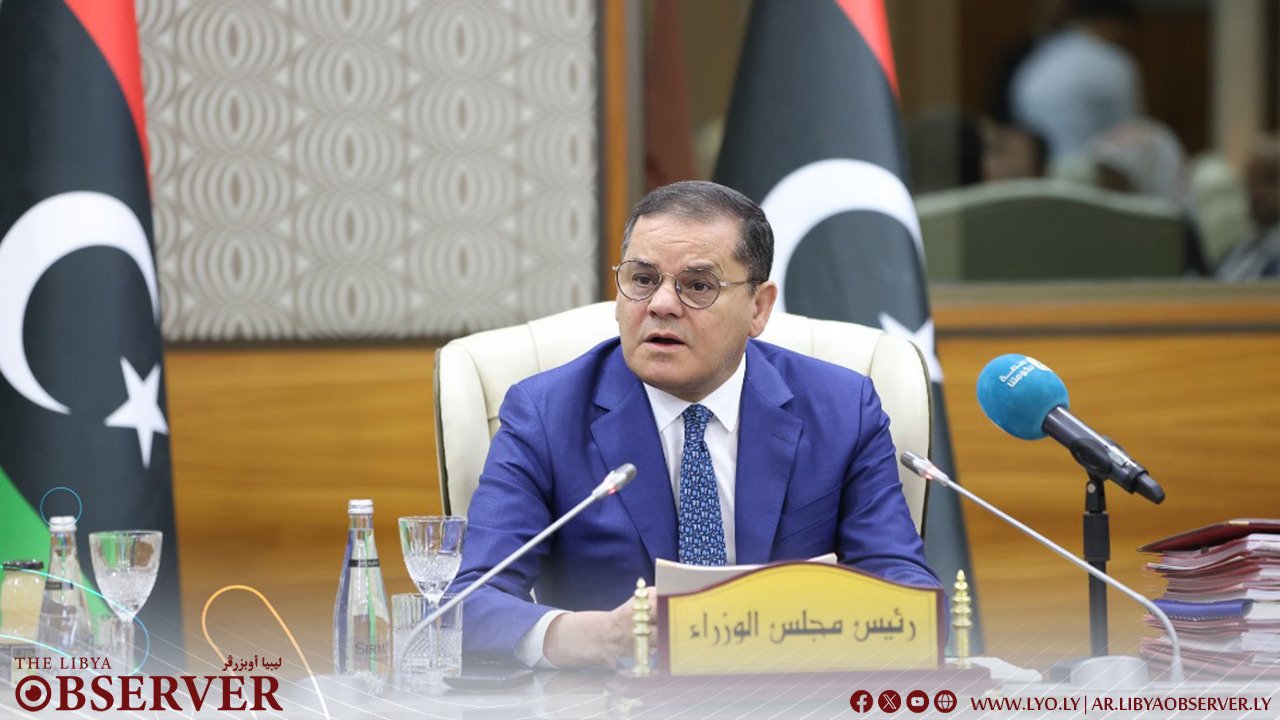
The Prime Minister of the Government of National Unity, Abdul Hamid Dbeibah, outlined the details of the unified development-oriented financial agreement reached after seven months of negotiations through the (2+2) committee, stressing that the deal establishes a new framework for managing public spending and unifying its mechanisms, thereby ending years of fragmentation.
Speaking during the second regular cabinet meeting of 2026, Dbeibah explained that the core of the agreement is based on unifying expenditure chapters within a clear financial structure. This includes a single wage bill estimated at 73.36 billion dinars, linked to structural reforms and a unified system to address duplication, in addition to an operational expenditure chapter of 10 billion dinars and a subsidy chapter amounting to 44 billion dinars.
He noted that the development chapter represents the cornerstone of the agreement, with a budget of nearly 40 billion dinars. It incorporates various forms of central spending, including sectors such as electricity, education, and essential services, with all projects to be presented in a unified schedule covering all executive bodies and funds.
The Prime Minister stressed that the agreement includes an integrated oversight system, starting with the unification of revenues and their deposit into the state treasury account at the Central Bank of Libya. He emphasized preventing parallel spending, tightening financial allocations, and obligating implementing entities to submit accurate monthly reports on progress and expenditures, alongside the formation of a joint committee to oversee implementation.
He also pointed to subjecting the National Oil Corporation’s operations to independent external audits conducted by international firms, with its allocations to be presented in the form of loan financing, in a move aimed at enhancing transparency and ensuring efficient resource management.
Dbeibah added that this approach primarily aims to improve citizens’ living standards by stabilizing prices and boosting confidence in the national economy, stressing that the success of the agreement depends on effective implementation on the ground.
Dbeibah also announced a package of service and development projects in the municipality of Qasr Al-Akhyar, including infrastructure upgrades and improvements to public facilities, in support of local stability and better service delivery, as part of a broader effort to ensure fair distribution of projects across different regions of the country.