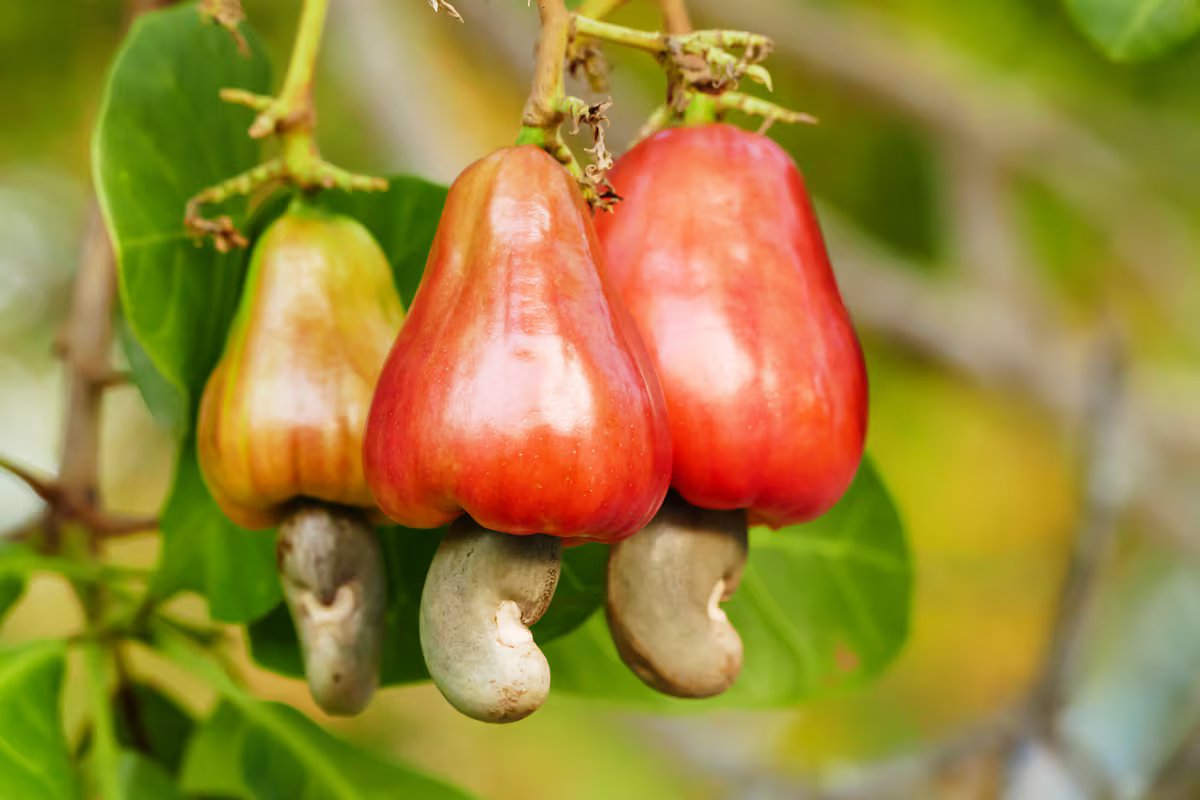
Idiap tests genetic materials in Río Hato to identify cashew plants more resistant to the fungi that have affected their production in Panama.
In the Río Hato Experimental Farmin the province of Coclé, there is no talk of the rescue of the cashew. At least, not yet. Here it is measured, compared and expected.
In plots in the sector of The Basstechnicians of the Institute of Agricultural Innovation of Panama (Idiap) They test something more than plants: they evaluate whether the cashew still has room in the Panamanian countryside. In front of them there is a problem that – according to the institution itself – has not stopped growing for almost a decade: a fungal complex that has reduced production and pushed cultivation to the margins.
The test does not occur in ideal conditions, but where it has to happen: under heat, with intermittent drought and in soils that do not forgive mistakes. There is no complete control, and that is precisely why it matters. Whatever resists here has some chance outside.
The farm does not revolve only around cashews. Basic rice seeds are also multiplied and fodder is produced, according to the Idiap. This combination is not coincidental: it speaks of a system under pressure, where crops no longer compete only for space, but to survive in an increasingly demanding environment.

Cashew, for years, was not a problem. It was that tree that was always there: on fences, in patios and on small farms. Panama once had more than 455 thousand trees. It didn’t require much attention. And, perhaps, that’s where the problem started.
Starting in 2015, mushrooms were no longer background noise. They became visible, more aggressive. Production began to fall; not all at once, but enough to change decisions. In many farms, the cashew tree stopped being cared for. And what is not taken care of is lost.
What is being attempted today in Río Hato is something else: not to rescue weakened trees, but—according to Idiap’s lines of research—to identify which ones have the means to sustain themselves. The bet is on the genetic material: plants that tolerate the disease, but also the stress that activates it.
It is not a quick solution. It can’t be. Research takes time, and the field doesn’t always wait. That is one of the underlying tensions: the urgency of the producer versus the pace of science.

In parallel, Idiap seeks to better understand the problem. It identifies pathogens, studies associated insects and maintains cooperation with Brazil, where cashew remains competitive. But even within the technical sector itself there is a constant warning: genetics helps, but it is not a substitute for management.
Pruning, nutrition, water. Basic practices. Known. Half applied.
The cashew tree did not collapse overnight. He was weakening. And, in that process, lack of consistency played its part.
Therefore, what happens in Río Hato is not a solution, but an attempt: a starting point.
There, between plots and data, something more than a crop is at stake. The question is whether the cashew can become productive again or whether it will end up remaining, as is already the case in some areas, as just another tree in the landscape… but without economic value.