Bolzano, the historic Rai motor correspondent speaks: «Kimi was in the Maranello Academy, they let him escape. Rai lost F1, then tennis and football. It is increasingly politicised, look at the Olympic Games ceremony. I interviewed John Paul II exclusively for 25 minutes but no one from Rome recorded it”
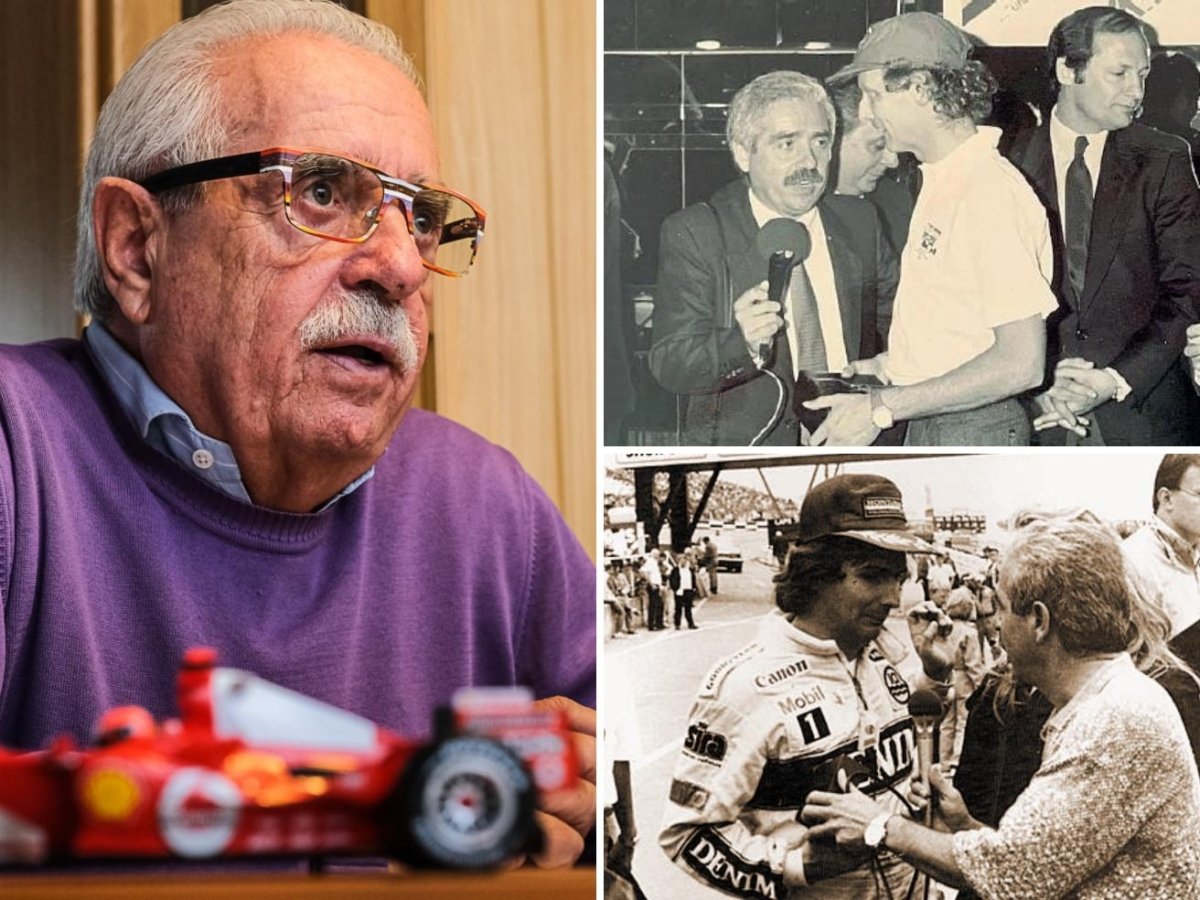
Ezio Zermiani, a journalist from Bolzano born in 1941, is one of those who changed the narrative of Formula 1 in Italy: the hot interviews in the pit lane, the direct relationship with drivers and teams, the technical expertise used for the benefit of the viewer. Zermiani – effectively F1’s first sideline – began his career inside the circus in 1975, after its debut as a reporter for Rai in Bolzano (followed among others the unsolved murder in Val d’Ultimo in 1973). Having become a correspondent in 1982 and retired in 2006, he still follows with interest and a pinch of nostalgia motorsport developments and updates.
Ezio Zermiani, it’s impossible not to start from current events. Kimi Antonelli is the first Italian to top the world rankings after 21 years (Giancarlo Fisichella in 2005). Can the 19 year old from Bologna win the World Cup?
“Yes, certainly. First of all, because Mercedes has the superior car. And we still haven’t seen all the potential which is probably still a little hidden so as not to attract too many criticisms from the Federation. They have found intelligent solutions that only they have at the moment: the distribution of electrical energy from the battery is much more functional; the frame, which absorbs the stresses and roughness of the ground very well; finally the management of the ailerons. They have such a stable machine that it does whatever it wants. You can see it especially when overtaking: the others struggle to manage the recharge, while they have a much more efficient range. As for Antonelli, he is young, perhaps too young. At 19 you can’t have all the necessary characteristics needed to tame a single-seater, but these are no longer the cars they once were. Once upon a time the steering wheel was only used for turning corners, today it is a computer with a thousand functions. From this point of view, absurdly, it is also easier for a young person to adapt.”
Did you expect such rapid maturation on his part?
«He certainly has talent. He makes youthful mistakes, it’s normal. But he has an important attitude: when he makes mistakes, he learns and doesn’t repeat the mistake. This is the fundamental thing.”
Does it remind you of any great drivers from the past?
«No, because the way of driving is completely different and it is impossible to make a comparison. Machines today have taken over and are worth 70%. Once upon a time it was much more tiring, less assisted. Today it is difficult to make comparisons: even a mistake at the start, with all the help available, can be overcome. Just like what happened to Antonelli in Suzuka. They use different means, they cannot be compared.”
In your opinion, could Antonelli wear the Ferrari suit in the future? «In my opinion, no, or at least I don’t wish it so. He was already in the Ferrari academy, they are the ones who dumped him. Ferrari doesn’t give me the idea of having an exceptional project but rather a mediocre one, or at least average: I think of a driver like Leclerc, between two generations, who threw away seven years of his career. The other teams are fairly aligned, while Mercedes is ahead of everyone. For a young man like Antonelli, being there is ideal.”
But do you like this new, increasingly electric Formula 1?
«There is a serious problem related to the batteries. When it suddenly runs out of power, the car can lose speed dramatically. We have seen dangerous episodes: cars suddenly slowing down to 80 km/h. It’s a huge risk, especially at those speeds. They have to intervene, because this is really dangerous.”
From an entertainment point of view, however, have any steps forward been made?
«I thought it was a more “robotic” and less exciting sport compared to the passionate one before. Instead the audience is growing. There are new factors: tire management, energy, strategies. But everything is the opposite of what it was before. Today you go slowly into corners to load up on energy, when previously a driver’s courage was measured by the ability to keep the car in the corner at full speed. In Japan there was an emblematic example, with Piastri asking Leclerc before the podium how to activate the battery switch. Once upon a time two drivers would have discussed how to do the Eau Rouge in full fifth.”
You practically invented the role of sideline on the circuits. Would this be a replayable scenario today?
“Impossible. Once upon a time we were few, one correspondent per country. There was time to build relationships, trust, go to dinner together and be told many things. Today there are hundreds of journalists in the paddock. You no longer have the time to really get in touch with the riders, not to mention the interests of sponsors and investors who want to be protected.”
Of those you have met, which pilots are you most fond of?
«If I have to choose between the strongest I would say Nelson Piquet and Ayrton Senna. For human relationships I say Alessandro Nannini, with a unique sympathy, and Riccardo Patrese, with whom we still communicate today. Among other things, many of them share the negative judgments on today’s Formula 1. Which incidentally doesn’t even appeal to many contemporary drivers like Alonso and Verstappen.”
His career is obviously linked to Rai and when the public service broadcast the races live. Why do you think the choice was made to abandon Formula 1?
«Over time, Rai also lost tennis and football. It is a company that is increasingly politicized and constantly changing. There are no longer the references of the past. Rai taught private TV stations how to do this job, but today it has to stay by the window and see what the others are doing.”
Does the discussion on politicization also apply when considering the case of the commentary of the inaugural ceremony at the Olympic Games in Milan and Cortina?
«Auro Bulbarelli (the journalist who should have hosted the evening before the self-assignment of the then director Paolo Petrecca ed) I hired him at Rai, so I’m particularly involved in this story. On that occasion there was amateurism, inability to grasp the essence of the work and arrogance in believing that everything is easy. In commentary you need to have a wealth of experiences, anecdotes and lived situations. Like post-it notes in your head, so you can give that extra bit that the viewer inevitably notices.”
However, you have also followed many important stories outside of Formula 1. Can you tell us an anecdote from your career?
«I started from the news, recounting among other things the crime in Val d’Ultimo (in 1973 a housekeeper was attacked and killed in the rectory, ed) and the Scicchitani case (the man, later acquitted, accused of the murder of the doorman of a hotel in Bolzano ed). But an incredible thing happened to me when I met John Paul II: in one of his first outings he came to the Marmolada in August. It was snowing, I made the normal connection for the 1pm radio news. Shortly afterwards, I entered the mountain station of the cable car. Here, a policeman who I knew from my past as a reporter let me through to the lobby which was closed. I was alone, and at a certain point Wojtyla came in with two white skis. I told the technician to give me the line immediately because we had the opportunity to interview the Pope live and exclusively, but from Rome they didn’t believe him, thinking it was a joke. In those cases you still go ahead thinking that someone is recording: I, convinced that I was connected and that someone was recording, continued to interview him for 25 minutes, even a little embarrassed. At the end of the interview I asked him: “Your Holiness, but if the cable car was broken and we all had to go down on skis, would you go down with us?”. He replied with absolute calm: “Of course, and I wouldn’t even finish last”. It was shocking, but there is no trace of that chat.”
Closing with the characters who marked the Italian sporting world of the twentieth century, what memories do you have of Enzo Ferrari?
«We often argued with Ferrari, an on-and-off relationship. He did not accept criticism of his creation. He once asked Sergio Zavoli for my dismissal, without obtaining it, since they were friends. He said that those who criticized Ferrari were on the bad side. Franco Gozzi, one of his closest collaborators, called me to reassure me: “Don’t worry, I was fired four times in a month” he told me. But I still have a very nice compliment card from him. It was a hard relationship, but true.”
And Gianni Agnelli?
«He was very witty. Once I met him in Monte Carlo, and we started talking. In that period neither Ferrari nor Fiat were doing well. I, who had some shares, was a little worried. So I asked him what expectations he had: “If you’re worried, of course I am”, he replied.”