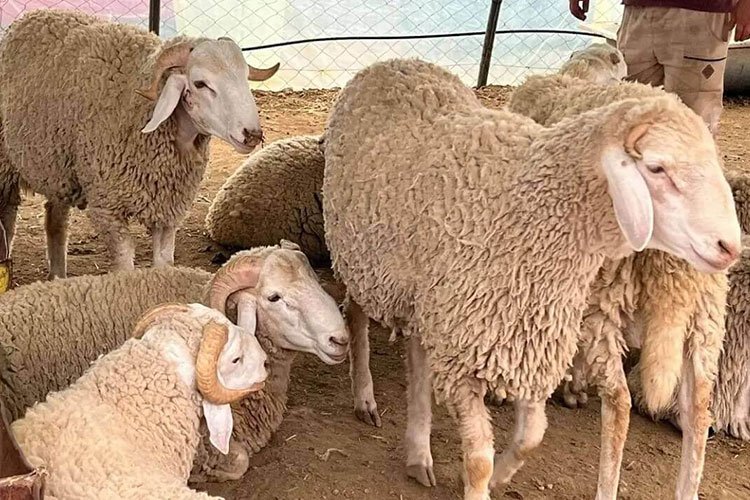
Veterinarians recommend good nutrition and a clean environment for imported rams
Witness, These days, The delivery of imported rams has begun via the “Adahi” platform, which requires awareness of how to deal with them after their acquisition, especially since these sacrifices pass through a precise health control system from the country of origin to the points of sale. However, the stress factors associated with transportation require special attention during the period before Eid to ensure their safety.
The authorities pay great attention to imported rams before Eid al-Adha, so that they reach the hands of their owners in good health, according to precise health and regulatory procedures, starting from their arrival through the ports, where they are subjected to strict veterinary control to ensure their safety and freedom from diseases. They are then transferred to equipped quarantine centers, where they are provided with appropriate feed, clean water, and continuous veterinary care, while their health condition is monitored daily. Hygiene and good ventilation conditions are also taken into account to avoid the spread of infection and to ensure that the sacrificial animals reach citizens in the best health condition, in order to preserve public health and ensure sound and safe religious rituals.
Hoda Jaafari: Good care increases the quality of meat by up to 40 percent
In continuation of this care, and with many citizens receiving their sacrifices days before the Eid, specialists and veterinarians stress the necessity of respecting general rules in raising the sacrifice during these days, which are mainly based on gradual feeding, providing a clean and ventilated environment, taking care to reduce factors of tension and stress, avoiding wrong practices that may affect the health of the ram, and ensuring a healthy sacrifice in accordance with the required health standards.
The monitoring process starts from the country of origin
For her part, the veterinary inspector and expert consultant in the agricultural sector, Dr. Hoda Samira Jaafari, reassured citizens about the safety of these sacrifices, stressing that they pass through a precise, multi-stage health control system.
Jaafari explained to Al-Shorouk that the monitoring process begins from the country of origin, where the herd undergoes comprehensive veterinary examinations targeting the most important epidemic diseases, before it is re-monitored locally upon its arrival through quarantine for a period ranging between 5 and 7 days, given that these rams are destined directly for slaughter. She added that the percentage of health risks is very low, and does not exceed 1 to 2 percent, and is within accepted international standards.
On the other hand, the spokeswoman pointed out that imported rams may be exposed to stress factors as a result of long-distance transportation, which may lead to some temporary disorders, especially at the respiratory or digestive level, at a rate that may reach 10 percent in some cases. She stressed that these symptoms are usually not serious if they are dealt with properly, stressing the necessity of purchasing sacrificial animals from approved points of sale, given that they are subject to continuous veterinary monitoring, which ensures the safety of the animal and the protection of the consumer.
Isolate the ram and provide it with clean water
In a related context, the veterinary expert presented a set of practical recommendations for caring for rams during the twenty days preceding Eid, stressing that adhering to them improves the quality of the meat by up to 30 to 40 percent.
She revealed that the first stage, which extends from 3 to 5 days after purchase, is an essential acclimatization period, as it is recommended to isolate the ram from the rest of the animals and monitor its health condition, while providing a calm environment to reduce stress that may affect its immunity.
As for nutrition, it recommended providing a balanced feed that combines hay, barley, or compound feed, in a daily amount equivalent to 2 to 3 percent of the ram’s weight, while avoiding sudden changes in the diet to avoid digestive disorders.
She also stressed the importance of providing clean water on a permanent basis, at a rate ranging between 3 and 5 liters per day, while ensuring that the shelter is cleaned daily to limit the spread of diseases. With regard to health monitoring, Jaafari called for monitoring the appetite and natural movement of the animal, ensuring that it is free of coughing or secretions, while monitoring its temperature, which usually ranges between 38.5 and 40 degrees Celsius, and warning of the necessity of consulting a veterinarian immediately upon the appearance of any abnormal symptoms.
Avoid stress with good ventilation
She also pointed out the importance of preventing heat stress, by providing shade and good ventilation, and avoiding tying the ram in a tight way or leaving it under the sun for long periods. She added that the final preparations before Eid are very important, so she recommended gradually reducing the feed 12 to 24 hours before slaughter, while maintaining the provision of water only, as this has a role in improving the quality of the meat after slaughter and reducing the risk of contamination, stressing the necessity of avoiding washing the ram directly before slaughter to avoid exposing it to stress, stressing However, adhering to these simple recommendations contributes to reducing the percentage of health problems to less than 5 percent.