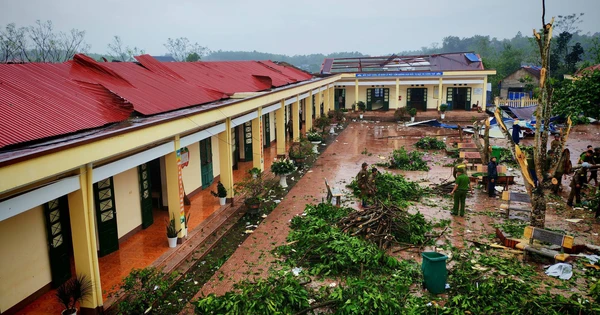
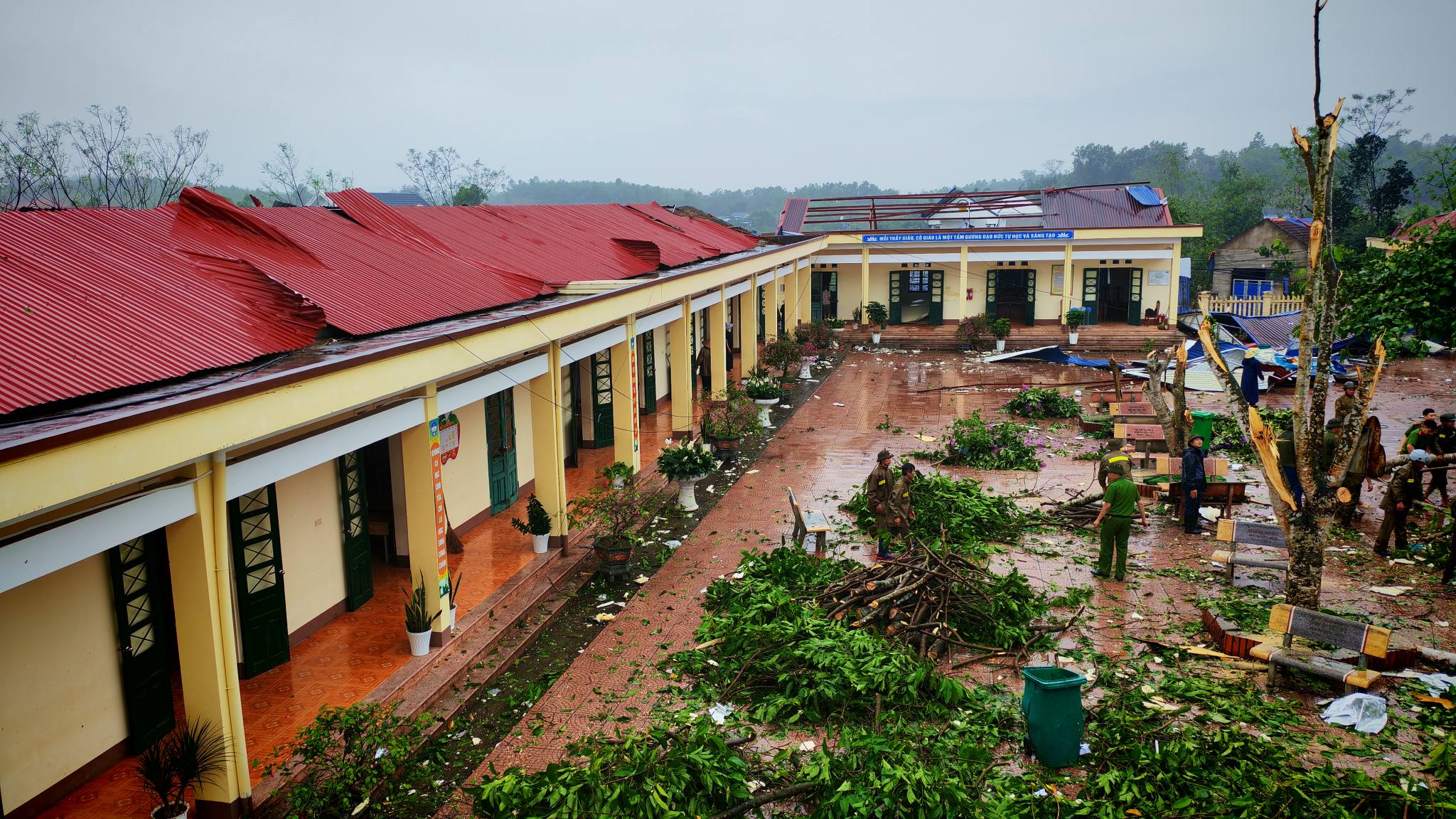
Extreme weather conditions cause damage to the infrastructure of a school in Phu Lac Commune, Thai Nguyen Province, northern Vietnam, May 2026. Photo: Supplied
Nguyen Van Huong, head of the center’s weather forecasting department, said hailstorms and squalls that swept across multiple northern provinces and cities, including Hanoi, Dien Bien, Tuyen Quang, Thai Nguyen, and Phu Tho, late on Saturday were triggered by a low-pressure trough at around 5,000 meters moving from upper Laos into northern Vietnam.
At the same time, temperatures in the north reached 32-33 degrees Celsius, fueling strong convective cloud formation that led to widespread hail and strong winds.
Huong said that while thunderstorms and hail are common during seasonal transitions, the scale of the Saturday event was unusual.
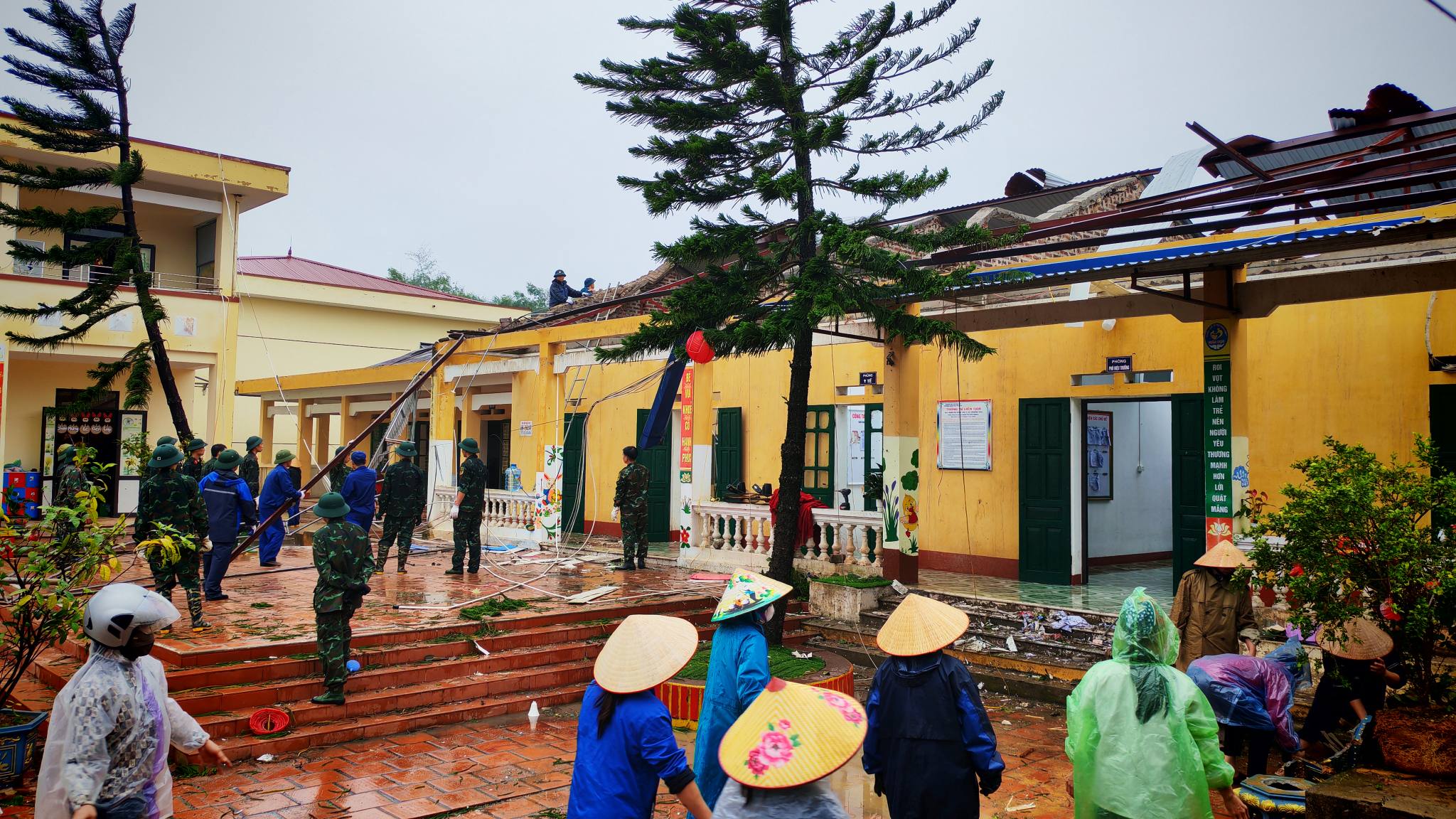
Police and military officers deal with debris and damaged infrastructure of a school after rainfall and violent winds hit the site in Phu Lac Commune, Thai Nguyen Province, northern Vietnam, May 2026. Photo: Supplied
He cautioned that similar extreme weather patterns could occur again around Thursday or Friday this week, when another northeast monsoon is expected to affect northern Vietnam.
The Central Highlands and southern regions are also entering the seasonal transition period, making them vulnerable to extreme weather, including hail and thunderstorms.
El Niño is forecast to develop between June and August, potentially raising temperatures above average, reducing rainfall, and lowering the number of storms and tropical depressions, he said.
However, the hotter conditions may also lead to more violent thunderstorms, hail, and lightning.
He also warned of short-duration extreme rainfall events that could trigger flash floods, landslides, and urban flooding.
Earlier, hailstorms and squalls late on Saturday injured 12 people and damaged 350 homes and six schools, while destroying crops across nearly 1,000 hectares in several northern provinces.
According to the World Meteorological Organization, El Niño, and La Niña are opposite phases of the El Niño-Southern Oscillation, or ENSO, one of the most powerful climate patterns on earth.
El Niño is characterized by a warming of ocean surface temperatures in the central and eastern Equatorial Pacific.
It typically occurs every two to seven years and lasts around nine to twelve months.
El Niño events affect temperature and rainfall patterns in different regions and typically have a warming effect on the global climate, the organization said in a statement issued on April 24.