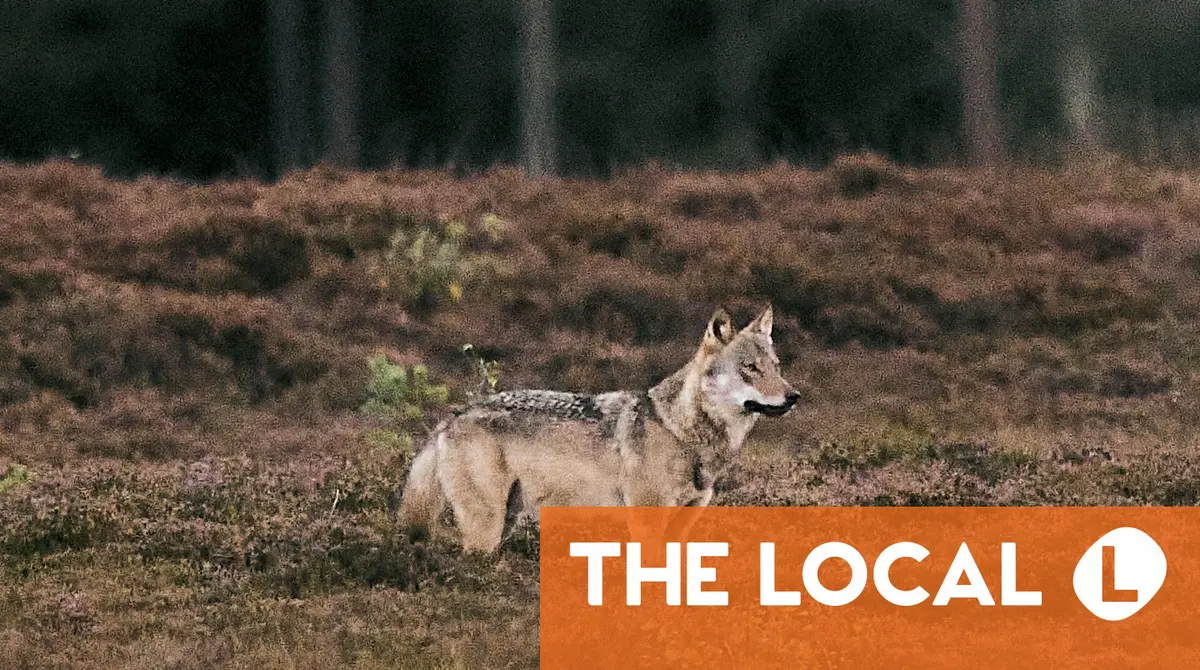
A number of wolf sightings near Oksbøl in Jutland have made headlines in recent weeks, and now researchers believe the wolves may have been ‘actively fed’ by humans.
At the end of April, a man north of Oksbøl in Jutland had two four warning shots to scare off a pack of six wolves that had followed him home.
Earlier this year, a 14-year-old girl in the town filmed a wolf following her home from sports practice, which she told public broadcaster DR at one point was less than a meter away.
Now, researchers from the Danish Center for Environment and Energy (DCE), at Aarhus University, have investigated a number of events involving wolves in the area and concluded that in 13 cases wolves showed “problematic behaviour,” which differs from their usual behavior and requires action.
“I can’t come up with any alternative other than the wolves being fat which would explain them they actively follow humans with an expectation that they’ll get something good,” Peter Sunde, professor for Ecoscience at Aarhus University, customs DR.
In the case of the wolf following the 14-year-old girl, researchers concluded that the animal did not show a fear of humans and that attempts to scare it off were unsuccessful, which would support the theory that they have been fat.
“They’ve actively targeted humans,” Sunde said, adding that there are two explanations for this behaviour. “One of them is dogs and another is food. And when they actively approach humans in this way then it has to be because someone has fed them before.”
READ ALSO: What do you do if you spot a wolf in the wild in Denmark?
In the report, the researchers wrote that there is no danger of humans being attacked by the animals, although they did admit that action needs to be taken nonetheless.
Sunde said that there are two male wolves involved in the recent sightings near humans, and while one appears to be dead the other one is still alive and still appears to be unafraid of humans.
“There’s no immediate danger to people but you should be aware and act correctly,” he said. “We can hope that their behavior will change by itself, but otherwise we’ll need to get it to change behavior by either forcing it to do so or euthanising it.”
He added that it was not for him to say how the authorities should react.
In Denmark, there are rules about regulating the wolf population, among other things requiring approval from the Agency for Green Transition and Aquatic Environment. This allows so-called ‘problem wolves’ to be dealt with, for example if they attack dogs or other pets, are unafraid of humans or pose a danger to people.