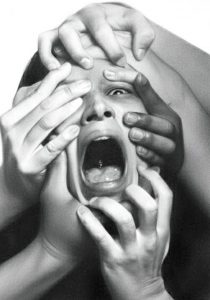
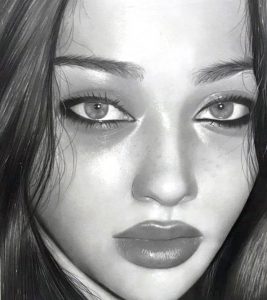
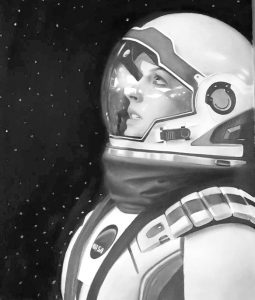
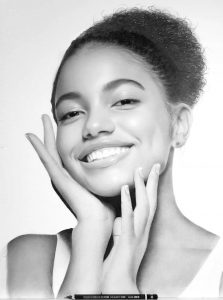

Al-Taie draws features of strength and different acceptance
Feather searches for beauty from colors to human issues
Baghdad – time
In a time when challenges are crowded and spaces for support are narrow for young talents, the artist Zahraa Muhammad Al-Taie stands out as a model of persistence and creativity, as she was able to make drawing a special language in which she expresses herself and conveys humanitarian and social messages that go beyond the limits of traditional painting.
Al-Taie says that her relationship with art began since childhood, but her real breakthrough came in 2017 when she decided to take her talent more seriously, through continuous training and refining her skills through daily practice. She explains that the most important moment in her career was when she realized that painting is not just colors and lines, but rather her only means of translating what words cannot say.
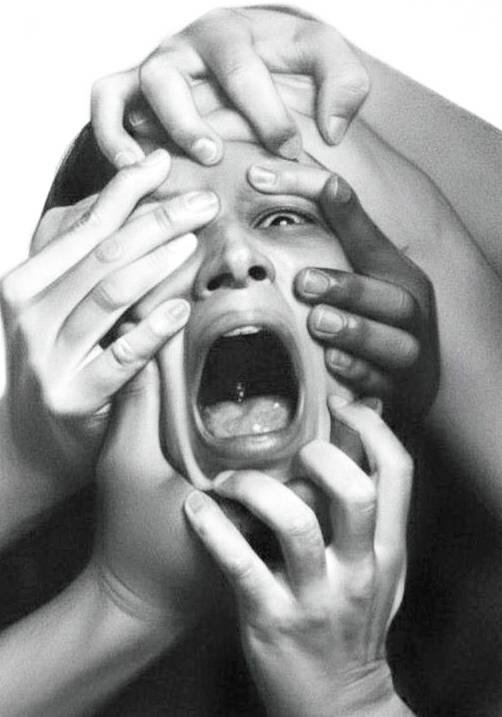
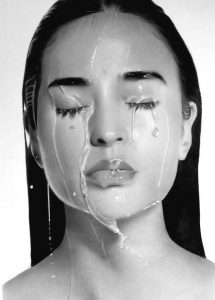
The young artist takes portraiture as the main field of her work, as she believes that “facial features store complete stories that can be read silently.” Through this artistic genre, she seeks to highlight women’s issues and embody her inner strength, in addition to highlighting unconventional concepts of beauty.
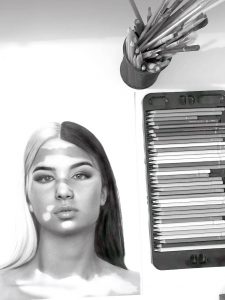
Al-Taie confirms that among the topics she is interested in addressing in her paintings is highlighting the aesthetics of vitiligo, in an attempt to enhance the culture of societal acceptance and break the stereotypes associated with external appearance. She believes that (art can play an important role in redefining beauty as diversity and difference, not one fixed model).
Regarding her artistic style, she describes it as “expressive realism, as it combines accuracy in details and the ability to convey feelings.” She points out that what distinguishes her work is the focus on details that some may consider (flaws), but she sees them as elements of beauty and identity that deserve to be highlighted and celebrated.
Artistic experience
Al-Taie believes that the Iraqi reality has left a clear impact on her artistic experience, especially in light of the weak support provided to young artists and the absence of sufficient cultural incubators to nurture talent. However, she confirms that (this reality was not an obstacle as much as it turned into an incentive to continue, by relying on personal effort and developing one’s own tools).
She adds that art, for her, is an attempt to create beauty amidst challenges, and a message to prove that Iraqi creativity is capable of being present and distinguished even in the most difficult circumstances, far from waiting for official support or traditional opportunities.
She does not hide the social challenges she faces, in a society that does not always view art as a serious career path or a cultural necessity. But she confirms that determination and confidence in talent were the most important weapon in overcoming these obstacles, and turning them into an incentive to build her artistic name step after another.
Regarding her future ambitions, Al-Taie says that she seeks to leave an artistic imprint that transcends local borders and reaches the international level, to demonstrate the Iraqi artist’s vision and ability to compete and create. She is also currently working on completing a new group of paintings, in addition to planning her first personal exhibition, which she considers an opportunity to present her integrated artistic experience to the public.
Between a brush searching for beauty, and a message calling for acceptance, Zahraa Muhammad Al-Taie continues to chart her path steadfastly, stressing that true art requires only sincere talent and an unbreakable will.