The agreement will eliminate 91% of tariffs on European exports and 92% on Mercosur exports, starting today for some products and progressively for the rest.
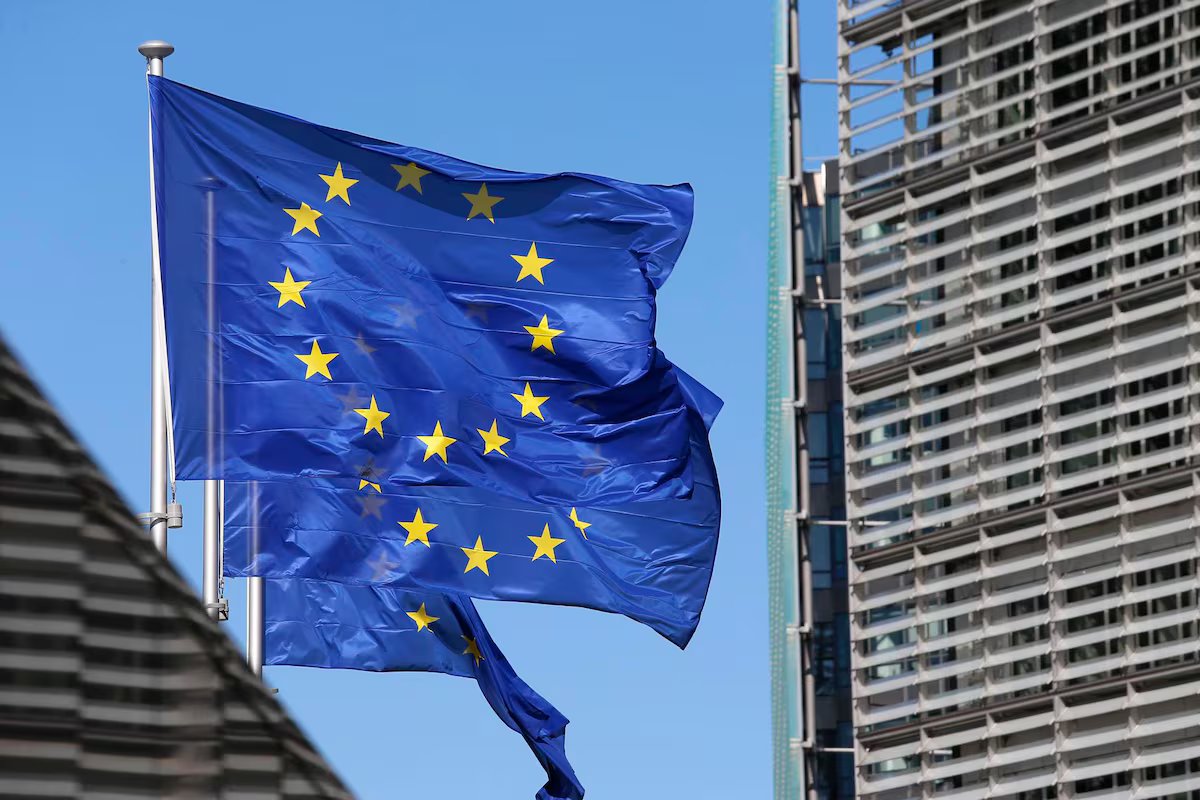
The trade agreement between the European Union and Mercosur entered into force this Friday, provisionally, more than 25 years after negotiations began, creating a market of 700 million people in which more than 90% of tariffs will be eliminated.
Aside from its economic impact, the agreement also has political significance for its defense of multilateralism in a geopolitically turbulent period and for the European will to gain the ground lost to China in Latin America.
The pact is going ahead despite the main opposition from France and the European agricultural sector, but its continuity is not entirely guaranteed, because the European Parliament has asked the Court of Justice of the EU about its legality before ratifying it.
A step that Poland has also taken, whose government questions the provisional entry into force before the European Parliament has given its approval.
Elimination of tariffs
The agreement will eliminate 91% of tariffs on European exports and 92% on Mercosur exports, starting today for some products and progressively for the rest.
The EU, Brazil, Argentina, Uruguay and Paraguay have agreed on tariff quotas for other products that are not completely liberalized, including agri-food products.
Main EU exports to Mercosur:
– Automotive sector: 35% will be completely eliminated progressively, in 15 years for combustion vehicles and in 18 for electric vehicles.
– Wine: The current 27% tariff will be completely eliminated in the eighth year, although that of high-end sparkling wines disappears from today, while low-end ones disappear after 12 years.
– Other agri-food products: The agreement will recognize 344 European Geographical Indications, 59 of them Spanish (including Sherry, Cava, Rioja, Ribera del Duero; Jamón de Jabugo and Guijuelo, Sobrasada de Mallorca; olive oil from Priego de Córdoba, Baena, Les Garrigues and Siurana; Turrón de Jijona)
– Machinery: The current 20% will be eliminated in a maximum of 15 years
Main exports of Mercosur to the EU:
– Beef: A quota of 99,000 tons per year has been agreed at a tariff of 7.5%.
– Chicken meat: A quota of 180,000 tons per year at 0% has been agreed.
– Sugar: 180,000 tons annually free of tariffs from Brazil and 10,000 tons at 0% from Paraguay.
– Honey: 45,000 tons per year at a tax of 0%.
– Eggs: 3,000 tons per year at 0%.
– Citrus fruits: the export of lemons will be free of tariffs in 7 years and that of oranges and tangerines, in 10.
Safeguards
To protect farmers from possible harm from the import of these agricultural products, the EU has approved safeguard measures that allow for the temporary suspension of tariff preferences.
The European Commission will have to launch an investigation into the need for protective measures if imports of sensitive products such as poultry, beef, eggs, citrus and sugar increase by 5% over the three-year average and, at the same time, import prices are 5% below the EU price.
Furthermore, the Community Executive has committed to strengthening phytosanitary controls at the border to ensure that food, animals and plant products entering the European Union comply with Community rules and thus avoid possible unfair competition by Latin American farmers.