A majority of countries of the Central American Integration System (SICA) reformed the internal voting regulations of the regional organization to “unblock” the election of a new secretary generaland prevent the “co-presidents” of Nicaragua, Daniel Ortega and Rosario Murillo, from preventing or conditioning a future appointment.
The previous voting regulations required a “consensus” of all SICA members to make decisions, including electing the general secretary. However, the new regulations eliminate “consensus” and establish a qualified majority.
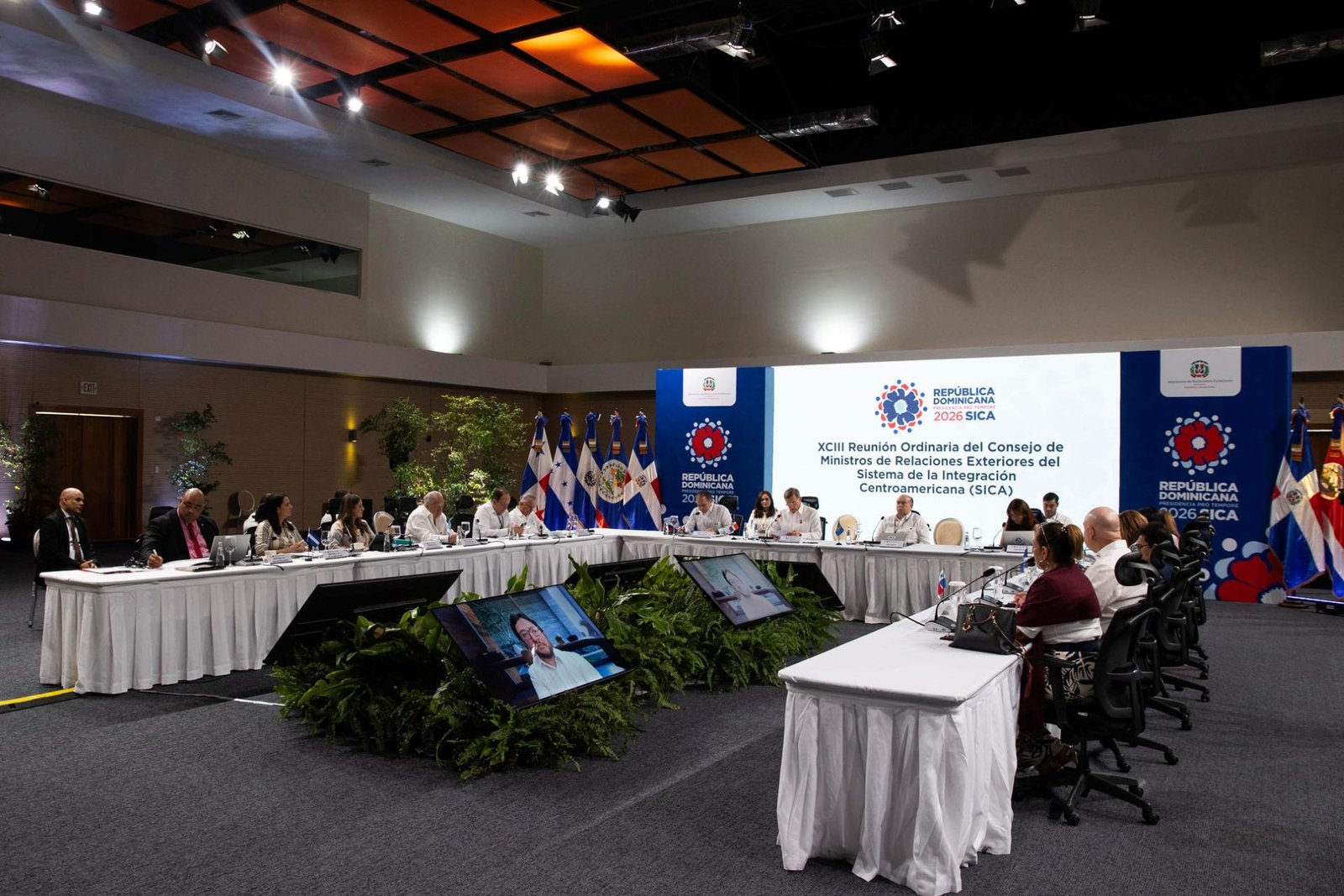
The reform was decided at a meeting of SICA foreign ministers in the Dominican Republic, on Friday, April 24, 2026, which Nicaragua did not attend, according to SICA sources.
In statements to newspaper La NaciónCosta Rican Foreign Minister Arnoldo André Tinoco commented: “an incorrect interpretation of the Tegucigalpa Pact had been happening, by virtue of which practically all States were granted the right to veto and block resolutions.”
“This opposition becomes a disguised veto that prevents the advancement of the System,” he highlighted.
The head of Costa Rican diplomacy explained that, with the reform, the “consensus rule” will be applied in such a way that three-quarters of the members can approve resolutions when there is the absence of a member or not necessarily unanimity.
“And now we reinterpret it so that it is the will of the qualified majority of the eight members that allows the system to advance. Why is it important? Because it is up to Costa Rica, now in May, to present a shortlist of candidates for the next secretary general of SICA, starting in August 2026,” André explained.
SICA without general secretary from 2023
The General Secretariat of SICA has been headless since November 2023, when Nicaraguan Werner Vargas Torres resigned from officewho is a lawyer with extensive experience in matters related to Central American regional integration.
Since April 2021, the dictatorship in Nicaragua has proposed twelve Nicaraguans and one Guatemalan for secretary general, but only the candidacy of Vargas Torres It was officially accepted by the rest of the countries in June 2022. The main argument for rejecting the Ortega candidates is that they are officials “loyal” to the regime and “without much knowledge” of the foreign service, according to the other SICA countries.
Ortega’s last bet was the diplomat Denis Moncada Colindreswhose candidacy was rejected in November 2024. As a consolation prize, the dictatorship appointed, in September 2025, Moncada Colindres as “co-chancellor” along with Valdrack Jaentschke Whitaker, who also aspired to lead SICA, but was not accepted at the beginning of 2024.
Nicaragua was responsible for the General Secretariat, for the period 2021-2025, but since Vargas Torres did not complete his term, the dictatorship argued that another Ortega official should lead SICA, which has been rejected by the other countries.
Since November 2024, the dictatorship has not presented a new shortlist of candidates and keeps the election of the general secretary blocked, protected by the fact that the election required consensus.
Meeting in Santo Domingo
The meeting in the Dominican Republic was held at the end of this country’s term in office. pro tempore of the organism. The Dominican Foreign Minister, Roberto Álvarez, and his counterparts from Costa Rica, Arnoldo André Tinoco, were present at the meeting; El Salvador, Alexandra Hill Tinoco; and Guatemala, Carlos Martínez Alvarado.
Likewise, the Vice Ministers of Foreign Affairs of Honduras, Pamela Handal; Panama, Carlos Guevara, and Belize, Amalia Mai.
The ministers and vice ministers of Foreign Affairs assumed a regulation regarding the integration, quorum and decision-making of the regional bodies and instances of SICA, to assume timely, effective and continuous positions, according to the organization in the final meeting document.
The member states advanced in the definition of a consensual roadmap for the election of the new ownership of the general secretariat of SICA, as a reflection of their desire to strengthen the strategic leadership of the System, ensure institutional continuity and improve its capacity to respond to regional challenges.
SICA, created in Tegucigalpa in December 1991, is made up of Belize, Costa Rica, El Salvador, Guatemala, Honduras, Nicaragua, Panama and the Dominican Republic as full members. In addition, 40 States have the category of regional observers, among which Taiwan, Spain, the Vatican State, Argentina, Brazil, Chile, Colombia, the United States, Ecuador, Mexico, Peru and Uruguay stand out.