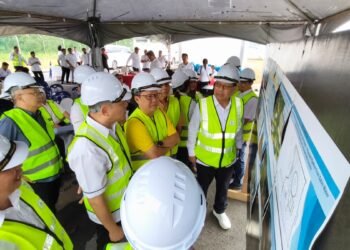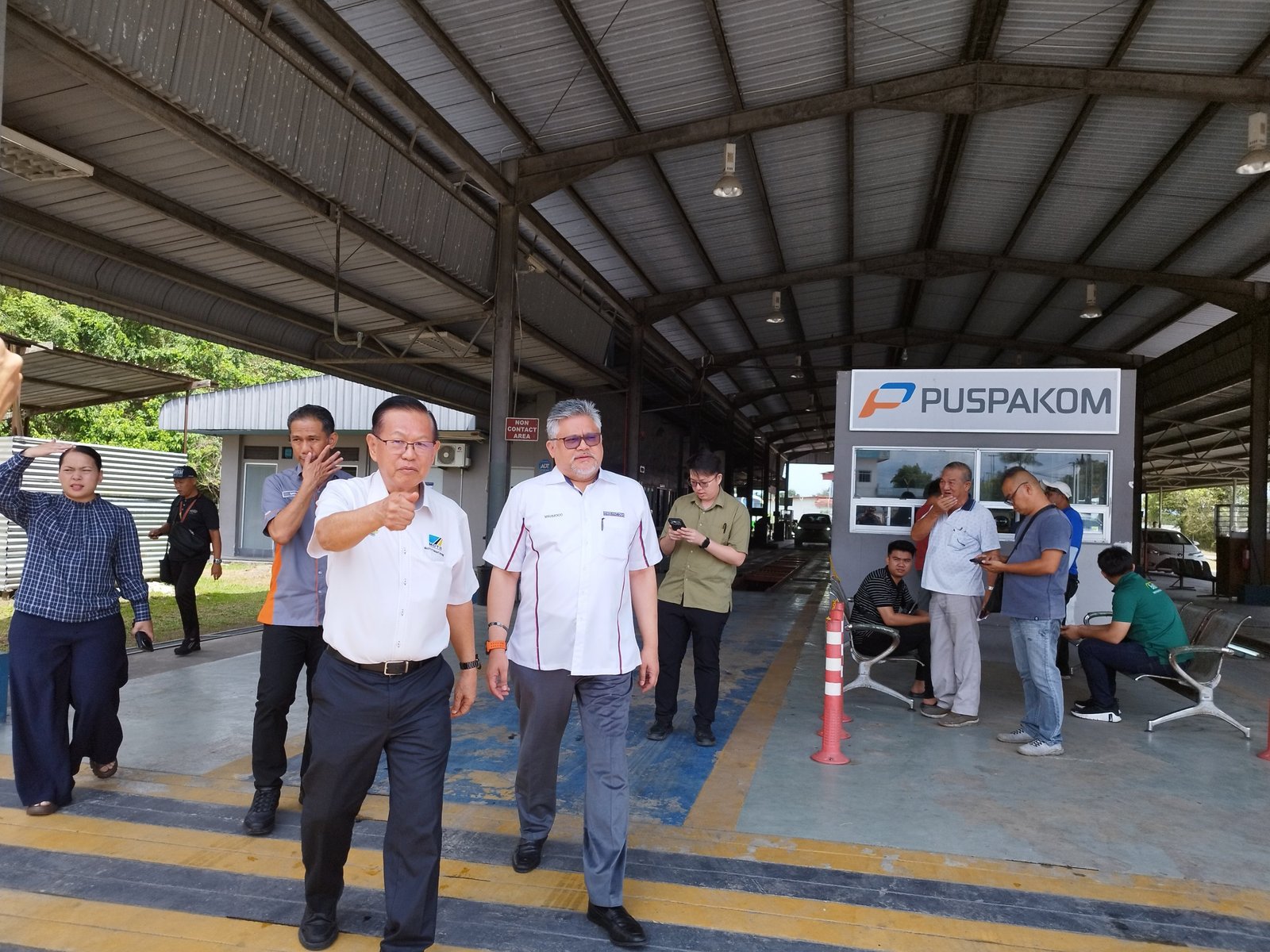

Lee (front) being accompanied by Mahmood, on his left, during the inspection on Puspakom Miri. Behind them are Liza (left) and Sainal.
MIRI (May 4): The check-time at the Computerised Vehicle Inspection Centre (Puspakom) is set to be reduced from the current 10 minutes to just one minute, with the help of artificial intelligence (AI).
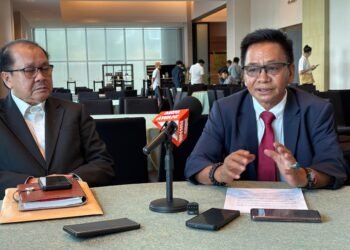
According to Puspakom chief executive officer Mahmood Razak, the new system focuses on undercarriage inspections, and is expected to significantly improve efficiency when it comes to inspection, particularly on heavy commercial vehicles.
“At present, a manual inspection of a vehicle’s undercarriage takes about 10 minutes.
“With AI, this process can be completed in approximately 60 seconds,” he said in a press conference, held in connection with a visit by Minister of Transport Sarawak Datuk Seri Lee Kim Shim to the Puspakom here on Monday.
Also present were Puspakom Sabah-Sarawak regional manager Sainal Abidin Talibe and the acting deputy regional manager Liz Jayub Abdullah, as well as the Miri branch manager Jebreee Julaihi.
The move came amidst rising demand for vehicle inspections in Sarawak, driven by rapid infrastructure development and a growing number of heavy vehicles such as lorries and container trucks.
“The AI system has already been introduced in mobile services, and is expected to be rolled out more widely starting in 2027.
“The initiative is part of broader efforts to modernise Puspakom’s services and address longstanding concerns over delays that can disrupt business operations, particularly in the construction and logistics sectors,” said Mahmood.
Earlier, he briefed Lee on the progress of the facilities’ upgrading and the steps taken by Pupaskom in response to the minister’s call for faster inspection processes to support ongoing development projects in the state.
Lee remarked: “When vehicles fail the inspection or face delays, it affects project timelines and daily operations.
“We want to ensure that inspections are faster so that vehicles can return to work without unnecessary downtime.”
Lee also projected that the number of heavy vehicles in Sarawak would rise in line with the implementation of major projects such as the Miri-Marudi-Mulu Road, the new Miri Port developments, and expansion of the oil and gas industry.
In addition to adopting AI technology, he also called for upgrading works on existing Puspakom facilities in Miri and Bintulu to cope with the growing demands.
Currently, Puspakom Miri handles an average of 145 vehicles daily, below its maximum capacity of about 190, and during peak periods, it often experiences congestion.
In a statement, Puspakom Miri said: “The works on expanding the entrance should reach completion in the third quarter of this year.
“It is meant to address the current bottleneck of vehicles waiting for inspection here.”