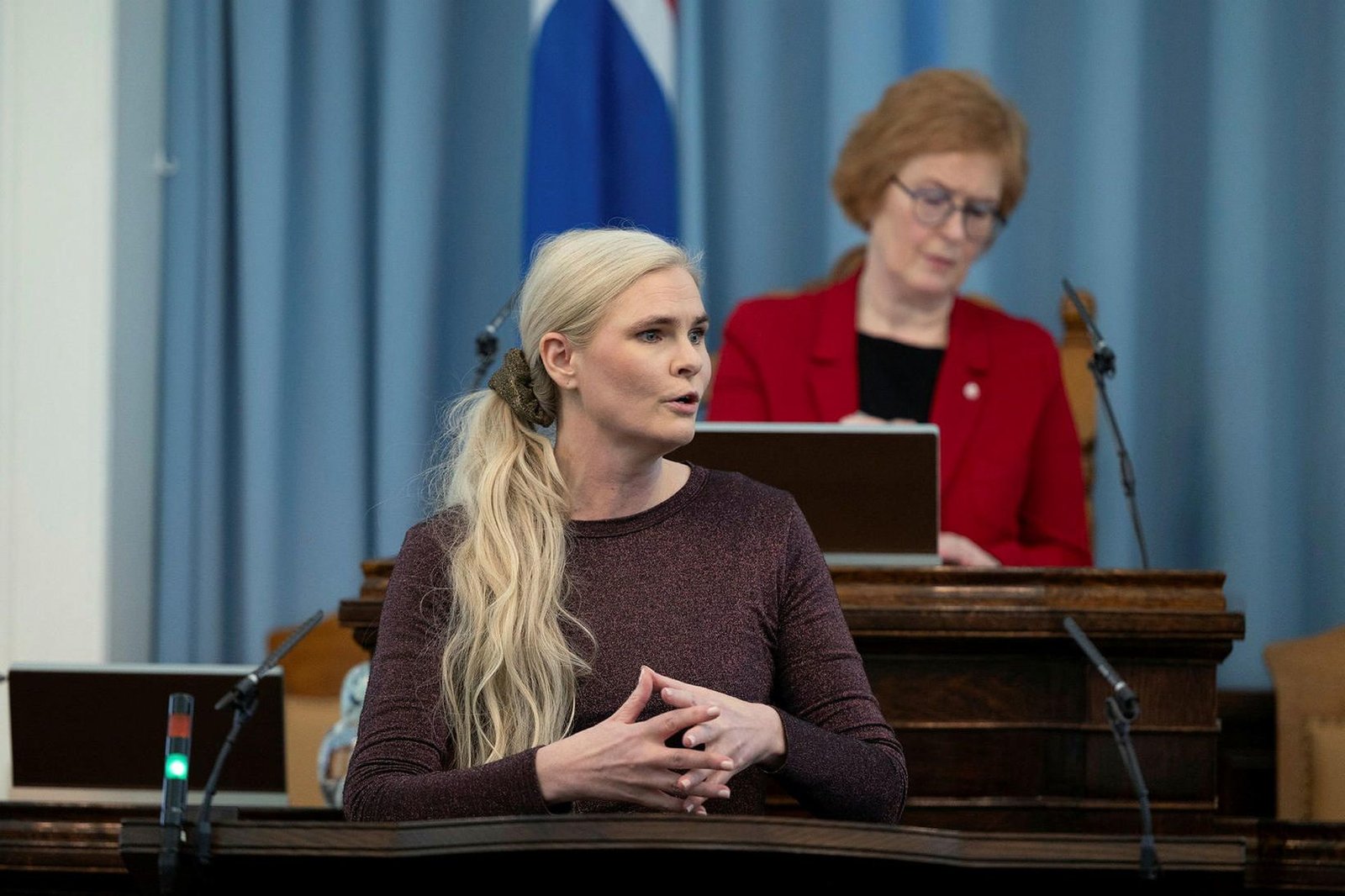
The opposition makes comments on the bill to reduce the value added tax on fuel and proposes that the price control powers of the Minister of Finance and Economy be removed from the bill.
Today, Alþingi’s second debate took place on a bill to temporarily reduce the value added tax on fuel in order to respond to uncertainty in the global fuel market and monitor the pricing of fuel in the country.
The first minority of the Economic and Trade Committee has proposed amendment where it is proposed to delete the second part of the bill which stipulates price control authorizations Minister of Finance and Economysince in the worst case it involves a violation of the constitution according to the committee’s minority.
At worst, a violation of the constitution
Hildur Sverrisdóttir, Member of Parliament for the Independence Party, was the representative of the minority opinion of the Economic and Trade Committee with amendmentwhich stipulates, among other things, that all the minister’s price control authorizations will be abolished and that the period of validity of the measures will be extended until October 31, 2026 due to the uncertainty of war. The case goes to Hildur in a post on her Facebook page.
There she says that the reduction of value added tax on fuel is undoubtedly a positive step, but says that the reason for this was the controversial implementation and powers of the government’s proposed revived price control.
“The proposal brings powers to the Competition Authority, vague and unclear in scope, and the minister is authorized to set a maximum price or a maximum levy or “other management of pricing and business terms,” says Hildar’s post.
“That open check is at best a sham, at worst a violation of the constitution’s freedom of employment clause.”
Inconsistency and constitutional problem
The main arguments of the first minority against the price control provisions of the bill are, among other things, that too broad a delegation of power is contained in the minister’s authorizations, which according to the bill extend to “other control of pricing or business terms”.
There could also be inconsistencies within the bill in terms of the Competition Authority’s supervisory duty on the one hand and the minister’s price control authority on the other hand, as the supervisory duty covers whether a reduction in value added tax is beneficial to consumers, while the minister’s authority extends to the tax price itself. There are holes in the middle.
The most important thing is that the matter concerns the constitution, as freedom of employment and property rights are protected by its articles 72 and 75, and the minority of the committee believes that neither the articles of the bill nor the committee’s opinion of the majority contains an assessment of whether the public interest actually requires resorting to price control.
It is a constitutional obligation that rests on the legislator.
There is no reason to make a zombie out of the price control
Hildur ends her post by reminding that Icelanders are well aware of the history of price controls, which were abolished for good reason after being in place in some form from independence until the end of the 1980s.
Icelanders already have the most powerful surveillance system in the world, in addition to the fact that such a system serves to provide consumers with false security and that they feel better protected but the truth is.
“There is nothing to prevent a reduction in fuel prices immediately, but there is no reason to make a zombie out of the price control,Hildur finally says.