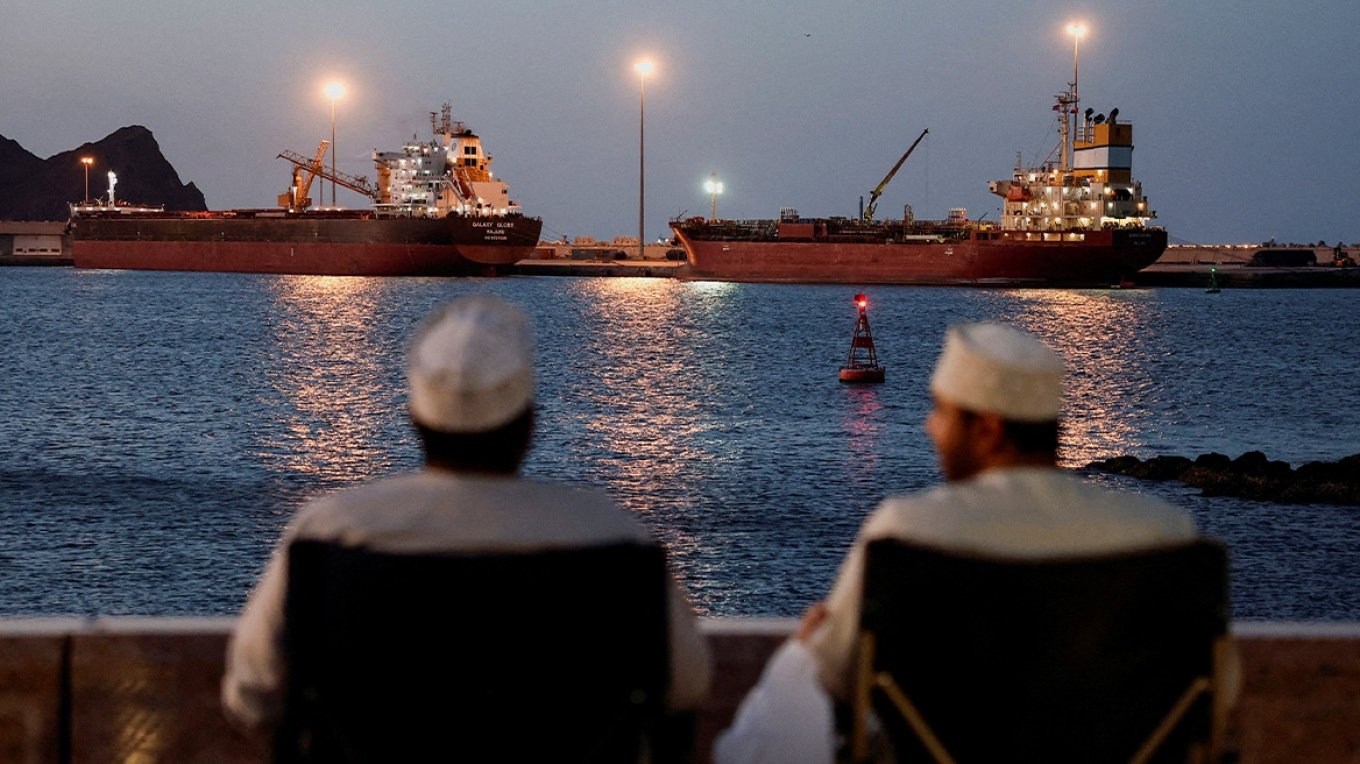
The diplomatic process between the US and Iranin order to find the appropriate formula, which will allow, on the one hand, the opening of Strait of Hormuz and on the other hand will allow to Washington and Tehran to come out of the war with their heads held high.
Iran has offered to end its control of the Strait of Hormuz if the U.S. lifts its blockade and ends the war, in a proposal that would delay talks over the Islamic Republic’s nuclear program, two regional officials said Monday, according to the Associated Press.
US President Donald Trump appears unlikely to accept the offer, which was relayed to the Americans by Pakistan and would leave unresolved the differences that led the US and Israel to war on February 28.
White House press secretary Carolyn Leavitt said Trump’s national security team met Monday to discuss Iran’s proposal. But he did not give details about the discussion or how the proposal was received. He said Trump would look into it later.
With a fragile truce in place, the US and Iran are locked in a standoff over the Strait of Hormuz, through which a fifth of the world’s oil and gas trade passes. The US embargo is designed to prevent Iran from selling its oil, depriving it of critical revenue, while potentially creating a situation where Tehran would have to shut down production because it has nowhere to store oil.
The closure of Hormuz, meanwhile, has put pressure on Trump as oil and gasoline prices have soared ahead of crucial midterm elections, and has strained his Gulf allies, who use the waterway to export oil and gas.
The new proposal to end the blockade
Frustration among many nations is growing, with fresh demands on Monday to end the blockade that has had far-reaching effects across the global economy, including raising the price of fertiliser, food and other essential goods.
The Iranian proposal would push negotiations on the country’s nuclear program to a later date. Trump stated that one of the main reasons he went to war was to deny Iran the ability to develop nuclear weapons.
The two officials with knowledge of the proposal spoke on condition of anonymity to discuss closed-door negotiations between Iranian and Pakistani officials this weekend. The Iranian proposal was first reported by the Axios news agency.
The proposal came as Iran’s foreign minister visited Russia, which has long been a key supporter of Tehran. It is unclear what, if any, help Moscow could offer now.
Iran’s ability to block traffic through the Strait of Hormuz has proven to be one of its greatest strategic assets in a war that often comes down to which side can suffer the most.
Oil prices have risen steadily since the start of the war, and tankers full of crude oil have been stranded in the Gulf, unable to safely pass through the strait to reach global distribution points.
On Monday, the spot price of Brent crude, the international standard, was trading at around $109 a barrel, about 50% higher than when the war began.
Dozens of nations are pushing for the opening of the strait
Dozens of nations reiterated calls for the critical waterway to be opened in a joint statement led by Bahrain.
UN Secretary-General Antonio Guterres told the Security Council on Monday that humanitarian costs are rising.
“These pressures result in empty fuel tanks, empty shelves – and empty plates,” he said.
German Chancellor Friedrich Merz criticized the US for going to war without what he described as a strategy. “The problem with conflicts like these is always the same: It’s not just about entry. You have to get out too,” said Mertz.
French Foreign Minister Jean-Noël Barrot criticized all sides. He said the crisis began after the US and Israel struck Iran without clear targets “in a manner that defies international law”.
But he said Iran was responsible for closing the passage. “Narrows are the arteries of the world. It is not owned by any individual. They are not for sale, therefore, they cannot be stopped by any barrier, toll or bribe,” he said.
Putin – Aragchi meeting in Russia
Trump last week extended indefinitely the truce agreed to by the US and Iran on April 7, which has largely halted the fighting. But a permanent settlement remains unknown.
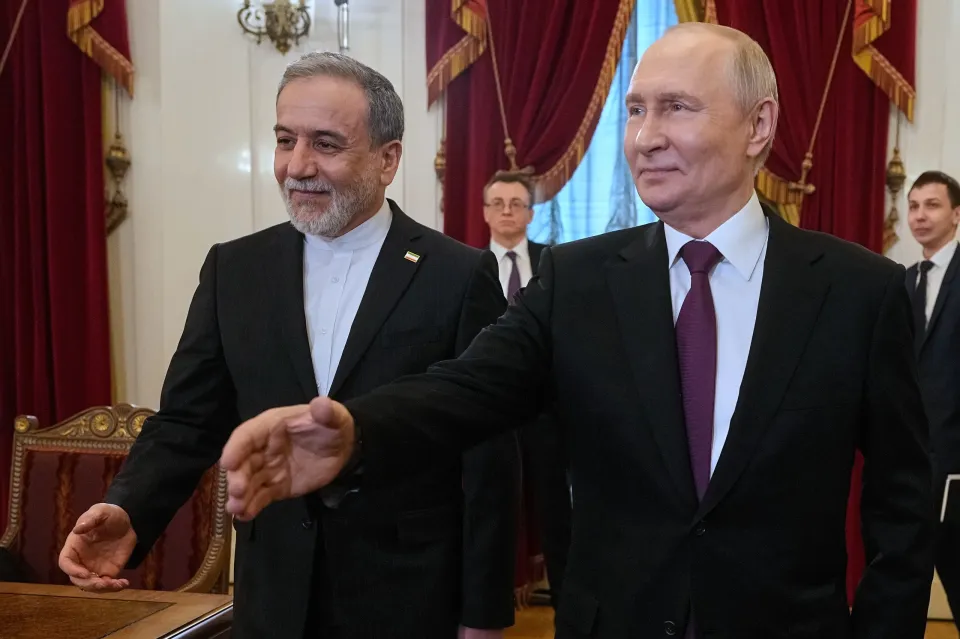
Iranian Foreign Minister Abbas Araghchi met with Russian President Vladimir Putin in St. Petersburg on Monday, Russian state news agency Tass reported. Putin praised the Iranian people as “bravely and heroically fighting for their sovereignty” and said Russia would do everything possible to bring peace to the Middle East, Tass reported.
Aragchi told a Russian state television reporter that the US and its leaders “have not achieved any of their goals” in the war. “That’s why they’re asking for negotiations,” he said. “We’re looking into it now.”
Iran’s top diplomat said Iran and Russia “are strategic partners” and that their “cooperation will continue.”
Iran wants to persuade Oman, which shares the Straits, to support a mechanism to collect tolls from ships passing through the strait, according to a regional official who spoke on condition of anonymity because he was not authorized to discuss the matter.
Oman’s response was not immediately clear.
The official, who is involved in mediation efforts, also said Iran insisted on ending the US blockade before new talks and that Pakistan-led mediators were trying to bridge significant gaps between the countries.
Since the start of the war, at least 3,375 people have been killed in Iran and at least 2,521 people in Lebanon, where fighting between Israel and the Iran-backed Hezbollah militant group resumed two days after the start of the war in Iran. Another 23 people have been killed in Israel and more than a dozen in Arab Gulf states. Fifteen Israeli soldiers in Lebanon, 13 US soldiers in the area and six UN peacekeepers in southern Lebanon have been killed.
The ceasefire between Israel and Hezbollah has been extended by three weeks. Despite the truce, both sides continue to attack each other.
Hezbollah has not participated in the Washington-brokered diplomacy.