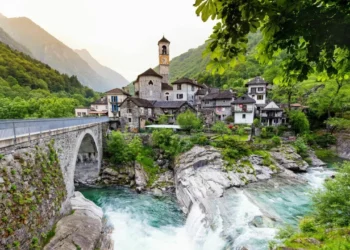
Project Sound invisible housewith which Slovenia will present itself at the 61st Venice Art Biennale in the Arsenal exhibition space, is based on a little-known episode of European history: a temporary wooden mosque erected in 1917 by the Austro-Hungarian army in Log pod Mangart near the Slovenian northwestern border. The building was built during the First World War for Bosniak soldiers who fought on the Soča front, and it functioned as part of the military infrastructure of the empire.
After the war, the building soon disappeared, leaving behind only a few photographs, and there were no traces of the space until recently. In physical terms, the history of the mosque is very short, but as one of the members of the Nonument Group said Miloš Kosecthe mosque has another history that begins much later.
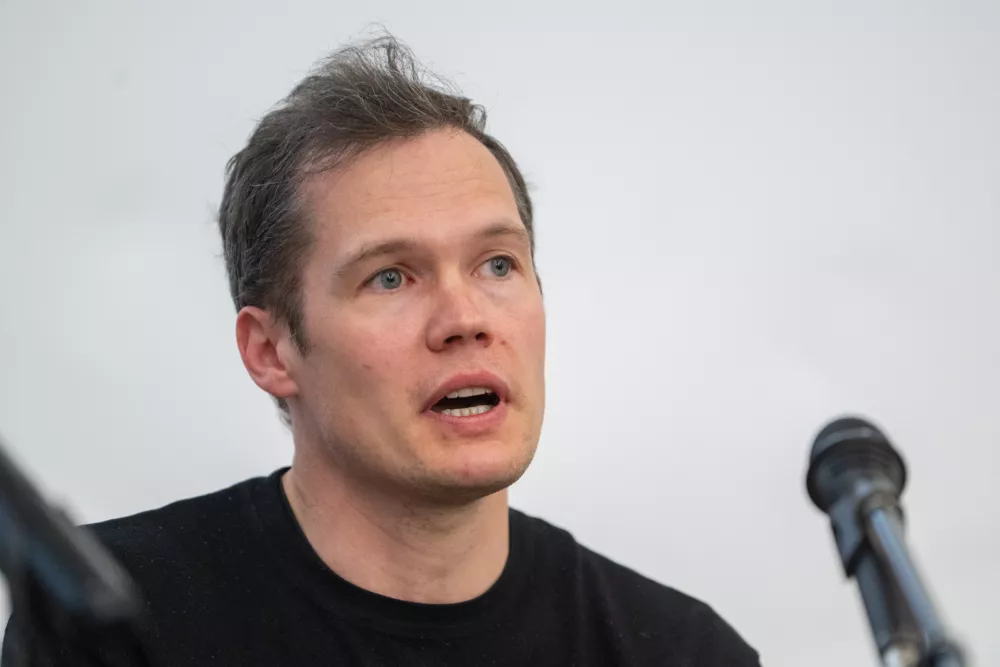
“In 1990, the first of the photographs found, a black-and-white photograph of the contrast between the iconic Alpine scenery of the mountain range around Mangart and the at first glance foreign, unusual, exotic, oriental – of course I use marked terms – mosque in the foreground, was presented in the just-opened Gorizia museum,” said the artist. And he added how this photo became a catalyst for both local, national and wider interest in the forgotten story, as well as in all the other meanings that began to be imposed on the then already overgrown meadow. New identities, however, settled on a meadow that, at first glance, is silent.
After the year 2000, as Kosec also said, “with the new paradigms of the so-called clash of civilizations and new intolerances, interest in what was already a very eloquent meadow at the time, both from the point of view of the search for foreignness and difference, and through the understanding that we once lived in countries that were very open and inclusive and took care of all their citizens in a spiritual and material sense.”
A space with traces of social changes
As Kosec also explained, the Slovenian pavilion project raises the question of how a silent and at first glance empty space, where there are no ruins left, could become so eloquent. “How can a vanished house produce such different, sometimes contradictory, sometimes very inclusive and sometimes exclusive narratives. How space defines us, even though at first glance it looks like there is nothing in this space. After we listen – and hearing is a key sense in this project – we realize that the meadow is full of life and stories that speak more about today than about 100 years ago.”
The mosque, the foundations of which were recently discovered by archaeological excavations on the lawn behind one of the houses and which was officially entered in the register of immovable cultural heritage of the Republic of Slovenia as a memorial site in 2025, is interpreted by the Nonument Group as a nonument: a place with a meaning that has changed due to socio-political changes.

They started the research with a visit to the meadow
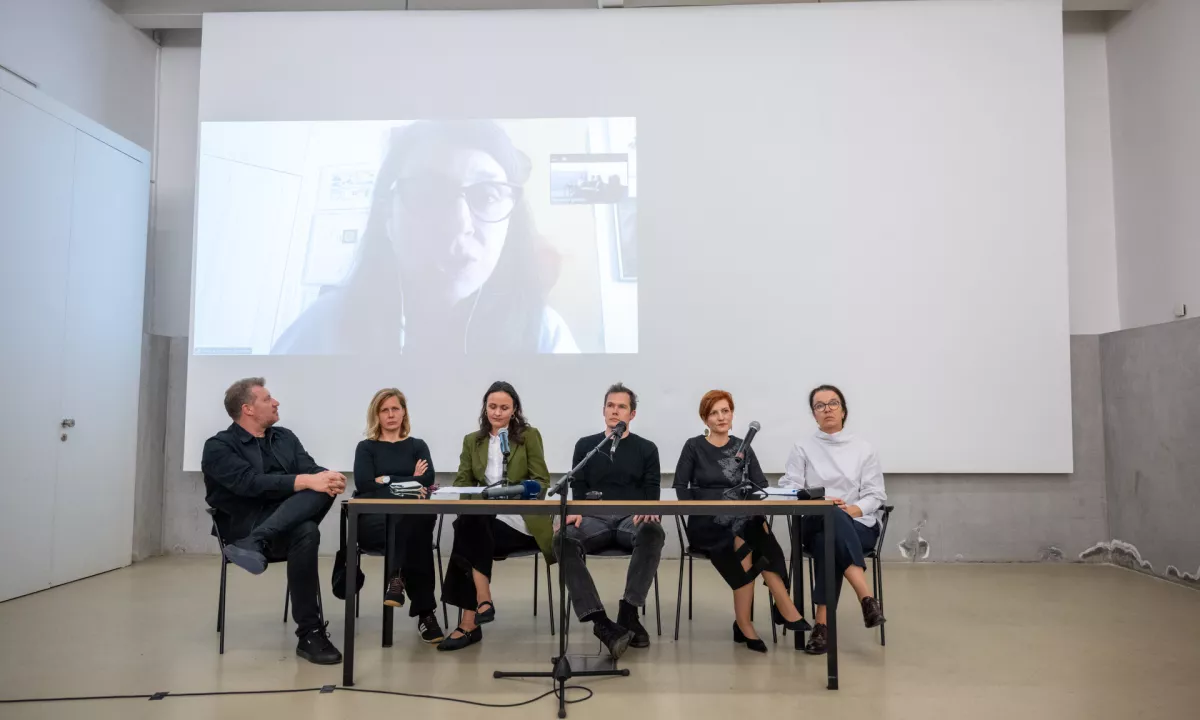
According to the members of the group, the research for the project Neje Tomšič started with a visit to the meadow and their reaction to it, which was then key to all further aesthetic decisions in designing the pavilion. During the research, members of the Nonument Group, including the aforementioned artist Miloš Kosec and Nika Graber, and the project’s scientific advisor Anja Zalta conducted numerous interviews, and selected excerpts from these conversations are published in the catalog, which is a very important part of the project and is also the basis for the song and the sound installation in the pavilion. These conversations, in which the researcher of the First World War and the first writer about the mosque in Log pod Mangart Vinko Avsenak, the head of the Nova Gorica regional unit of the Institute for the Protection of the Cultural Heritage of Slovenia Ernesta Drola, mufti Nedžad Grabus, activist, anthropologist and publicist Ahmed Pašić and many others, took part, confront different views on the building and its meaning in today’s time. Since the pavilion is inhabited by a sound installation, they also conducted a survey of the sound image of the location and field recording.
As Neja Tomšič also pointed out, in the pavilion they talk less about the history of the mosque, but rather focus on their reflection of the space and its story, while the catalog is exhaustively devoted to the meaning of the mosque, reflections and research.
A space of contemplation and reassurance
According to a member of the Nonument Group Nike Grabar when designing the project, they aimed to create a space of contemplation and reassurance, a safe space where “we can think about certain contents, which in this frenetic, lively, controversial and violent world, we cannot think about in a decent and humane way”.
The pavilion, where they used leftovers from the last architecture biennale, was created by an artist Martin Bricelj Baraga said that the visitor finds himself in the endless ruins, hears footsteps and is invited to inhabit the outline of the mosque’s floor plan, which represents a space of contemplation.
The Slovenian project is not linked to the thematic framework of the biennale
As the curator pointed out Nataša Petrešin – Bachelez, the Slovenian project is also related to the thematic framework of the biennale And Minor Keysdesigned by its chief curator Koyo Kouoh. She emphasized that “we are in an almost intimate and completely direct dialogue with the Slovenian pavilion project, as the core of the project is a multi-voiced and multi-directional story about the ruins as a metaphor for the constant search for human dignity in the age of civilization ruins”.
She also added that the theme of this year’s biennale invites us to slow down and listen to quieter, less exposed stories, which, however, have an extraordinary narrative power and an extraordinary power in changing certain discourses into the present. And such are the stories that the Nonument Group has been telling all along, both through interventions in public spaces and installations in art institutions.
Minister of Culture Asta Vrečkowho handles ongoing business, emphasized that the topic of the project is very current, and at the same time concerns both our cultural history and the future.
The Slovenian pavilion will be opened on May 6. The Venice Art Biennale will be open to the general public from May 9 to November 22.