The Federal Council of Education (CFE) approved a new national evaluation plan which, among other points, modifies the tests Learn. They seek to move from a system in which they consider that the evaluation became an “isolated set of measurements” to another oriented by strategic objectives, as mentioned in the objectives of the plan agreed upon by the 24 ministers of education of the provinces and modifies the 2026-2030 evaluation scheme.
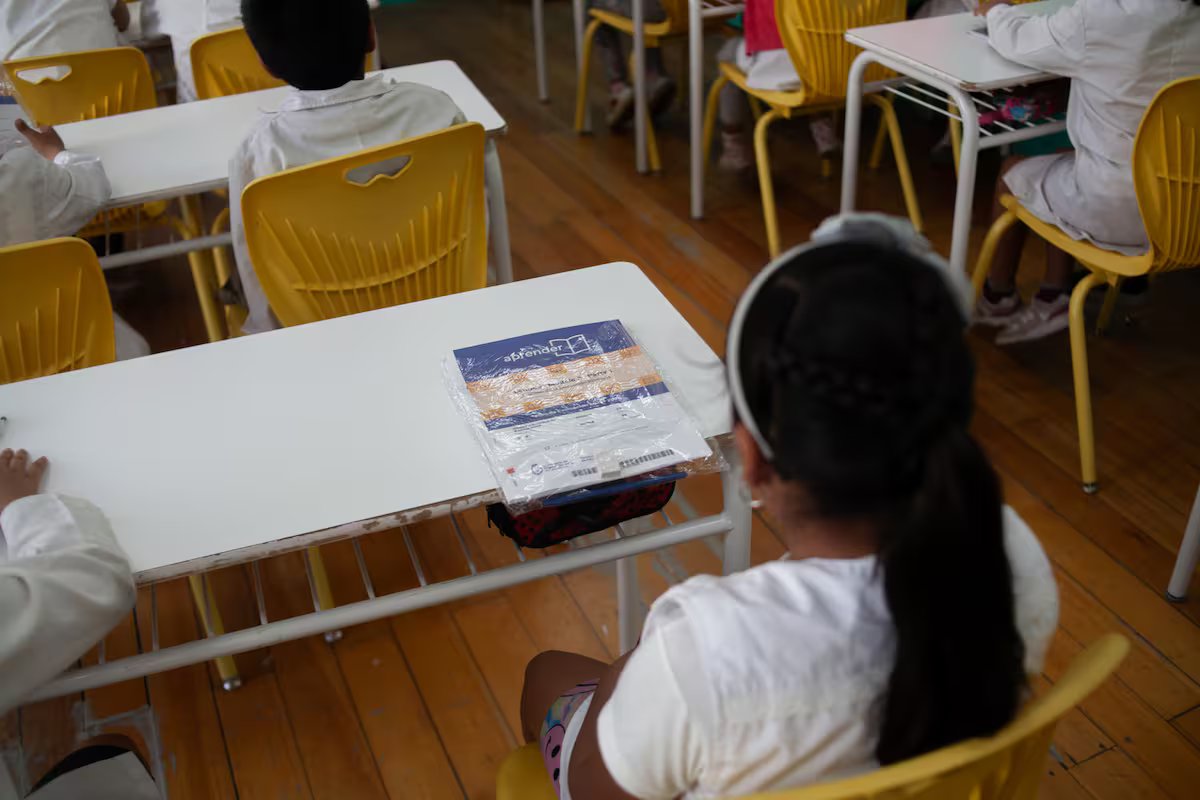
The most notable change in operational Learnthe national evaluation device that measures the language and mathematics learning of Argentine students, is the step to a biennial evaluation scheme that intersperses census tests (all schools) and show them (a representative selection).
Instead of carrying out massive operations every year, as has happened until now, alternating between primary and secondary, they will rotate census coverage with sample coverage.
They explain that this modification seeks to reduce the “operational load” about schools and technical teams in a context where other evaluation tools already exist, such as the jurisdictional ones implemented by each province or the Acompañar platform that they seek to extend.
One of the impacts will be that schools will now not receive their reports every two yearsas has happened since 2016, but every four, since reports by school can only be made when the evaluation is census-based.
“Currently, given the expansion of jurisdictional evaluations that return information to the school and the development of other formative evaluation devices, it is pertinent to rethink the centrality of Learning as a pedagogical feedback device, and thus its coverage. At the same time, numerous studies have shown that evaluating more frequently does not necessarily improve the educational system and, on the contrary, limits the time available to analyze and use the information,” the document states.
And he justifies: “In this way, the times allocated to the return and use of the results at the institutional level and to the technical strengthening of the instruments are expanded and organized.”
In line with the main – and almost only – flag of libertarian educational management, the approved plan prioritizes initial literacy. The evaluation, in any case, will also be census every four years. A fixed schedule is established to evaluate reading and mathematics in third grade, with a census in 2026 and 2030, and a sample in 2028.
Javier Milei’s administration reimplemented the evaluations to that degree. The Learn Literacy 2024 tests showed that less than half of Argentine students reach the reading ability expected for that level and one in ten children does not know how to read. In other words, only 45% of students reached the expected level of literacy at the end of the first cycle of primary school.
To this diagnosis, they add daily pedagogical support in the classroom with the Accompany platformdeveloped by the National Ministry of Education. Its coverage depends on jurisdictional use, but it is available in all schools in the country. It offers structured activities that allow formative and nominal evaluation of all registered students and detailed reports for teachers, directors, supervisors and authorities. This tool, then, allows the teacher to obtain evidence of each student’s performance in real time to adjust teaching.
In 2024 it was extended to the first cycle of primary school with specific reading activities. By 2026, the plan foresees the development of mathematics assessment activities for the first and second cycles of primary school.
According to the new plan schedule, the projected schedule will be as follows:
In line with other decisions they have made in educational matters, such as the elimination of the national parity, the Ministry of Education once again seeks to act as a federal coordinator of education whose management depends mainly on the provinces. This plan details technical tools validated by the Nation so that the provinces have shared methodological standards that are comparable between jurisdictional evaluations.
In the case of reading skills, it is called EGRA (for its acronym in English Early Grade Reading Assessment); Its technical validation ended in 2025 and it will have permanent national technical assistance until 2030. In the case of initial mathematical skills, the federal device is called EGMA (Early Grade Mathematics Assessment) and its validation process begins this year.
“These devices are made available to the provinces along with technical assistance bodies aimed at accompanying their implementation, promoting shared methodological standards, and strengthening local technical capacities for the development and use of educational evaluations,” they noted.
They also plan to develop federal item banks in the coming years: they will develop a repository of questions that will serve as “anchors” so that provinces can compare their local primary assessments with national standards.