The school year must be adapted to Greenlandic culture and societal conditions, Naleraq believes. MIO warns that the specific proposals may have negative consequences for some children.
Fixed summer holiday from 1 June to 31 August and the possibility of local shortening of the teaching week to four days in April and May.
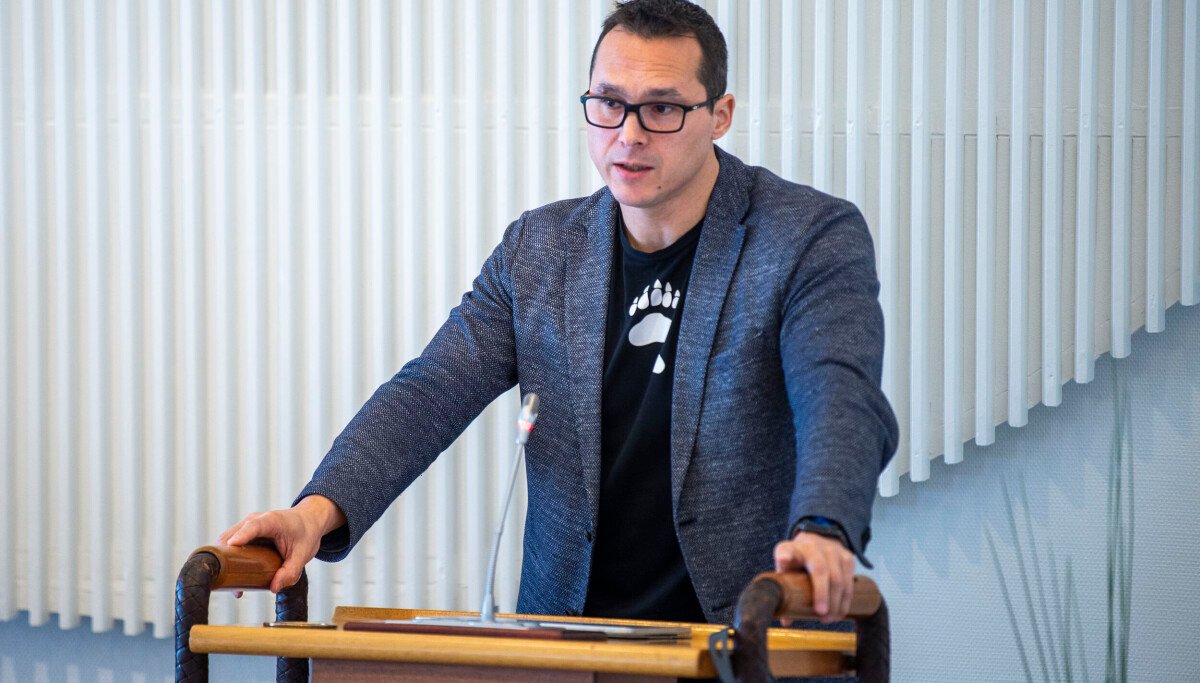
These are some of the things that Kuno Fencker (N) proposes in a restructuring of the primary school structure, so that the school year is adapted to Greenlandic cultural and societal conditions.
Together with two other points about the primary school, Kuno Fencker’s proposal must be considered by Inatsisartut today.
“Naleraq believes that Greenland’s children must grow up with a school system that is adapted to our reality. Greenland’s climate, seasons and traditional ways of life make it inappropriate to maintain a school calendar that is based on European conditions,” the resolution proposal states.
The proposal must make it possible for children and young people to participate actively in the family’s catching, hunting, fishing and storage and be an extension of school, as cultural education.
Naleraq refers to indigenous peoples in Nunavut, Alaska and Sami areas who have successfully adapted school systems to the rhythm of nature and culture.
However, the party recognizes that there may be a need to adjust childcare services for families who do not have time off all summer.
The school provides structure and community
Although it is important that children’s education supports the understanding and attachment to Greenlandic culture and nature, MIO strongly advises against an extended summer holiday.
This is what MIO writes in a press release.
The proposal for a total summer holiday of three months means that many children will be left for a longer time without the daily structure, fixed framework and stable adult contact that school normally provides, writes the children’s rights institution.
– Our experiences from travels throughout the country show that for many children – and especially for children in vulnerable positions – school constitutes a crucial safe space with structure, stable adults and community. For these children, school is often the place where they encounter predictability and safe relationships in everyday life.
– A three-month long summer holiday risks removing this point of reference and leaving the children without the stable contact with adults and daily structure, which is crucial for their well-being, says children’s spokesperson Stina Sværd in the press release.
They also point out that many families cannot take time off during the entire summer holiday period, and that access to childcare is limited in several places in the country.
At the same time, they warn that not all children have the opportunity to participate in hunting, trapping and cultural activities through the family.
MIO suggests, on the other hand, that cultural and nature-based knowledge is integrated to a greater extent in teaching, so that all children – regardless of the family’s resources and prerequisites – have the opportunity to acquire this knowledge.
More cultural learning in teaching
MIO recommends that Kuno Fencker’s proposal not be implemented in its current form.
In particular, they advise against introducing a total summer holiday of three months and creating four-day teaching weeks when parents still have a normal working week.
Instead, they suggest that vacation periods be placed more flexibly in relation to hunting and trapping seasons, without lumping it into three months of vacation.
They also suggest that cultural and nature-based learning be integrated into teaching.
Naleraq also suggests flexibility to use outdoor and nature-based teaching as part of the teaching obligation.
Together with Kuno Fencker’s proposal for a reorganization of the school year, Inatsisartut must deal with a point that there may be a maximum of 18 students in a primary school class, and a point that written step tests in 3rd and 7th grade are abolished. Both proposals have been put forward by Demokraatits Inatsisartutgruppe.
All three proposals must be considered on 12 May.