Inflation is rising rapidly, all over the world, and the Eurozone is no exception, which is being understood as enormous pressure for central banks to start raising interest rates. In Europe, most analysts point to two or even three increases this year of 0.25 percentage points, starting at the end of April. The current level is 2%.
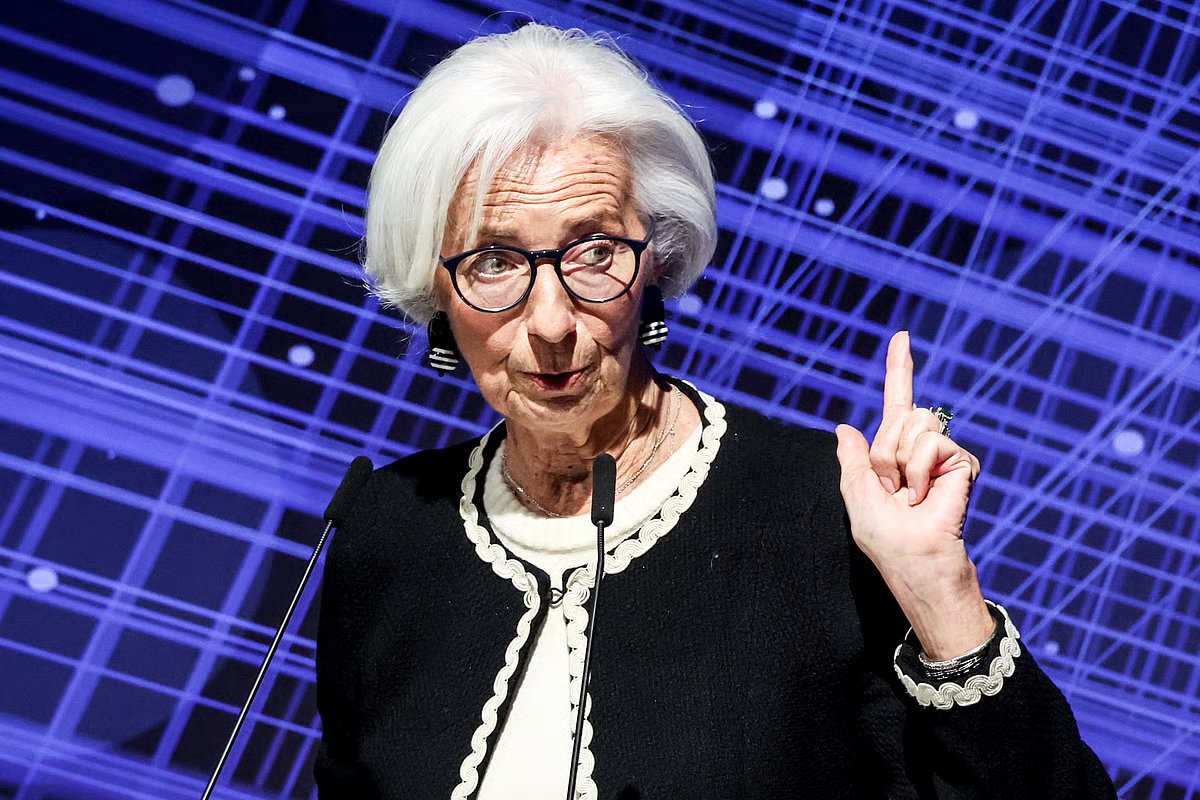
At a conference that took place on Monday afternoon, in Berlin, Germany, the president of the European Central Bank (ECB) went further and said that there is evidence that European families are today “more sensitive” to cost increases than they were, for example, in 2022, when inflation soared because of the war between Russia and Ukraine.
For Christine Lagarde, this “greater attention to inflation” is yet another argument for the ECB to increase the cost of money because workers will be quicker or more insistent in trying to negotiate or update salary increases to protect the loss of purchasing power inflicted by the rising and ever-increasing costs of goods and services, not just energy.
The same psychology can happen on the companies’ side, said Lagarde: increase prices more quickly so as not to face some erosion of margins as happened four years ago, when the cost of energy also rose sharply.
At the time, Europe was very dependent on Russia in this regard, especially Germany, the largest economy in the Eurozone.
Both of these behaviors (consumers and companies) feed the so-called second-round effects on inflation.
Lagarde, who spoke to an audience of bankers, at the 75th anniversary of the Association of German Banks (Bundesverband deutscher Banken), in Berlinsaid that at the ECB they are paying particular attention to the speed of transmission of energy prices, which this time, the head of the central bank suspects, could have broader effects on inflation than four years ago, depending of course on the duration of the conflict in the Middle East, to which there is still no end in sight.
According to the euro’s central banker, “the same energy shock can have very different effects depending on the economic environment in which it occurs”.
“In 2022, strong demand, global bottlenecks in supply chains and an acute labor shortage have created conditions for widespread transmission” of rising energy costs to inflation.
And it was different in the two previous oil shocks. “When energy prices rose in 2008 and 2011, economies became weaker which meant that the cost increase was mostly contained in the energy component.”
“The memory is fresh”
But this time it’s even more different. “On the one hand, families and companies have just experienced a major inflationary shock (following the Russia-Ukraine conflict) and may be more sensitive to rising costs.”
For Lagarde, “the memory is fresh” and the “most recent surveys suggest that companies’ sales price expectations have increased and that families pay more attention to inflation” than before.
This is the force that pressures the ECB to raise interest rates to avoid the entrenchment of inflation and the second-round effects that, once installed, are very difficult to reverse.
“Two opposing forces should influence inflation’s response this time” and the second force, the one that helps the ECB more in terms of popularity and the economy a lot in the short term (not raising interest rates so much), is that “higher energy prices and weaker consumer confidence will weigh on demand, especially taking into account that growth, although recovering, was already moderate before the start of the conflict”.
It would be crucial for the ECB as “this could limit the size of price and wage increases”, hopes the president of the Frankfurt-based authority.
“The relative importance of these forces will only become clear as we observe concrete data on company price behavior and wage negotiations”, in other words, “this double uncertainty regarding the duration of the shock (current) and the extent of transmission (to prices and production) justifies the collection of more information before drawing firm conclusions for our monetary policy”.