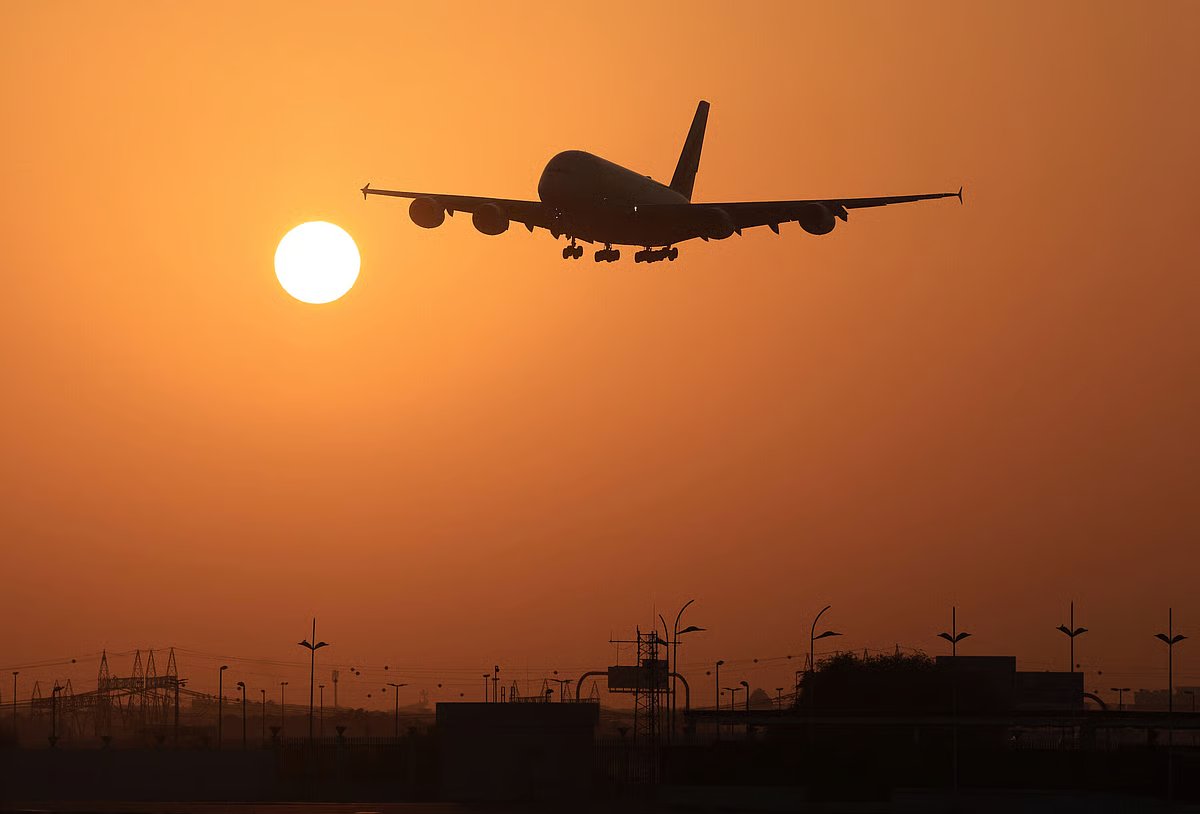
The European Commission reiterated today that there is no shortage of fuel, particularly for aviation, in the European Union (EU), but assured preparation for “possible actions” and recalled the “significant capacity” to refine crude oil in the community.
“There is no fuel shortage in the EU at the moment. Obviously, part of the preparation is talking to citizens, informing them, and we know that the situation is not ideal,” said EU executive spokeswoman Eva Hrncirova.
Speaking at the institution’s press conference in Brussels, the official pointed out that “the availability of aviation fuel is a priority and it is important to say that here in the EU there is also a significant capacity to refine crude oil and produce aviation fuel”.
“We are preparing for possible actions”, he highlighted.
Eva Hrncirova admitted that the energy crisis caused by the conflict in the Middle East “obviously affects the markets here in the European Union”.
“Our role is mainly to coordinate and prepare different scenarios. We have the oil coordination group, which met last week, and the group will also meet again at the end of this week”, he said.
Still, he recalled that “everything depends on the evolution of the situation”, reinforcing that, “at this stage, there is no fuel shortage in the EU”.
Following the attacks by the United States and Israel on Iran and the consequent Iranian response, around two months ago, there have been disturbances in the Strait of Hormuz, through which around 20% of the world’s oil passes, which affects aviation fuel as it directly depends on the price and availability of crude oil.
EU Transport Ministers will meet on Tuesday, in an informal videoconference, to discuss the impacts of the conflict in the Middle East on the sector, particularly aviation given the pressure on fuel.
Last Thursday, the director of the International Energy Agency said Europe has “perhaps six more weeks of jet fuel”, warning of possible flight cancellations soon if oil supplies remain blocked.
On the same day, the Association of Airlines in Portugal said that, for now, there is no impact on the operation, but admits the possibility of flight cancellations and higher prices if the energy crisis persists.
EU laws oblige member states to maintain 90-day strategic reserves of both oil and gas.
With regard to oil, it is up to Member States to decide what part of these 90-day reserves corresponds to crude oil and what part corresponds to refined products, including kerosene and aviation fuel.
An escalation of the conflict involving Iran, the United States and Israel has direct impacts on the transport sector, particularly the maritime sector in any disturbance in the Strait of Hormuz.
In aviation, we are witnessing the closure or restriction of airspace, greater fuel consumption and higher operational costs.