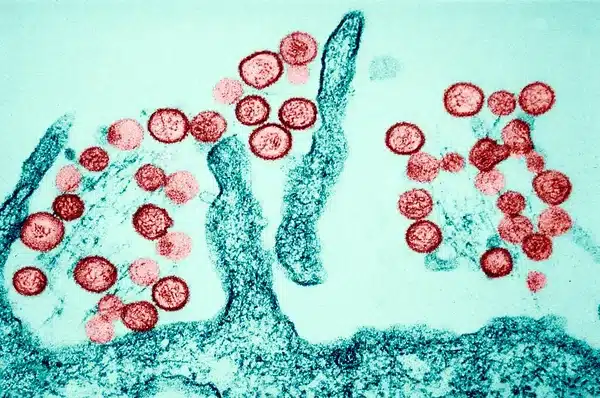
Three deaths and six suspected cases of Hanta virus infection have been reported on board a cruise ship, the World Health Organization announced, but assures that the risk to the general public remains low.
According to the WHO, the cases were recorded on board the ship MV Hondius, which was crossing the Atlantic Ocean between Ushuaia (Argentina) and Cape Verde. Among the victims are two Dutch nationals aged 70 and 69.
Quoted by Reuters, WHO regional director for Europe, Hans Henri P. Kluge, indicated that “the risk to the general population remains low”, specifying that no travel restrictions or panic measures are recommended at this stage.
A rare infection linked to rodents
According to the Centers for Disease Control and Prevention, hantavirus infections remain rare and occur primarily in rural areas, where rodents, the main vectors of the virus, are present.
Transmission occurs mainly by inhalation of air contaminated by the urine, excrement or saliva of these animals. In rare cases, it can also result from a bite or indirect contact with contaminated surfaces.
Each strain of the virus is associated with a specific species of rodent. In the United States, the illness is known as “hantavirus pulmonary syndrome”, while in Europe and Asia it is called “hemorrhagic fever with renal syndrome”.
Symptoms and variable severity
The infection initially manifests itself with fever, intense fatigue and muscle pain, particularly in the back and lower limbs. Other symptoms may appear, such as headache, dizziness, chills, vomiting and digestive problems.
In some cases, the disease progresses to serious respiratory complications, with accumulation of fluid in the lungs. The mortality rate can then reach around 40%.
In its renal form, the disease can cause acute renal failure, with a mortality rate varying between 1% and 15%.
No specific treatment to date
To date, no specific treatment for Hanta virus is available. Management is primarily based on supportive care, including the administration of oxygen, fluids and, if necessary, respiratory assistance.
Specialists emphasize the importance of early diagnosis to improve the chances of survival.
Research is currently underway to develop antiviral treatments capable of fighting this virus more effectively.