The EU asylum reform starts on June 12th. Until then, a new basic care agreement between the federal and state governments and a custody law would be needed. The former tends not to work, the latter is scarce.
June 12th is marked heavily in the Interior Ministry’s calendar. Because that’s when the EU asylum reform comes into force. The new basic service agreement between the federal and state governments should also be signed by then. But that will be difficult.
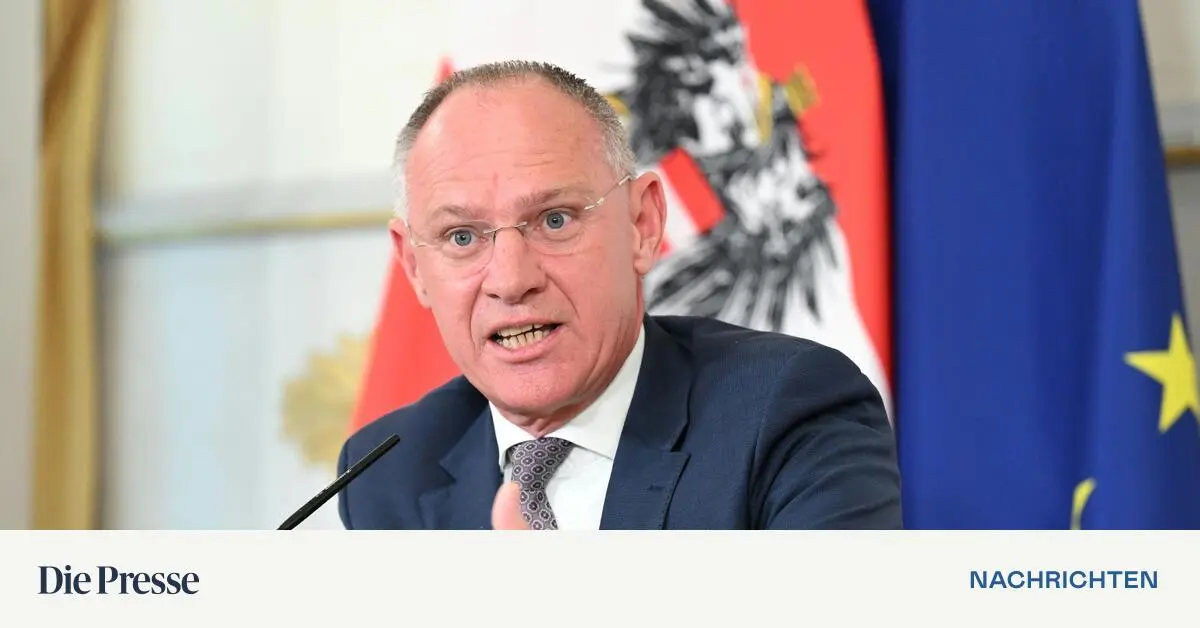
It was about a month ago when the “chief negotiator” of the states – the Styrian Asylum Provincial Council – sold Hannes Amesbauer (FPÖ) – the compromise with the Ministry of the Interior as a great success. Since then, the (non-public) statements from the other countries have been received by the Ministry of the Interior, where they are “viewed”. Then there will be further discussions, according to the BMI.
Burgenland already has a date for this – and a rather late one: the state refugee speakers’ conference in June (still chaired by Styria). You are not alone with this idea either. It was “nice anyway” that Amesbauer reached a compromise with the Interior Minister Gerhard Karner (ÖVP) negotiated, “but there is more than one federal state”. A “broad discussion” is expected. Together with everyone. This could result in what the Carinthian governor said Daniel Fellner (SPÖ) described it as “undesirable”. Until a new agreement comes into force, the states must derive the legal situation from a “summary of federal, state laws and the EU admission directive”.
So what are the country concerns? In the office of Vienna’s Asylum Council Peter Hacker (SPÖ) is called the costs. It remains unclear, for example, who will pay for subsequent children as part of the newly regulated family reunification. There is also no adjustment of the daily rates to inflation. In addition, the “overall picture” also included other questions (such as costs for German courses) that were in the outstanding Integration Obligations Act from Minister Claudia Bauer (ÖVP) should be regulated. But it’s not just about the money. Burgenland also wants to ensure that the allocation of asylum seekers from the federal government to the states only takes place by mutual agreement.
However, basic services are not the only federal-state construction site in connection with the asylum reform. In the care from day one for unaccompanied minor refugees (UMF) from the house of the Minister of Justice Anna Sporrer (SPÖ), four federal states tried to trigger the consultation mechanism: Lower Austria, Styria, Salzburg and Burgenland.
“Attempted” because, according to the Ministry of Finance, all of them failed because of the trivial cost limit. The mechanism is designed to allow a local authority that is financially burdened by the rules of another to force negotiations. There is a lower limit for this that has not been reached. Negotiations are still taking place. But will it last until May 20th? According to the BMJ, the Custody of Unaccompanied Minors Act is in plenary session, including an amendment. It is scheduled to come into force on June 12th – the date sounds familiar.
The federal states governed by turquoise-blue or blue-turquoise have already made known the reasons for their protest (“Die Presse” reported). Burgenland was quieter. When asked, the department of the responsible state council said Leonhard Schneemann (SPÖ): There was a lack of specifics. It is unclear which tasks child and youth welfare services have to take on when UMF is first detected and how the responsibilities between the federal states are regulated. So far, the UMF have mostly come to federal facilities, especially in Traiskirchen. Incidentally, the problem cannot be solved by a “quick fix”, such as an increase in the UMF daily rates in the basic service agreement, says Eisenstadt. “A mere financial adjustment is not enough.”