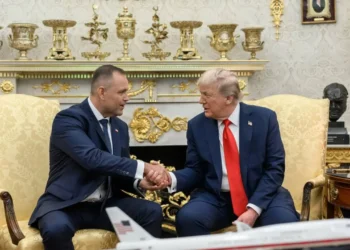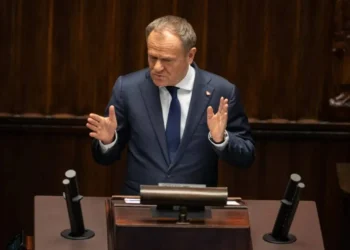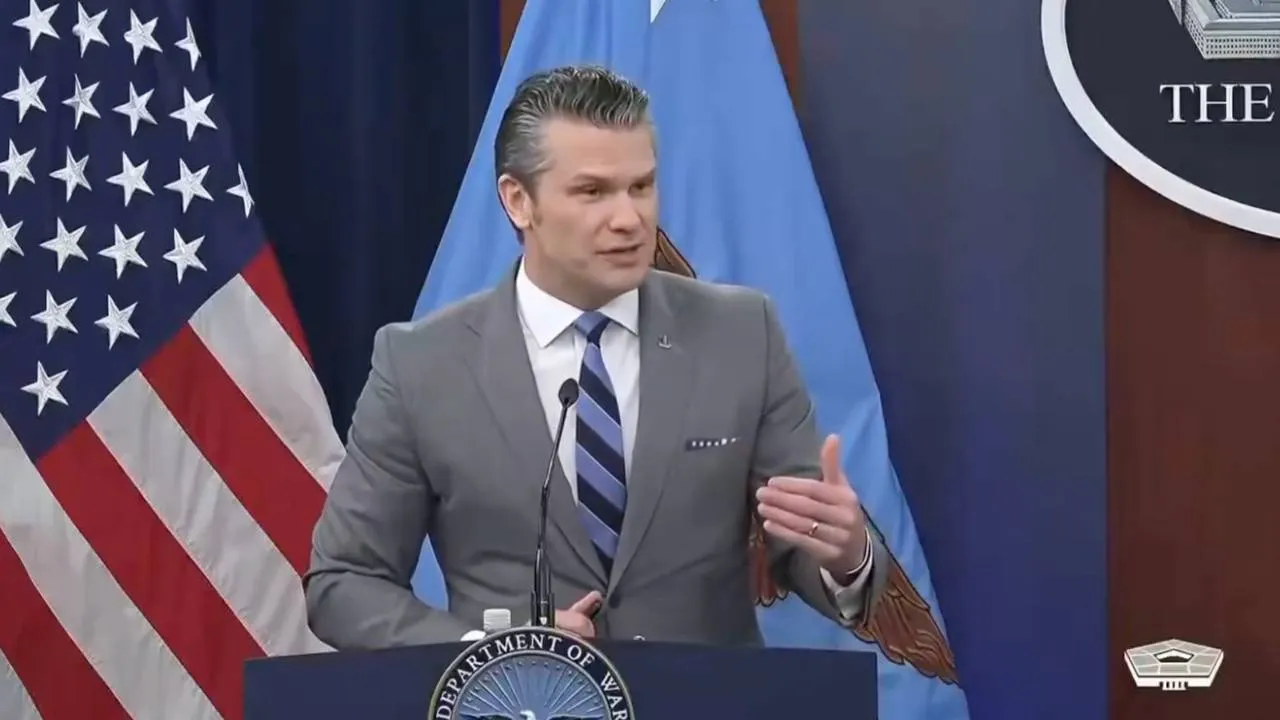
“Model allies who mobilize […] will receive our special consideration,” said U.S. Secretary of War Pete Hegseth in the House of Representatives. The politician from the administration of President Donald Trump explicitly mentioned Poland among a small group of countries. A clear signal is coming from Washington that Polish-American cooperation continues and remains worth relying on. However, the words of the Polish prime minister, published in the Financial Times, are not without significance.
Donald Tusk said in an interview with the British daily Financial Times that “the biggest and most important question for Europe is whether the United States is ready to be as loyal as described in our NATO treaties.” The prime minister faced criticism for publicly weakening the Alliance and Polish-American cooperation.
Representatives of the U.S. administration have no doubts that the alliance with Washington is crucial for Poland. Secretary of War Pete Hegseth addressed the issue clearly in remarks before the House Armed Services Committee.
“In short, Americans want partners, not dependencies. And thanks to President Trump’s visionary leadership, that is exactly what we are building – true partnerships and alliances based on hard power,”
he said, referring to NATO.
“Our allies are not powerless. These are nations capable of doing far more for themselves than they have done. It is time for them to rise, and some already are. In fact, many of them are nations with their own proud and strong military traditions, and we should treat them as such. We can, should, and must expect them to do their part, just as President Trump has done,”
Hegseth added.
He listed a group of countries that, in the U.S. view, are fulfilling their allied commitments, explicitly naming Poland:
“Model allies who mobilize, such as Israel, South Korea, Poland, Finland, the Baltic states, and others, will receive our special consideration.”
He warned that “allies who fail to do so, those who continue not to meet their obligations to collective defense, will face consequences.”
The Secretary of War emphasized that “President Trump likes to help countries that help themselves.”
“That is the nature of partnerships, not dependencies. That is what we owe our friends, and, most importantly, the American people,”
he said.
Echoes of Tusk’s Remarks
The potential damage caused by the Polish prime minister’s statements in the Financial Times was highlighted a few days earlier by Tomasz Szatkowski, former Permanent Representative of Poland to NATO.
Following a series of meetings in the United States, he noted that “the willingness (of the U.S.) to engage in dialogue and find common ground with reasonable forces in Europe is today surprisingly greater than it probably was a year ago.”
“There is more humility and a greater willingness to present constructive proposals. Unfortunately, Poland does not seem to be benefiting from this trend. Donald Tusk’s recent interview in the Financial Times is just one of several elements of this phenomenon that have been strongly noted,”
Szatkowski wrote.
He added that “in the Department of War, thanks to the pragmatic policy of Merz, Germany is already taking Poland’s place as the model ally.”