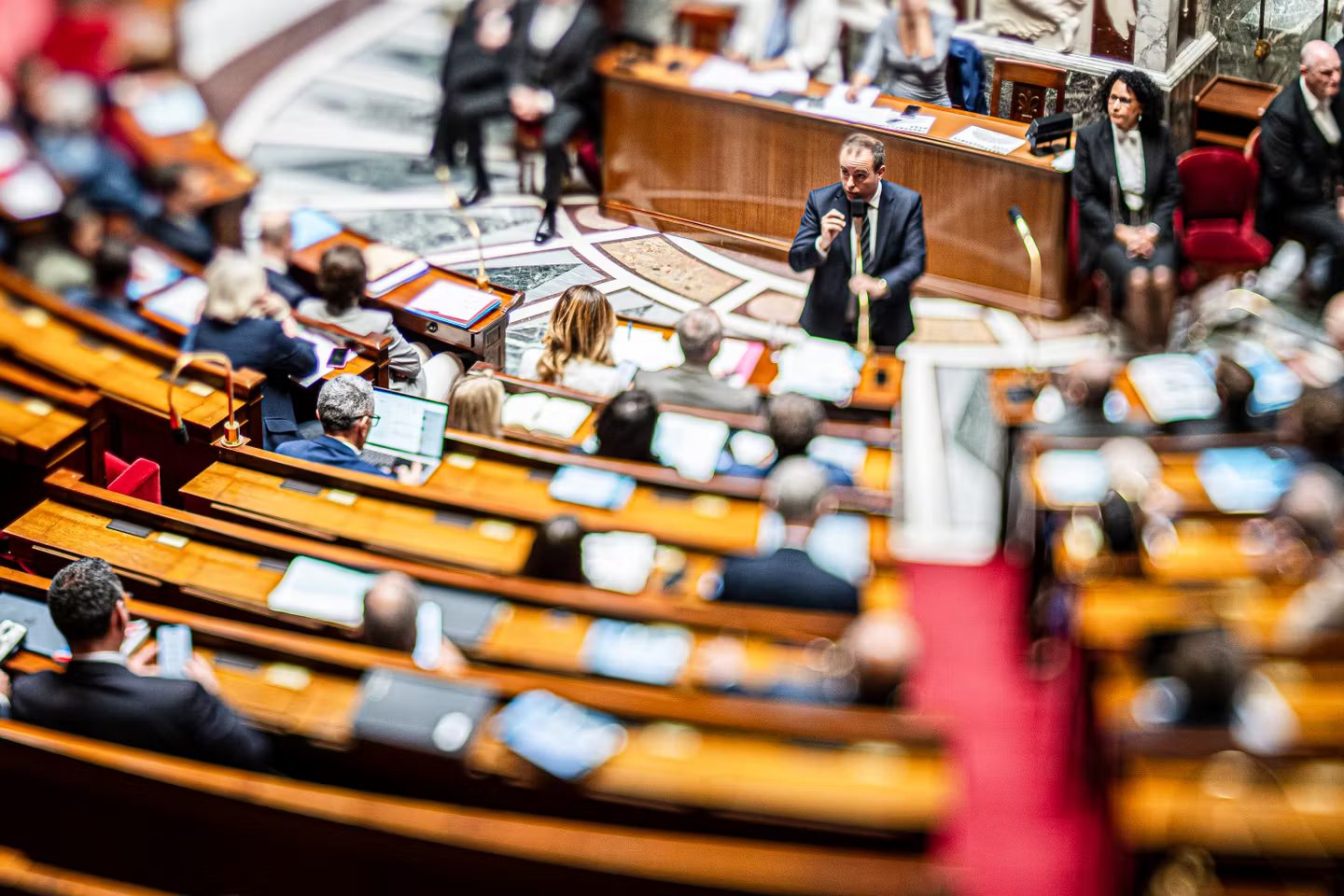
Through their 2025 book La Dissolution de la Ve République (“The Dissolution of the Fifth Republic”), which was recently awarded a prize by the Assemblée Nationale, Denis Baranger and Olivier Beaud, professors of public law at Université Paris-Panthéon-Assas, analyze the causes of the political crisis shaking France’s institutional system.
What is your assessment, at this stage, of Sébastien Lecornu’s tenure as French prime minister?
Denis Baranger: When the Abbé Sieyès was asked what he did during the Reign of Terror, he replied: “I survived.” Sébastien Lecornu, for his part, could answer: “I endured.” His first achievement has been simply to survive. But this minority government, born under a bad sign, is destined for planned obsolescence. While Mr. Lecornu has skillfully maneuvered with his strategy of being “the weakest prime minister of the Fifth Republic,” we must not forget that, constitutionally, he owes his position solely to the president and that he carries almost no political weight. Although the Assemblée Nationale has not voted him out, it is only offering him negative support. The Rassemblement National [RN, far right] has decided not to bring a motion of no confidence against him. The central bloc and the left, excluding La France Insoumise [LFI, radical left], have formed a minimal coalition on the basis of a tacit agreement: “No dissolution, no resignation [of the president].” That explains why the government has not fallen, but instead stumbles very often, moving from frequent parliamentary defeats to partial political setbacks: the unusual vote on the 2026 budget, the setback on low-emission zones, discord over May 1 [Labor Day, which many workers traditionally get off] and the government being outvoted on the unemployment benefits bill.
You have 81.93% of this article left to read. The rest is for subscribers only.