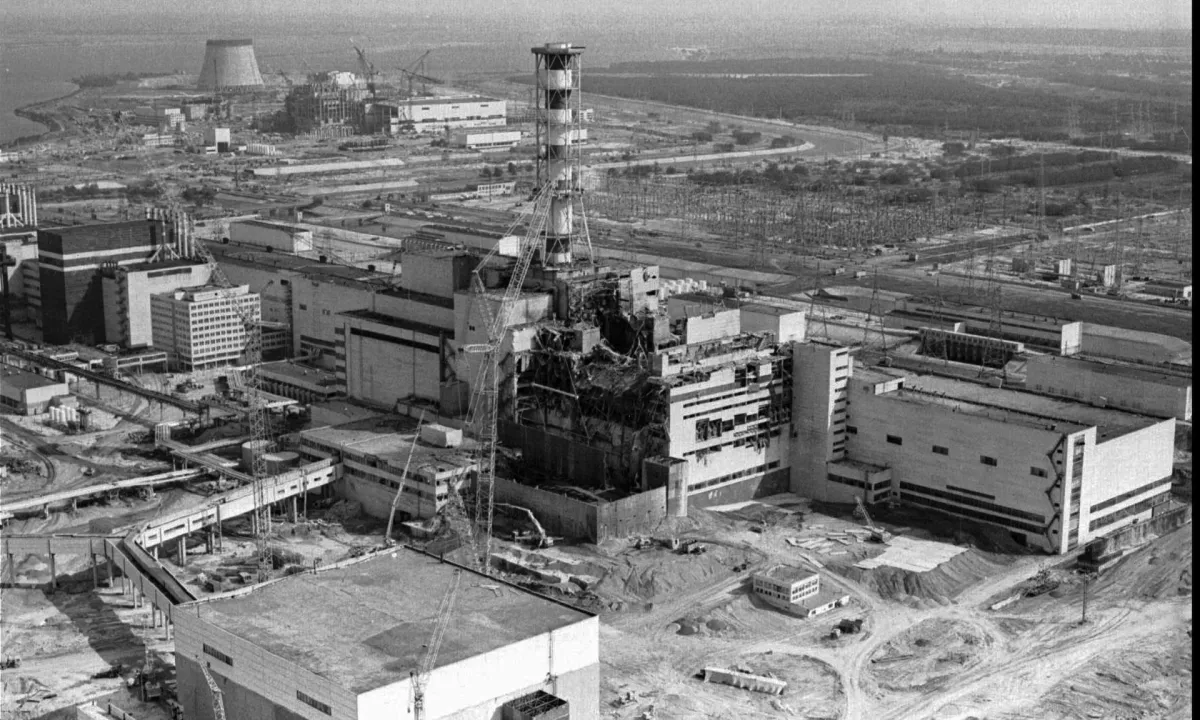
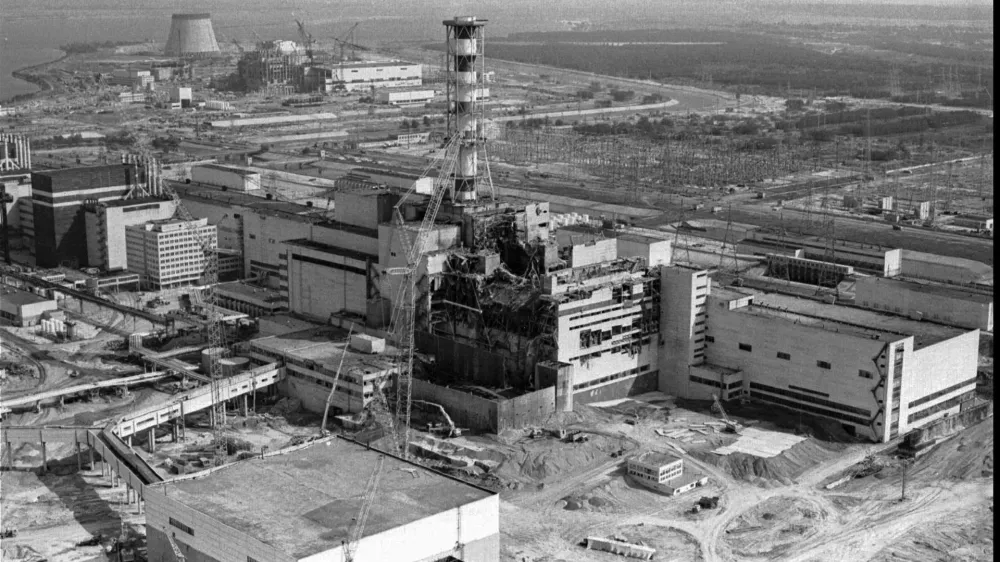
Chernobyl, 40 years later: The forgotten period of another “Slovenian spring”
Late in the afternoon on Friday, April 25, 1986, I sat down at a large walnut desk. I started typing the editorial in the special issue on the typewriter Journal of Science Criticismof which I was the youngest member of the editorial board, and which at the time mainly brought social science translations and author’s contributions to the Slovenian space, which were more or less conceptually theoretically based on the so-called critical theory of society.
That issue of this social sciences and humanities journal was special in that it did not publish “critically Marxist” or “post-Marxist theoretical discussions”, but instead published edited and authorized contributions from the international round table of the Nuclear Power Plant – yes or no?. The round table was organized by the editors of the magazine a good two months before in the well-visited Štih hall of Cankarjev dom, which from the middle to the end of the 1980s was also a place where the ideas and concepts of the later “left-liberal” political pole of Slovenian politics were presented, articulated and in a mutual critical dialogue.
Kardel’s big throw
The founder of the international round table on nuclear energy was the late philosopher and sociologist dr. Leo Šešerko. It was the first time, at least since the Second World War, in Slovenia that in a public space, which in every respect exceeded the university lecture halls or the premises of various societies, domestic and foreign experts who were critical of the official line of this policy discussed a very burning and hot topic of one of the key development policies at the time. In addition to the already well-known critic of the industrial-technical “progress” of the domestic public at the time, the psychiatrist dr. Hubert Požarnik, Zagreb development economist dr. Slavko Kulić and two British “far-left” sociologists participated in it, and the main star was the German nuclear engineer Klaus Traube, a former manager in the German nuclear industry and one of its leading opponents. Falsely suspected of passing classified information to the left-wing terrorist organization Red Army Faction, he was the victim of illegal wiretapping by German intelligence in the 1970s. In his presence and in the presence of dr. Mihael Gabrijelo Tomšič, another very skeptical nuclear energy expert with practical experience in the field of “peaceful use of the atom”, and the later Minister of Energy in the government of Lojze Peterlet (and for a short time also in the government of Janez Drnovšek) behaved very calmly, respectfully and restrained, the otherwise very self-confident and arrogant Slovenian nuclear physicists and energetics most exposed at the time.
The article is accessible only to subscribers
The article is accessible only to subscribers