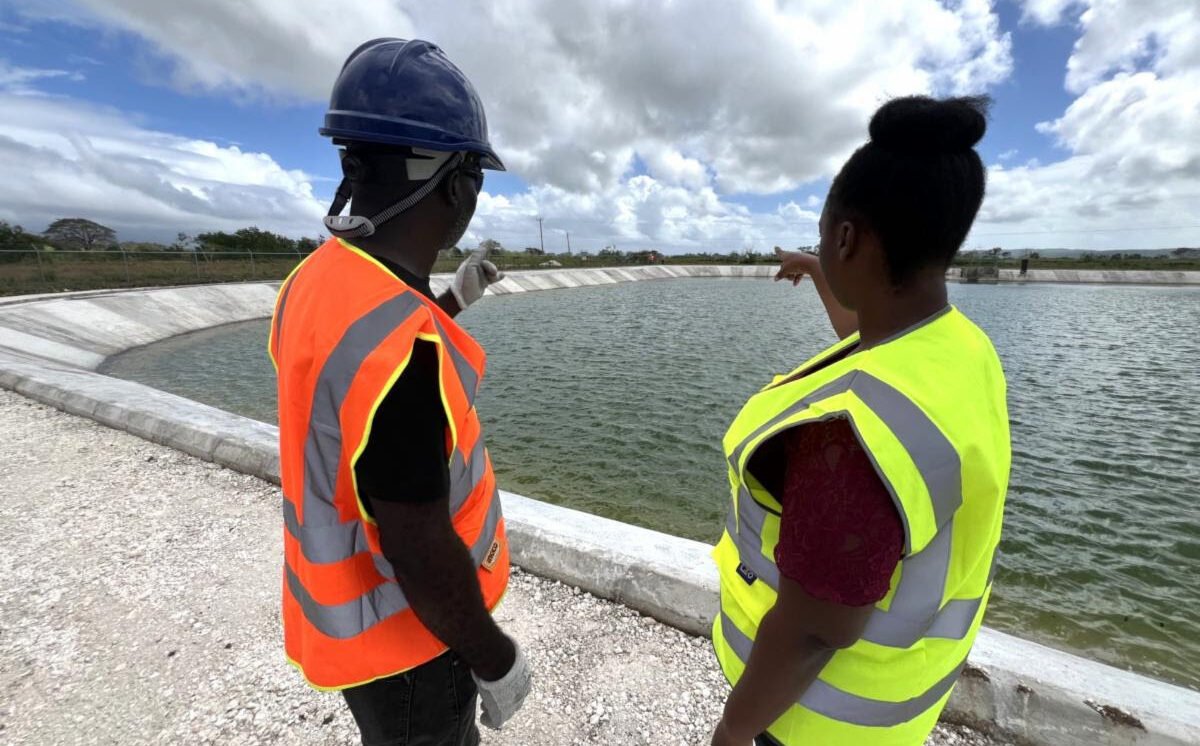

The Board of Directors of the Caribbean Development Bank (CDB) has authorized an additional US$12 million in funding to help the Government of Jamaica complete the Southern Plains Agricultural Development (SPAD) Project.
Defined as a major initiative by a CDB press release, it is focused on converting climate-sensitive farmland into more resilient and productive agricultural zones.
The new financing package takes the form of a concessional loan provided through CDB’s Special Development Fund. It is reportedly intended to cover increased project costs linked to global supply chain disruptions stemming from the COVID-19 pandemic and the war in Ukraine, along with damage and delays caused by extreme weather. By filling the remaining financial gap, the funding will allow the SPAD Project to reach completion by 2028.
Emphasizing the importance of this support, Mr. L. O’Reilly Lewis, Director of Projects at CDB, stated, “This additional financing is essential to safeguard and build on the gains already achieved under the SPAD Project. Completing this innovative initiative will strengthen Jamaica’s food security, safeguard rural livelihoods and ensure that climate resilient infrastructure continues to deliver long term benefits for farmers and communities.”
According to the release, the approved US$12 million will fund several final components of the project, including the installation and commissioning of irrigation systems at Amity Hall, as well as the construction of produce handling and packhouse facilities at Amity Hall in St. Catherine and Parnassus in Clarendon.
It will also cover associated engineering, supervision, and project management expenses. In addition, the financing will maintain farmer support programmes, such as access to climate-smart irrigation equipment through a Matching Grant Scheme, training in Good Agricultural Practices and Climate Smart Agriculture, and the establishment of systems for long-term operation and maintenance.
The SPAD Project, implemented by CDB under the United Kingdom Caribbean Infrastructure Fund Programme, has already produced measurable benefits across Jamaica’s Southern Plains, a key agricultural region, says CDB. To date, more than 790 hectares of farmland have been equipped with reliable irrigation, and approximately 40 kilometres of farm access roads have been rehabilitated. The initiative has also expanded opportunities for small and medium-scale farmers—including women and young people—by improving access to land, water, modern irrigation technologies, training, and markets.
Reportedly, a central feature of the project is the transition from traditional flood irrigation to more efficient, climate-resilient water systems. This shift is enabling farmers to better withstand drought conditions, maintain stable production levels, reduce crop losses, and increase their incomes. CDB asserts that these improvements are especially critical as Jamaica’s agricultural sector continues to face repeated climate-related challenges, including Hurricanes Melissa and Beryl. While irrigation infrastructure at Parnassus is already fully operational, work at Amity Hall is approaching completion.
The supplementary financing also supports the objectives outlined in CDB’s Strategic Plan 2026–2035, which prioritizes strengthening economic, social, and environmental resilience. Through investments in climate-resilient food systems, sustainable livelihoods, and durable infrastructure, the plan aims to help communities better endure and recover from future shocks.




![COMMENTARY: Once upon a time – Diplomacy in the image of our times [Shridath Ramphal Centre Trading Thoughts]](https://agentially.org/wp-content/uploads/2026/05/pexels-gabby-k-6289049-e1777829357976-350x250.jpg)