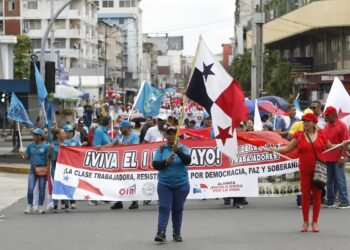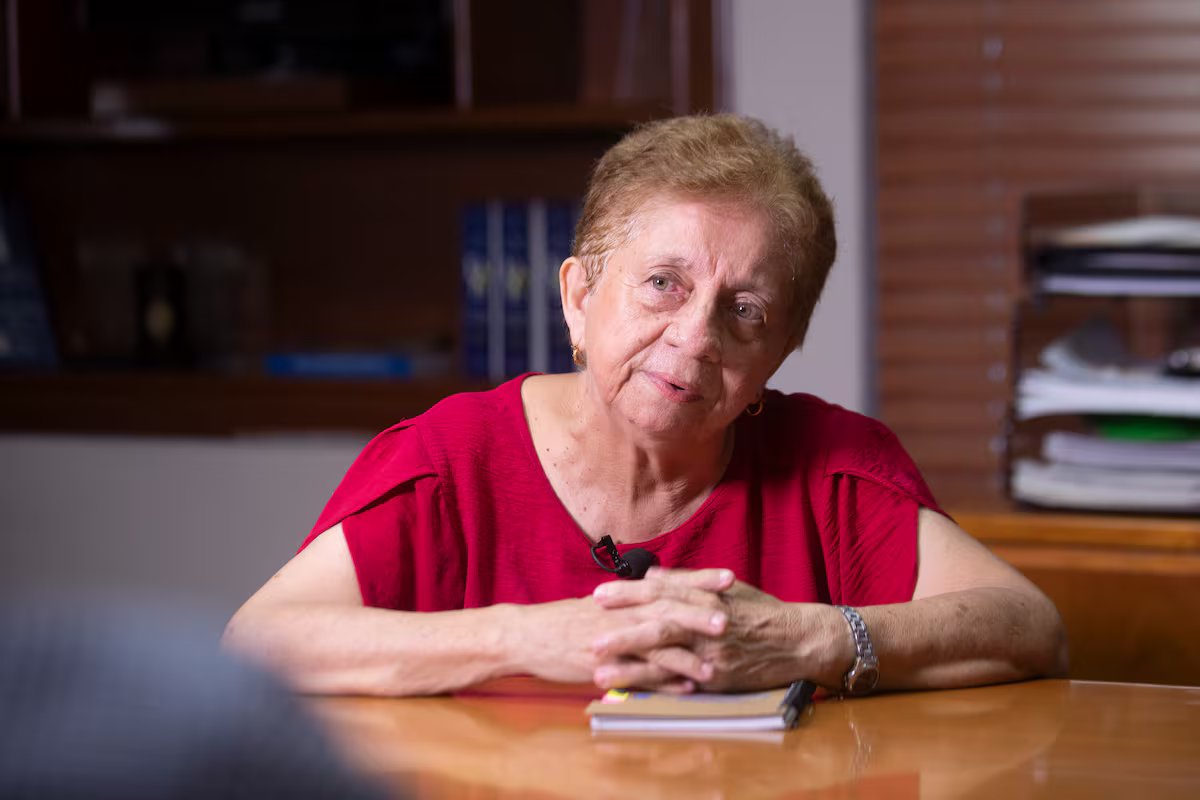
Within the framework of International Workers’ Day, this May 1, the union leader and educator Nelva Reyes He called for historical memory and the organization of the working class, highlighting that achievements such as the eight-hour workday were not a gift from the system, but the result of struggles, persecution and shed blood.
“The eight hours were not free, no one came and gave them to us for our pretty face“, said.
Reyes considers that there is an alarming growth in informal employment. He indicated that in Panama there are around 777 thousand people working in the informal economy.
“The International Labor Organization establishes that for decent work to exist there must be a defined working day, salary, social security, thirteenth month and vacations. And those who are in the informal sector have none of that,” he expressed.
The leader highlighted that within that universe there are 341,795 women who work without guarantees, many of them heads of households. He assured that this reality not only exposes them to economic precariousness, but also to a disproportionate social burden, since they support the upbringing at home and the educational follow-up of their children.

But Reyes expanded his analysis to another issue that, in his opinion, aggravates the social crisis and hits workers: access to drinking water. He criticized that large areas of the country face deficiencies despite the national water wealth. “It is an injustice for a country that has rivers, streams and water sources. Until yesterday, almost the entire city center did not have water,” he claimed.
Minimum wages
On the labor front, Reyes criticized the recent adjustment to the minimum wage, in January 2026. “It has been the worst thing that has been done in all the years of negotiations,” he added.
He also recalled that the teaching union marked one year on April 23 since the start of a strike in rejection of Law 462, which reformed the Social Security Fund and that to date dozens of educators remain separated for protesting.
Reyes also denounced what he described as an offensive against unionism, directly mentioning the case of the Single National Union of Construction and Similar Workers (Suntracs).
He assured that there are efforts to dissolve it and questioned that its new board of directors has not yet been recognized, despite the fact that – as he said – months have already passed since the election.
Young people and the challenge of the organization
Asked about the vision of new generations regarding the union movement, Reyes expressed concern about what she described as an “alienation” caused by the use of technologies and social networks, which limits political and union training. “They don’t read anything, only three lines that WhatsApp sends them,” he lamented.
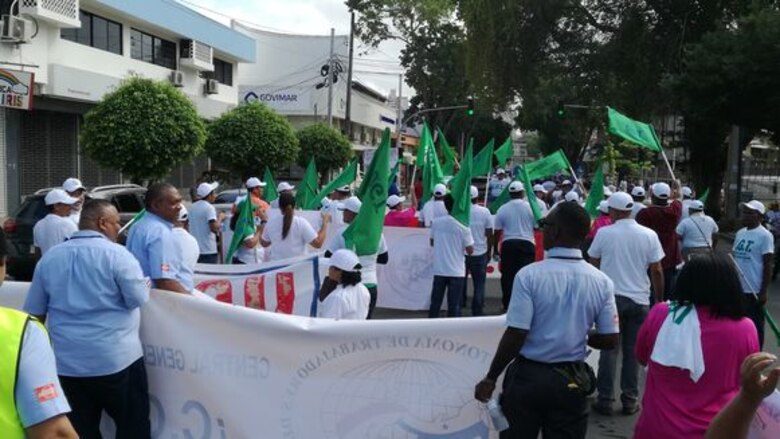
However, he acknowledged that there is a conscious and mobilized youth, remembering protests such as the massive marches against mining. “There were thousands of young people there. We hope that these youth will organize themselves,” he said.
He insisted that the key is union independence from governments. “No union organization should be attached to a government. Governments pass and those who pay the consequences are the workers,” he stated.
‘There were deaths’
One of the central points that stood out was the reminder of the historical origin of Labor Day and the eight-hour work day. Reyes explained that this conquest arose from a systematic organization in the United States, where labor leaders toured states, factories and organizations to convince workers of the need to strike.
“It was a fight where there were deaths, where there were murdered, where workers were taken to the gallows,” he stressed. He recalled that before that conquest it was common to work days of 12, 14 and even 16 hours, including women subjected to conditions of extreme exploitation.
The educator called for building a real union unity, based on principles and coherence. “A transparent, honest unit, where there are no betrayals.”
He also defended the right of workers to participate in politics, arguing that the country’s fundamental decisions are made in the National Assembly and the Executive.