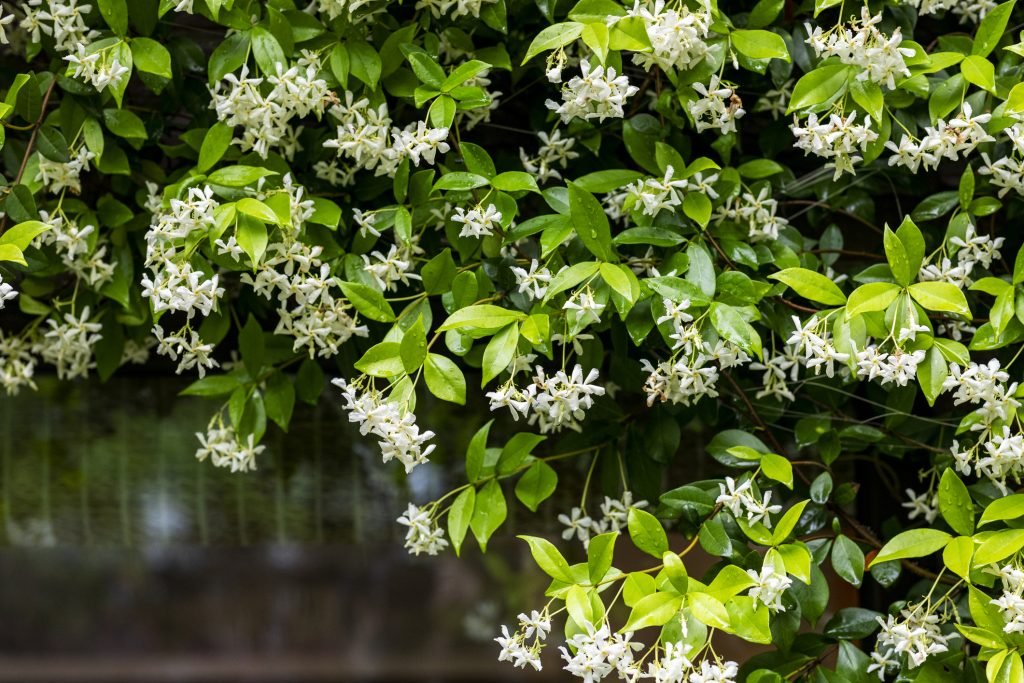
It is sweet and unmistakable and these days it spreads throughout the city: it is the scent of jasmine. Or at least that’s what we all call it. Because if we stop to look carefully at that cascade of little white flowers, we discover that in most cases it is not jasmine at all (belonging to the genus Jasminum), but of his “double” Trachelospermum jasminoidesthe so-called “false jasmine”, evergreen, which thanks to its rusticity and generous flowering has become the protagonist of gardens, balconies and pergolas. Real jasmine, the one that smells of Arabian nights, is much more delicate and often unsuitable for our climates.
Plants belonging to the genera Jasminum And Trachelospermum they are both climbing, scented, with small white flowers with five or more petals. However, they belong to different botanical families, have distinct geographical origins and different cultivation needs.
What is real jasmine
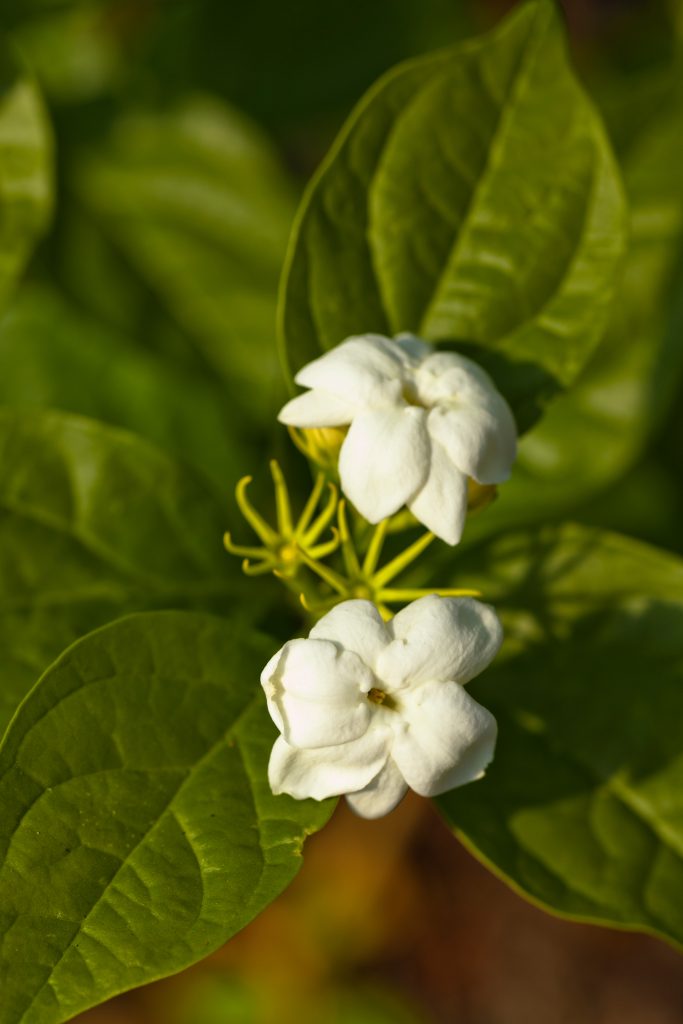
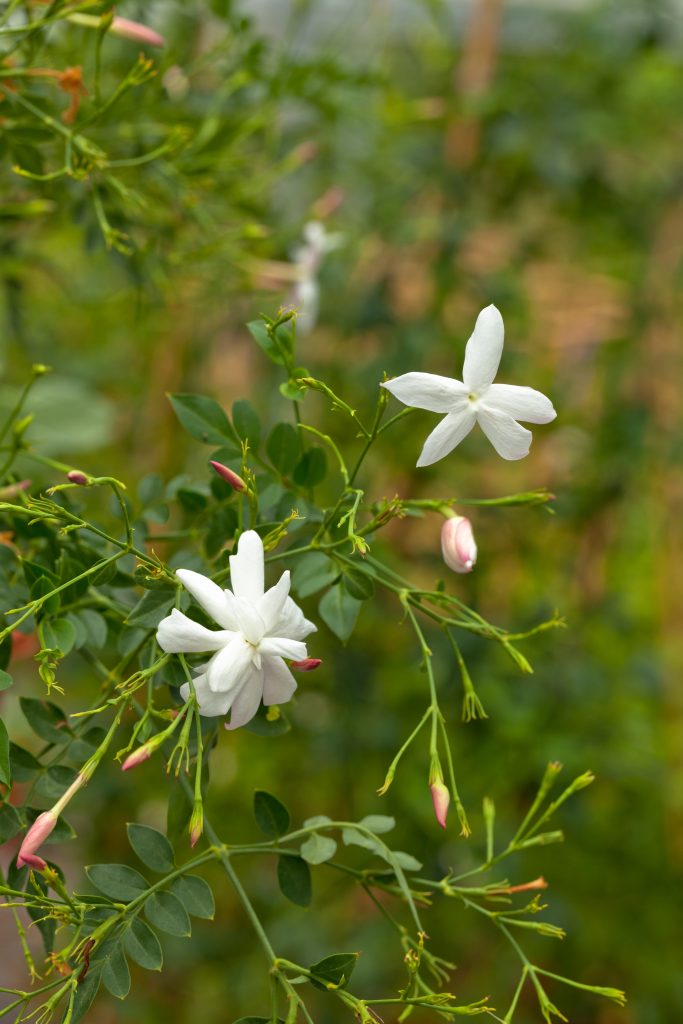
The actual jasmine belongs to the genus Jasminumfamily of Oleaceae — the same as olive trees and lilacs. The genus has over 200 species of shrubs and climbers, deciduous or evergreen, coming from every continent except America. A variety so wide as to surprise: winter jasmines with yellow flowers devoid of fragrance, white summer jasmines with an intoxicating smell, dwarf species for the rock garden, vigorous climbers capable of covering a pergola in just a few years.
The most widespread is Jasminum officinaleoriginally from Persia and now acclimatized throughout Europe, even in Northern countries. Climber with long and flexible branches, it produces rich white inflorescences from spring to late summer. Next to him, J. grandiflorumwith its white flowers from June to Christmas, sometimes arriving in February-March in areas with a milder climate.
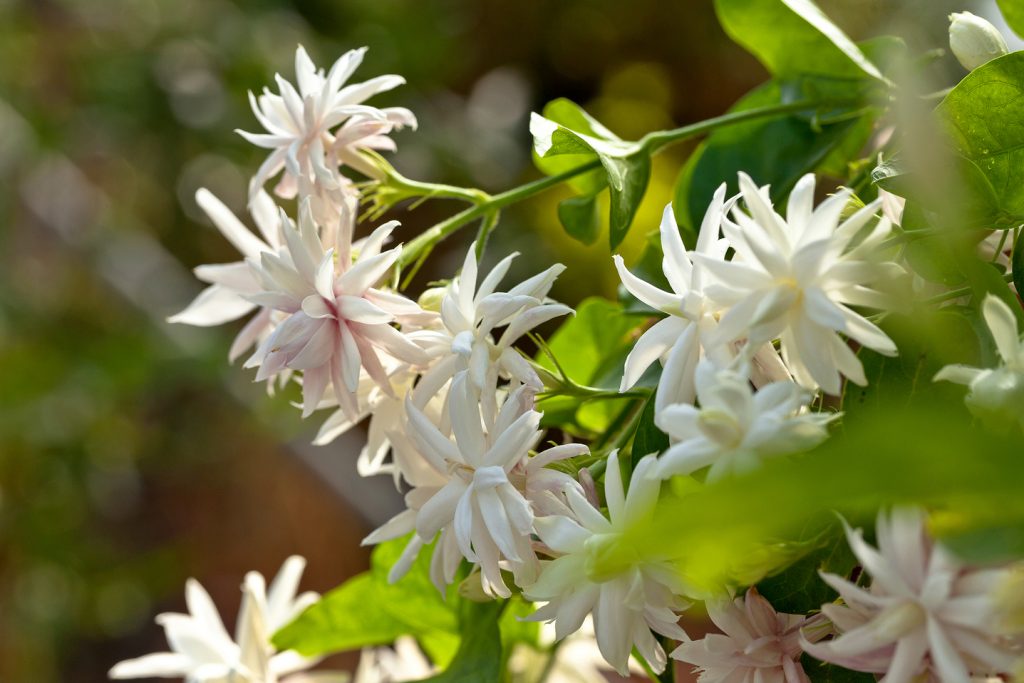
Among the most particular species it is worth mentioning Jasminum sambacwith long and elegantly disordered branches, whose white and fleshy flowers give off an intoxicating scent. The ‘Maid of Orleans’ cultivar is considered the most fragrant of allwhile ‘Belle of India’ sports double, white corollas, slightly tinged with pink. Also famous is ‘Granduke of Tuscany’, with double flowers, so called in honor of Cosimo III de Medici who cultivated it in the eighteenth century in the greenhouses of the Medici Villa of Castello.
What is false jasmine instead?
False jasmine belongs to the genus Trachelospermumfamily of Apocinaceae: a genus botanically very distant from Jasminumwith which it shares only the external appearance of the flowers and the scent. Native from India to Japan, Trachelospermum It appears as an evergreen woody climber, with stems that in the best conditions can reach 6-9 meters and more.
The leaves are a first element of distinction: In the Trachelospermum they are persistent, leathery, shiny, of an intense and brilliant green – much thicker and more robust than those of the Jasminumgenerally more tender and with a less “hardened” consistency. The flowers, however, are small, white or light yellow, with a cylindrical tube and five slightly spiraled lobes: it is precisely this twist that gives them an unmistakable appearance, like a small helix of petals.
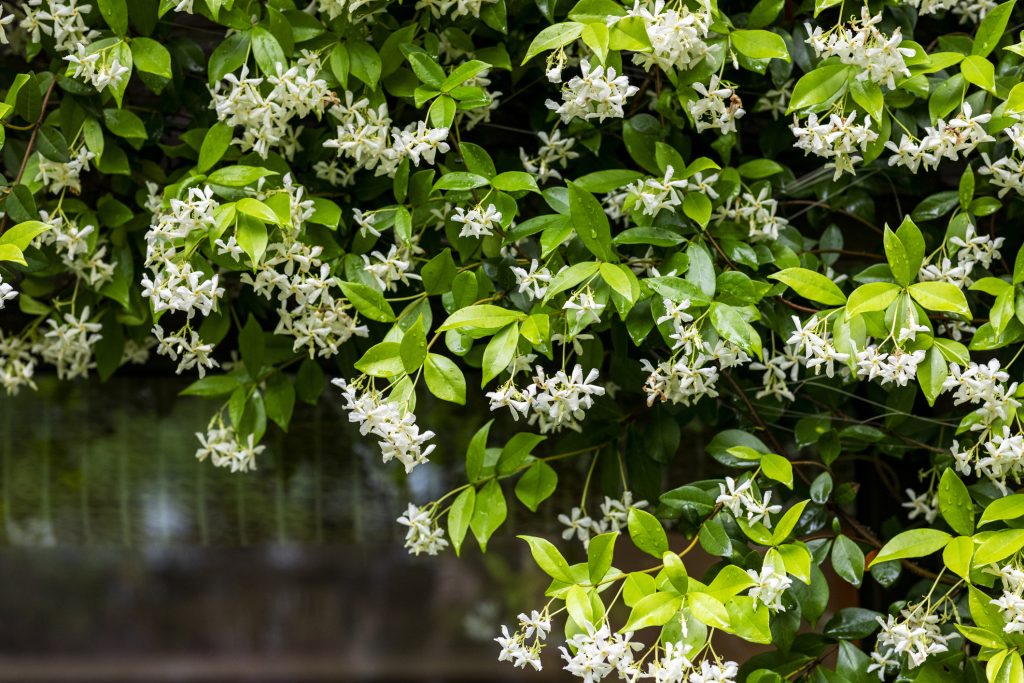
The most widespread species in Italian gardens is Trachelospermum jasminoidesrobust, very abundant in summer flowering, fragrant and – hence the success – almost indestructible. It tolerates heat, drought, wind, even smog: characteristics that have made it the favorite choice for terraces, balconies and fence coverings throughout the Peninsula.
Because they get confused
In addition to the similarity, Trachelospermum it works so well that already at the end of the 1980s, T. jasminoides it had begun to spread like wildfire in Italy, offering itself as a more robust and long-lived alternative to real jasmine. Its flowering is so dense, prolonged and so strongly scented that few other climbers can come close.
The intrinsic variability of trachelosperms also contributes to complicating matters: they cross easily, and very heterogeneous plants circulate on the market, derived from plant material that arrived in Europe in the nineteenth century, probably already “contaminated” by other species or natural forms. Some are repeat-flowering, others redden their leaves in autumn. This has generated further confusion, because even nurserymen do not always agree on the attribution.
Do they smell the same?
No, even if they look alike. The scent of real jasmine is the raw material of great perfumery: complex, warm, slightly animalic in its deepest nuances. That of J. sambac it is particularly appreciated in the East, where it is used to perfume tea and in religious ceremonies; Sicilian plantations have supplied the perfume houses of Grasse for decades.
The scent of T. jasminoides it is instead more direct and immediatewith an almost vanilla sweetness that can become very intense in the height of summer. No less beautiful, but different. That of T. asiaticum it is similar to primrose and cyclamen: more delicate, suitable for those who find the scent of jasminoides excessive.
Are the flowers really similar?
At first glance yes, but upon closer inspection the differences emerge. The flowers of Jasminum they consist of a narrow tubule that opens into five or more well-distended, almost star-shaped lobes. In the Trachelospermum the five petals are instead slightly twisted on themselves, overlapping the edges with a light characteristic spiral. Color also helps: T. jasminoides it is pure white, T. asiaticum pale yellow; The Jasminum it can be white, yellow, but also – in some species – pink.
An obvious difference also concerns the foliage. The leaves of Trachelospermum they are evergreen, leathery, very shiny, with an intense green that persists even in winter. Those of Jasminum they vary greatly depending on the species: single, trifoliate or pinnate, generally softer, and in many species deciduous.
How cultivation needs change
Land
Both prefer substrates rich in organic substance, soft and well-draining. True jasmines, often found in arid and rocky environments in nature, are particularly afraid of water stagnation. Trachelosperms adapt to any fertile soil, as long as it is draining.
Exposure
The Jasminum likes full sun, with some exceptions such as J. multipartitum And J. nitidum who prefer partial shade. The Trachelospermum it is instead more flexible: from full sun to bright shade, it can flower even when exposed to the north, albeit with less abundance.
Irrigation
Real jasmines are not water-demanding plants: after the first year of planting, watering can be progressively reduced, waiting for the soil to dry well between one and the next. The Trachelospermumin open ground, tolerates drought very well; in pots it needs more regular watering, even in winter, as it is evergreen.
Pruning
For the Jasminumshape pruning is recommended immediately after flowering; periodic thinning is sufficient to keep the plant airy and prevent fungal diseases. The Trachelospermummore vigorous, requires regular pruning twice a year – at the end of winter and at the end of summer – and it is essential to guide and tie the shoots to the supports as they develop: left free, they tend to twist around themselves inextricably.
Fertilizers
Fertilizers. For the Jasminumtwo annual interventions are enough: a product with a prevalent content of phosphorus and potassium in autumn, when flowering is being prepared for the following year, and a nitrogen fertilizer in spring. Trachelosperms must also be well fed: nitrogen fertilizer at the end of winter and a product rich in potassium during flowering.
How to choose the most suitable vase
Both plants are suitable for cultivation in containers, as long as you choose suitable species and varieties. For vigorous trachelosperms, pots of at least 50 cm in height and width are needed; the smaller ones are satisfied with vases 30 cm high and wide. A specific precaution for potted trachelosperms: approximately every three years it is necessary to cut the roots and the root ball, with the addition of fresh soil. Without this intervention, the roots invade the entire substrate which becomes hard and compact, unable to absorb water and nutrients.
Which one to choose for balconies, gardens and pergolas
If you are looking for one quick, abundant and essentially low-maintenance coverage for pergolas, fences and walls – even in non-sunny exposures – Trachelospermum it is ideal. T. jasminoides for milder climates and for those who want maximum scent in summer; T. asiaticum for colder areas or for those who prefer a lighter fragrance and flowering that repeats until autumn.
If you love variety and you will be fascinated by winter blooms or rare cultivars, the world of Jasminum it has a lot to offer. J. nudiflorum bears yellow flowers on bare branches in January; J. officinale and its modern cultivars such as ‘Inverleith’ (deep pink buds) or ‘Clotted Cream’ (cream-coloured flowers with a pink interior) are climbers of great elegance. For the balcony or rock garden, J. parkeri and the cultivars of J. humile ‘Revolutum’ offer small dimensions and great personality.
Those who want to play with combinations can foresee the combination of species different in color and flowering period: yellow winter jasmine alongside white summer climbers, variegated foliage of T. jasminoides ‘Variegatum’ near the softer leaves of the Jasminum officinale. The golden rule, in any case, is to choose the variety most suited to the actual conditions of your space — and not just your olfactory expectations.