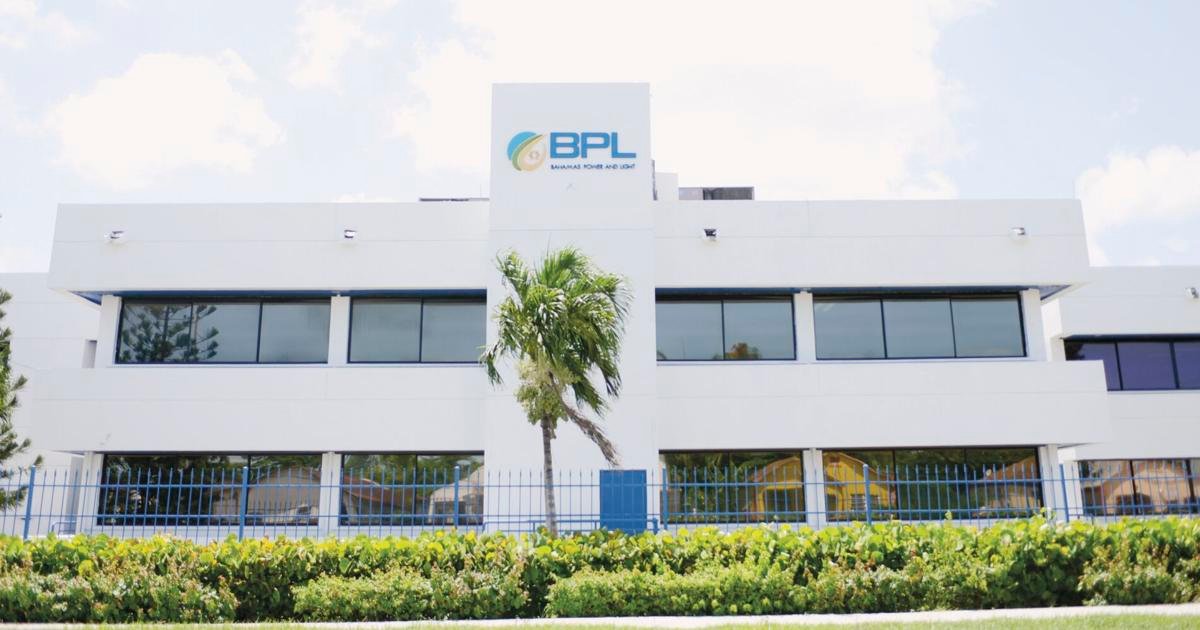
Bahamas Grid Company (BGC) Chairman Anthony Ferguson on Monday assured investors that Bahamas Power and Light (BPL) is meeting its financial obligations to their company.
Ferguson made those assurances for investors during a call to update them on the state of BGC, after it was announced last week that its leadership has transitioned from being led by Island Grid Solutions (IGS) to a fully independent, all-Bahamian-led operating model.
BGC is the special purpose vehicle created to take ownership, upgrade and manage the transmission and distribution (T&D) network on New Providence from BPL. Island Grid Solutions is the Bahamian subsidiary of US-based energy infrastructure company Pike Corporation.
Some of the broker dealers on the call had questions about how the sudden change in management structure would affect their clients who invested in BGC. Ferguson contended that BGC continues to collect the money owed to it by BPL for managing the T&D system.
“In terms of BPL’s financial performance, the only thing we can say is that given a number of the mandates that they (BPL) have issued… the initial purpose was for them to have free cash flow, to be able to meet their obligations,” said Ferguson.
“As far as I’m aware, they are continuing to meet those obligations. But more importantly, as I said, since the execution, we have been paid on time, and we see no reason, or have no reason to expect that BPL will not continue to meet its obligations.”
The Nassau Guardian reported recently that BPL, on a monthly basis, must pay to BGC all T&D system revenues it has calculated, whether or not it has actually collected those revenues.
Under the agreement the government entered into with IGS to upgrade the T&D network on New Providence, all of the revenue generated is the sole property of BGC.
The agreement states that the T&D system revenues shall be calculated on the basis of kilowatt hours billed by BPL, and not on the basis of kilowatt hours billed and collected.
Newly appointed Chief Executive Officer of BGC Dareo Mckenzie explained that BPL pays BGC $.055 per kilowatt hour for maintaining and operating the T&D assets.
“That agreement will run for a period of five years, and then it will get reduced by point $.002 (cents) annually, until we reach a rate of point $.045 (cents per) kilowatt,” said McKenzie.
“We are also allocating funds from that revenue stream to support the legacy debt that BPL has. That amount is equal to point $.025 per kilowatt.
“And of course, we’re also funding catastrophic reserve, or the storm fund, as we would call it, and we’re allocating an equivalent amount of point $.025, per kilowatt to fund that storm account.”