Monday, May 4, 2026
    The GeoStrategic Consensus
    No Result
    View All Result
    • Login
    • HOME
    • AMERICAS
      • Argentina
      • Brazil
      • Canada
      • Chile
      • Colombia
      • Costa Rica
      • Cuba
      • Dominican Republic
      • Ecuador
      • El Salvador
      • Greenland
      • Guatemala
      • Honduras
      • Mexico
      • Nicaragua
      • Panama
      • Paraguay
      • Peru
      • United States
      • Uruguay
      • Venezuela
    • ASIA-PACIFIC
      • Australia
      • Brunei Darussalam
      • Cambodia
      • China
      • Federated States of Micronesia
      • Fiji
      • Indonesia
      • Japan
      • Kiribati
      • Laos
      • Malaysia
      • Marshall Islands
      • Mongolia
      • Myanmar
      • Nauru
      • New Zealand
      • North Korea
      • Palau
      • Papua New Guinea
      • Philippines
      • Samoa
      • Singapore
      • Solomon Islands
      • South Korea
      • Taiwan
      • Thailand
      • Timor-Leste
      • Tonga
      • Tuvalu
      • Vanuatu
      • Vietnam
    • CARICOM
      • CARICOM – Non-English
        • Haiti
        • Suriname
      • CARICOM Associates
        • Anguilla
        • Bermuda
        • British-Virgin-Islands
        • Cayman-Islands
        • Curacao
        • Turks-and-Caicos
      • CARICOM English
        • Antigua and Barbuda
        • Barbados
        • Belize
        • Dominica
        • Grenada
        • Guyana
        • Jamaica
        • Montserrat
        • Saint Kitts and Nevis
        • Saint Lucia
        • Saint Vincent and the Grenadines
        • The Bahamas
        • Trinidad and Tobago
    • EURASIA
      • Armenia
      • Azerbaijan
      • Balarus
      • Georgia
      • Kazakhstan
      • Kyrgyzstan
      • Moldova
      • Russia
      • Tajikistan
      • Turkmenistan
      • Ukraine
      • Uzbekistan
    • EUROPE
      • Albania
      • Andorra
      • Austria
      • Bosnia and Herzegovina
      • Bulgaria
      • Croatia
      • Cyprus
      • Czech Republic
      • Denmark
      • Estonia
      • Finland
      • France
      • Germany
      • Greece
      • Holy See
      • Hungary
      • Iceland
      • Ireland
      • Italy
      • Kosovo
      • Latvia
      • Liechtenstein
      • Lithuania
      • Luxembourg
      • Malta
      • Monaco
      • Montenegro
      • Netherlands
      • North Macedonia
      • Norway
      • Poland
      • Portugal
      • Romania
      • San Marino
      • Serbia
      • Slovakia
      • Slovenia
      • Spain
      • Sweden
      • Switzerland
      • United Kingdom
    • MIDDLE EAST AND NORTH AFRICA
      • Algeria
      • Bahrain
      • Egypt
      • Iran
      • Iraq
      • Israel
      • Jordan
      • Kuwait
      • Lebanon
      • Lybia
      • Morocco
      • Oman
      • Palestinian Territories
      • Qatar
      • Saudi Arabia
      • Syria
      • Tunisia
      • Turkey
      • United Arab Emirates
      • Western Sahara
      • Yemen
    • SOUTH ASIA
      • Afghanistan
      • Bangladesh
      • Bhutan
      • India
      • Maldives
      • Nepal
      • Pakistan
      • Sri Lanka
    • SUB-SAHARAN AFRICA
      • Angola
      • Benin
      • Botswana
      • Burkina Faso
      • Burundi
      • Cabo Verde
      • Cameroon
      • Central African Republic
      • Chad
      • Comoros
      • Cote d’Ivoire
      • Democratic Republic of the Congo
      • Djibouti
      • Equatorial Guinea
      • Eritrea
      • Eswatini
      • Ethiopia
      • Gabon
      • Gambia
      • Ghana
      • Guinea
      • Guinea Bissau
      • Kenya
      • Lesotho
      • Liberia
      • Madagascar
      • Malawi
      • Mali
      • Mauritania
      • Mauritius
      • Mozambique
      • Namibia
      • Niger
      • Nigeria
      • Republic of the Congo
      • Rwanda
      • Sao Tome and Principe
      • Senegal
      • Seychelles
      • Sierra Leone
      • Somalia
      • South Africa
      • South Sudan
      • Sudan
      • Tanzania
      • Togo
      • Uganda
      • Zambia
      • Zimbabwe
    • HOME
    • AMERICAS
      • Argentina
      • Brazil
      • Canada
      • Chile
      • Colombia
      • Costa Rica
      • Cuba
      • Dominican Republic
      • Ecuador
      • El Salvador
      • Greenland
      • Guatemala
      • Honduras
      • Mexico
      • Nicaragua
      • Panama
      • Paraguay
      • Peru
      • United States
      • Uruguay
      • Venezuela
    • ASIA-PACIFIC
      • Australia
      • Brunei Darussalam
      • Cambodia
      • China
      • Federated States of Micronesia
      • Fiji
      • Indonesia
      • Japan
      • Kiribati
      • Laos
      • Malaysia
      • Marshall Islands
      • Mongolia
      • Myanmar
      • Nauru
      • New Zealand
      • North Korea
      • Palau
      • Papua New Guinea
      • Philippines
      • Samoa
      • Singapore
      • Solomon Islands
      • South Korea
      • Taiwan
      • Thailand
      • Timor-Leste
      • Tonga
      • Tuvalu
      • Vanuatu
      • Vietnam
    • CARICOM
      • CARICOM – Non-English
        • Haiti
        • Suriname
      • CARICOM Associates
        • Anguilla
        • Bermuda
        • British-Virgin-Islands
        • Cayman-Islands
        • Curacao
        • Turks-and-Caicos
      • CARICOM English
        • Antigua and Barbuda
        • Barbados
        • Belize
        • Dominica
        • Grenada
        • Guyana
        • Jamaica
        • Montserrat
        • Saint Kitts and Nevis
        • Saint Lucia
        • Saint Vincent and the Grenadines
        • The Bahamas
        • Trinidad and Tobago
    • EURASIA
      • Armenia
      • Azerbaijan
      • Balarus
      • Georgia
      • Kazakhstan
      • Kyrgyzstan
      • Moldova
      • Russia
      • Tajikistan
      • Turkmenistan
      • Ukraine
      • Uzbekistan
    • EUROPE
      • Albania
      • Andorra
      • Austria
      • Bosnia and Herzegovina
      • Bulgaria
      • Croatia
      • Cyprus
      • Czech Republic
      • Denmark
      • Estonia
      • Finland
      • France
      • Germany
      • Greece
      • Holy See
      • Hungary
      • Iceland
      • Ireland
      • Italy
      • Kosovo
      • Latvia
      • Liechtenstein
      • Lithuania
      • Luxembourg
      • Malta
      • Monaco
      • Montenegro
      • Netherlands
      • North Macedonia
      • Norway
      • Poland
      • Portugal
      • Romania
      • San Marino
      • Serbia
      • Slovakia
      • Slovenia
      • Spain
      • Sweden
      • Switzerland
      • United Kingdom
    • MIDDLE EAST AND NORTH AFRICA
      • Algeria
      • Bahrain
      • Egypt
      • Iran
      • Iraq
      • Israel
      • Jordan
      • Kuwait
      • Lebanon
      • Lybia
      • Morocco
      • Oman
      • Palestinian Territories
      • Qatar
      • Saudi Arabia
      • Syria
      • Tunisia
      • Turkey
      • United Arab Emirates
      • Western Sahara
      • Yemen
    • SOUTH ASIA
      • Afghanistan
      • Bangladesh
      • Bhutan
      • India
      • Maldives
      • Nepal
      • Pakistan
      • Sri Lanka
    • SUB-SAHARAN AFRICA
      • Angola
      • Benin
      • Botswana
      • Burkina Faso
      • Burundi
      • Cabo Verde
      • Cameroon
      • Central African Republic
      • Chad
      • Comoros
      • Cote d’Ivoire
      • Democratic Republic of the Congo
      • Djibouti
      • Equatorial Guinea
      • Eritrea
      • Eswatini
      • Ethiopia
      • Gabon
      • Gambia
      • Ghana
      • Guinea
      • Guinea Bissau
      • Kenya
      • Lesotho
      • Liberia
      • Madagascar
      • Malawi
      • Mali
      • Mauritania
      • Mauritius
      • Mozambique
      • Namibia
      • Niger
      • Nigeria
      • Republic of the Congo
      • Rwanda
      • Sao Tome and Principe
      • Senegal
      • Seychelles
      • Sierra Leone
      • Somalia
      • South Africa
      • South Sudan
      • Sudan
      • Tanzania
      • Togo
      • Uganda
      • Zambia
      • Zimbabwe
    No Result
    View All Result
    Agentially
    No Result
    View All Result
    Home ASIA-PACIFIC Japan

    The American chef reconnecting with Japan through a Kyoto restaurant

    The Analyst by The Analyst
    May 2, 2026
    in Japan
    The American chef reconnecting with Japan through a Kyoto restaurant


    Kyoto – On a Wednesday morning in early April, a week after the launch of SoNoMa by SingleThread in Kyoto, Kyle Connaughton is reflecting on his lifelong relationship with Japan. Outside, cherry blossoms are blooming in the courtyard of the Capella Kyoto hotel, which houses SoNoMa in Miyagawacho’s historic kagai, or geisha district. A few minutes’ walk in either direction lie Kenninji, the city’s oldest Zen temple, and the venerable Kaburenjo theater, where Kyoto’s geiko (the regional term for geisha) performers still train. It’s hard to imagine a more storied Japanese address for an American chef to set up a restaurant.

    READ ALSO

    99 accused in Japan in international crackdown on child sexual abuse material

    Prosecutor who accused boss of rape to resign after request for probe rejected

    Connaughton rose to international prominence with SingleThread in northern California’s Sonoma County, a farm-to-table concept encompassing a restaurant and inn on the 24-acre farm run by his wife, Katina. The restaurant, which showcases California cuisine informed by the couple’s experiences living and working in Japan, earned three Michelin stars within three years of its opening in 2016.

    SoNoMa, which opened in March, is the couple’s first international project and the inverse of what they built in the United States: a 12-seat counter that filters Kyoto’s seasons and ingredients through a California sensibility. For Connaughton, it is also the closing of a very long loop — one that began, improbably, at a sushi bar in a Colorado ski town when he was 9. His father, who spent much of the 1980s traveling to Japan to outfit the country’s Olympic gymnastics training facilities, had taken him to Beaver Creek and, on a whim, to the only Japanese restaurant in the resort town. As Connaughton watched the chef slicing fish with precise, unhurried movements, something clicked, and he caught a glimpse of his future.
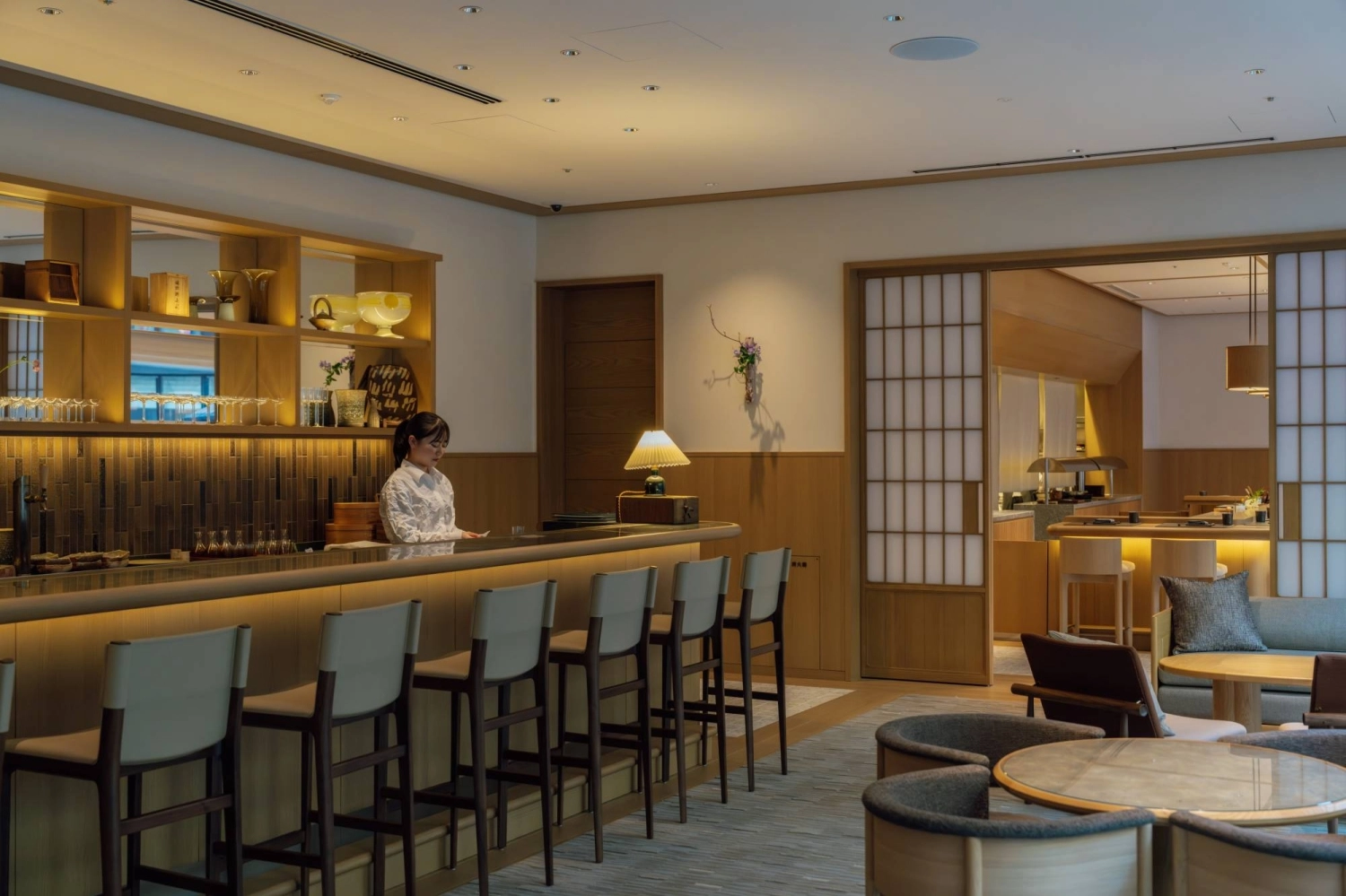
    Located in Kyoto’s historic geisha district, the SoNoMa experience begins in the front room of the restaurant, where guests are served a welcome drink and a trio of small bites.

    Located in Kyoto’s historic geisha district, the SoNoMa experience begins in the front room of the restaurant, where guests are served a welcome drink and a trio of small bites.
    | MITSURU WAKABAYASHI

    He moved to Japan in 2003 and has traveled between the two countries since. But Japan had been calling him before he ever went: in the snacks and postcards his father brought home from Tokyo, through the Osaka exchange student who lived with the family when Connaughton was 10, in the noodle shops of Little Tokyo in Los Angeles where he spent his weekends. After high school, he enrolled in culinary school in Pasadena, later joining the inaugural class of the California Sushi Academy in the late 1990s. While his classmates angled for stages in France, Connaughton worked nights at Spago in Beverly Hills while his true ambitions lay across the Pacific.

    Connaughton recently sat down with The Japan Times to talk about Japan, SingleThread and the road to SoNoMa.

    Early on, you’d set your heart on working in kaiseki (multicourse Japanese haute cuisine) or a sushi restaurant in Japan. How did you actually get here?

    I spent months writing letters — my Japanese tutor was drafting them for me — and sending them to ryōtei (traditional Japanese restaurants) all over Japan. Nobody wrote back. Then I heard that Michel Bras was opening a restaurant in Hokkaido (Michel Bras Toya Japon, located in The Windsor Hotel Toya Resort & Spa). I’d been obsessed with his book in culinary school. He was the one French chef I really followed. I reached out, and that ended up being my way in.
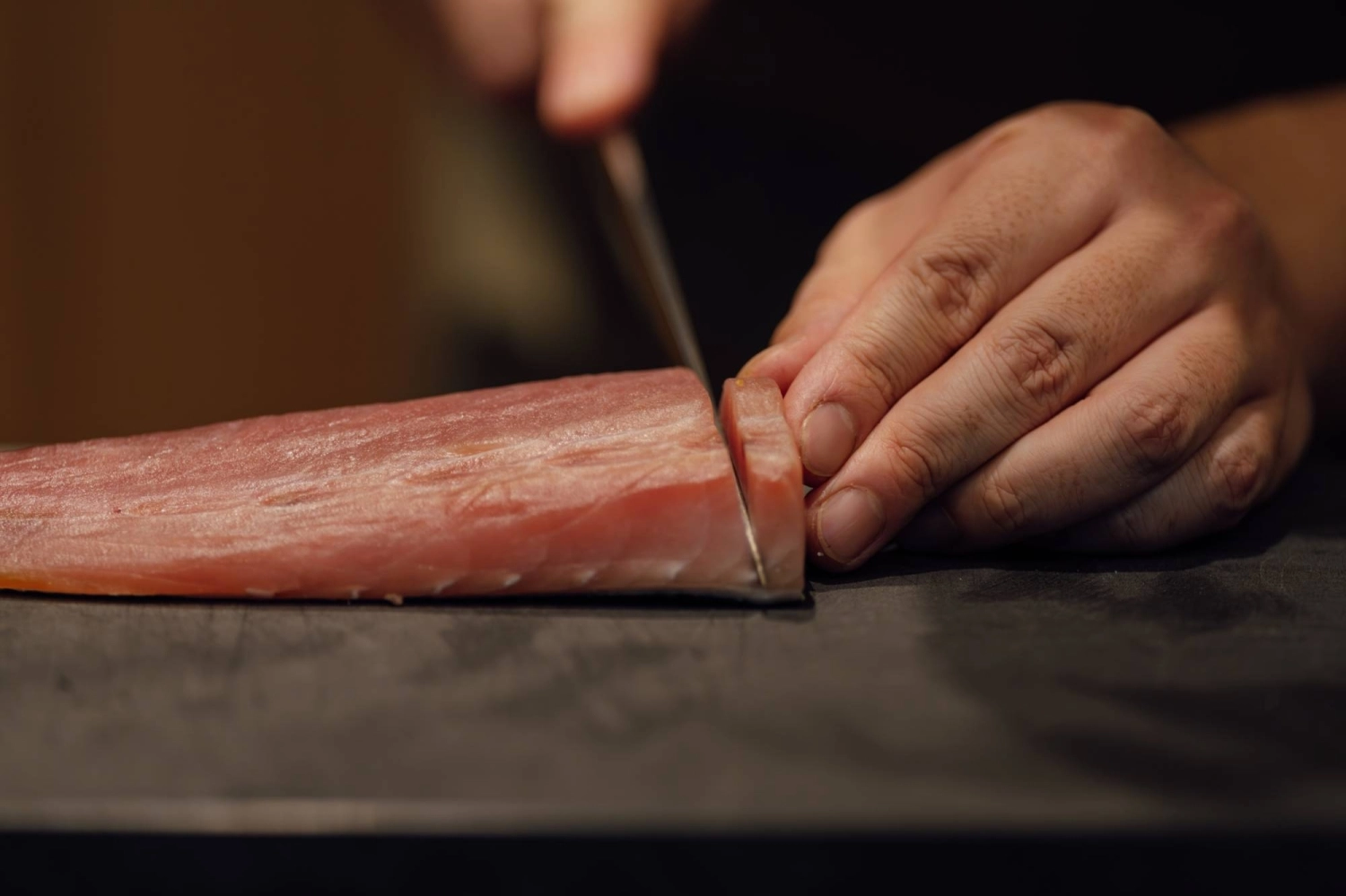
    When Kyle Connaughton was 9, he went to a Japanese restaurant and watched the chef slicing fish with precise, unhurried movements.

    When Kyle Connaughton was 9, he went to a Japanese restaurant and watched the chef slicing fish with precise, unhurried movements.
    | MITSURU WAKABAYASHI

    So you were cooking at a French restaurant in Hokkaido?

    Yes, but Bras wasn’t in rural Hokkaido for no reason. He cared about the same things I’d been looking for in washoku (Japanese cuisine) — the purity of the vegetables, the locality, the seasonality, the wild herbs. I figured I could find my way to Japanese cuisine from there.

    How, exactly?

    Well, the visa alone took 18 months. By the time I finally arrived, I’d missed the opening and the kitchen brigade was already full. They didn’t quite know where to put me, so I ended up rotating through all of the hotel’s other outlets — the casual Japanese restaurant, the teppanyaki counter and Tojisanka (overseen by Hisato Nakahigashi of Kyoto’s two-Michelin-starred Miyamasou) — which was, ironically, the kind of exposure to Japanese cuisine I’d been trying to get in the first place.

    You arrived with Katina and your two young daughters in the middle of a Hokkaido winter. What was that like?

    Total culture shock. Toyoura was a tiny fishing and farming village on Uchiura Bay — no grocery store, no restaurants. The people working at the hotel were all transplants from elsewhere in Japan, but the people my family was spending time with every day were the scallop fishermen and the strawberry farmers in town. Our daughters enrolled in the local school, and their friends were local kids. Katina didn’t speak much Japanese, but she became close with a floral farmer who started teaching her ikebana. That was her first real exposure to farming.
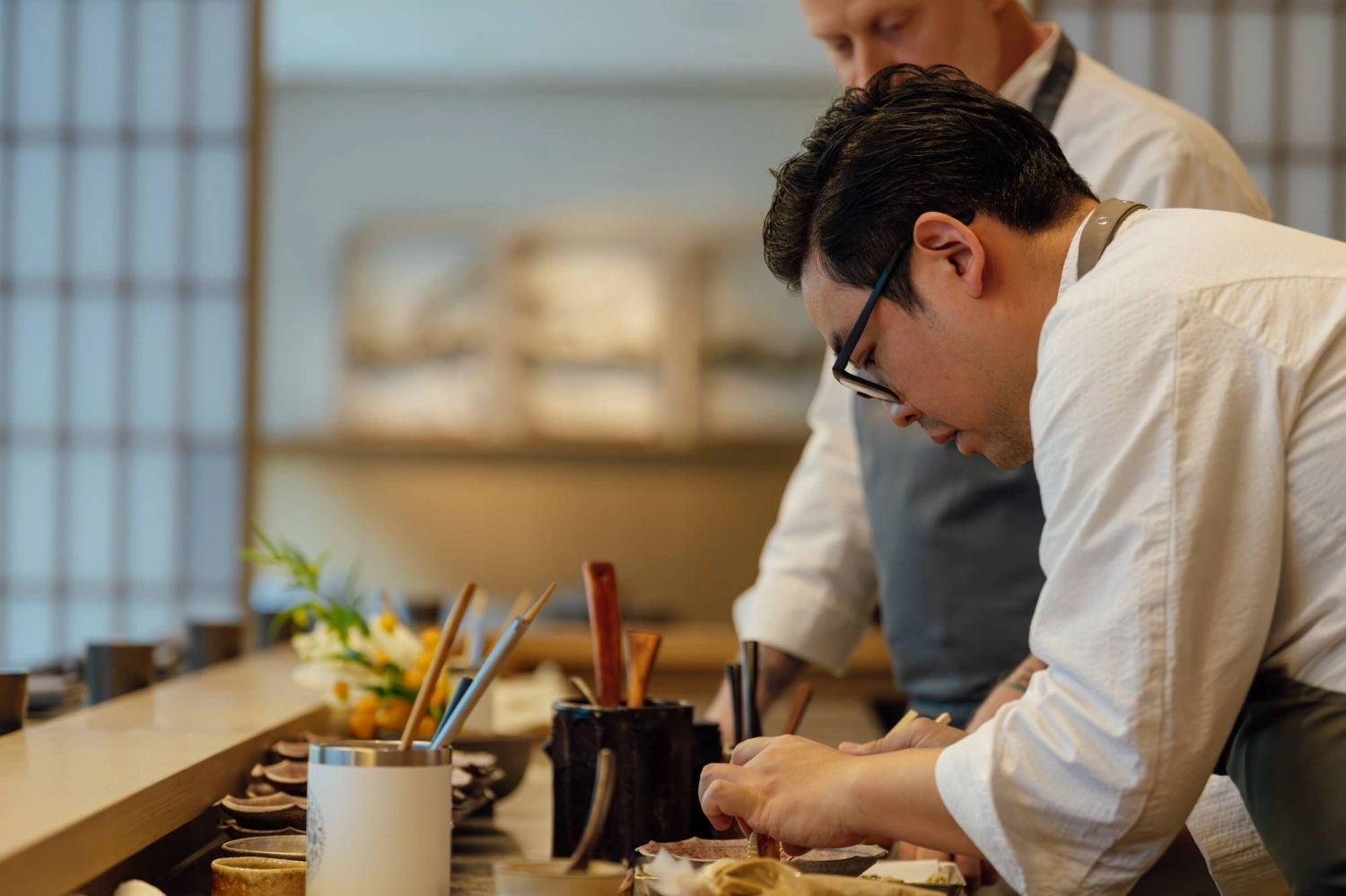
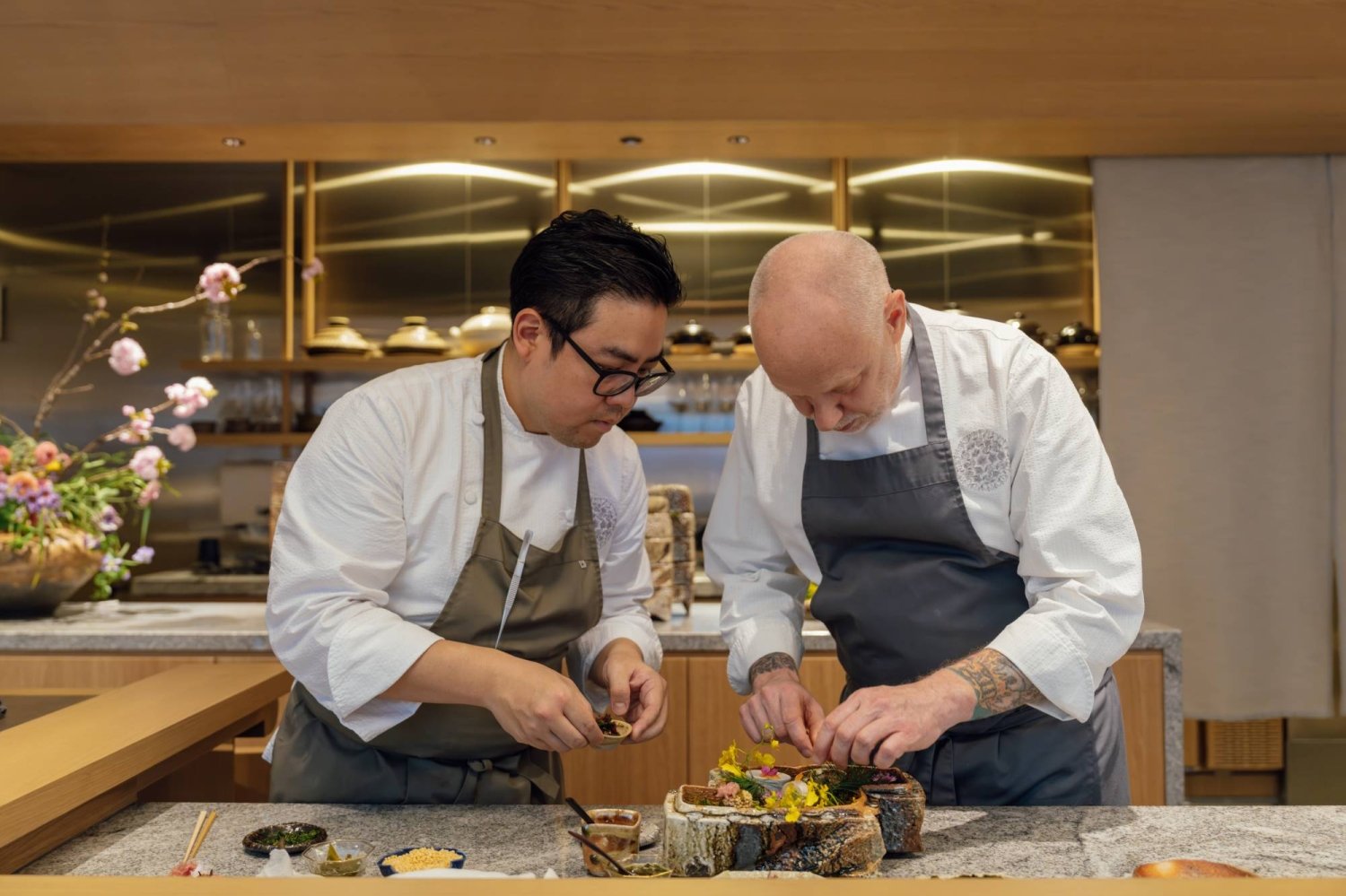
    A careful hand is needed when preparing SoNoMa's intricate dishes.

    A careful hand is needed when preparing SoNoMa’s intricate dishes.
    | MITSURU WAKABAYASHI

    It sounds like you both found your calling there.

    We did. Back in California, we had a lot of interaction with farms and farmers, but Katina was not in the culinary space then. In Hokkaido, she told me, “I like putting my hands in the earth. This is what I want to do.”

    You eventually wanted to move on to kaiseki and apprenticed at three-Michelin-starred Kikunoi in Kyoto. How did that happen?

    I reached out to chef Yoshihiro Murata and asked if I could come work at Kikunoi Honten. He was just starting to think about bringing foreign cooks into the kitchen, which was pretty groundbreaking at the time. We met, and he offered me a job — but I’d have to start at the bottom and commit to five years. I completely understood and respected that. But we had two kids, one income and no outside support. It just wasn’t realistic.
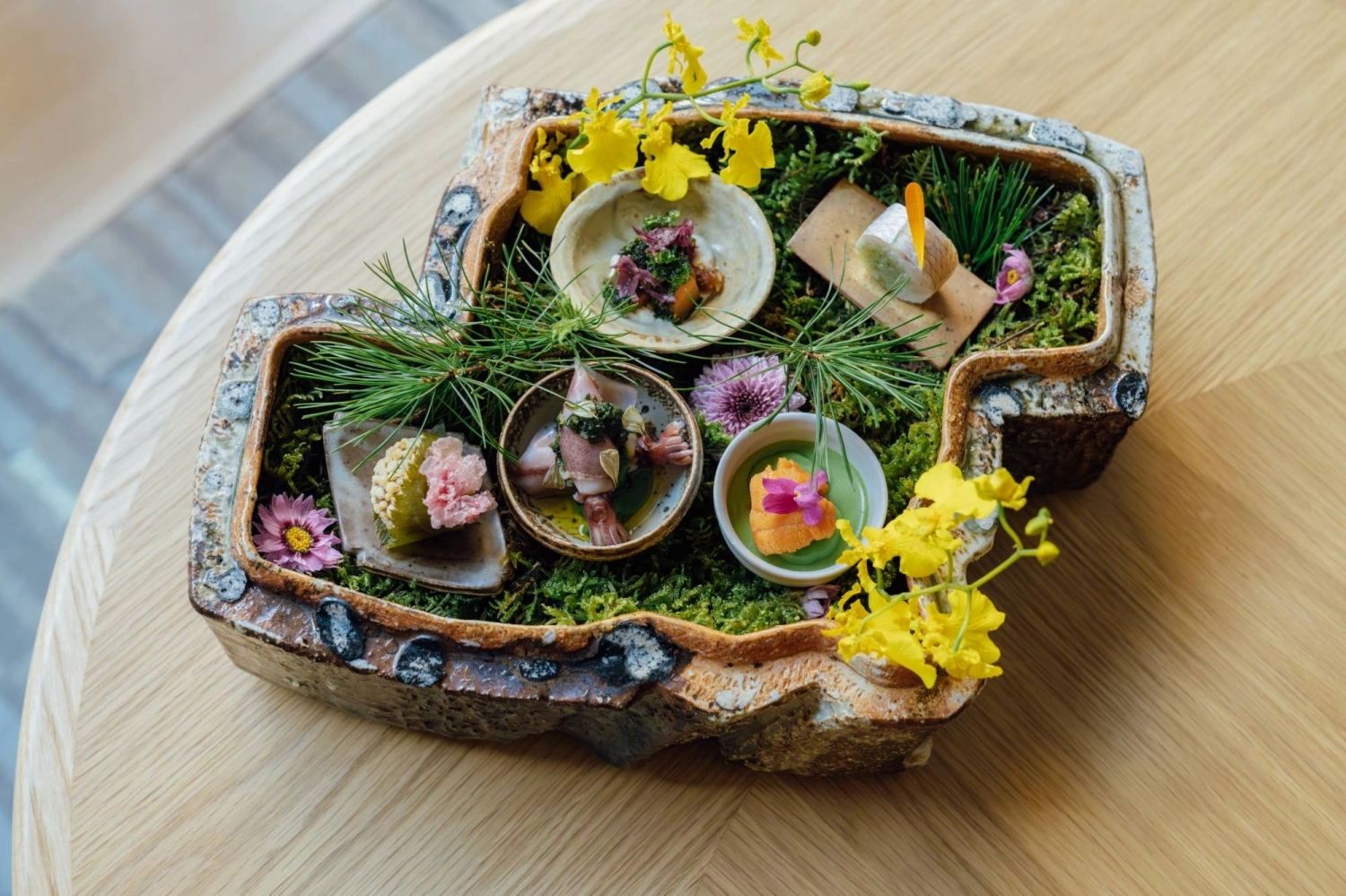
    SoNoMa’s early spring menu opens with an array of small dishes that capture the season.

    SoNoMa’s early spring menu opens with an array of small dishes that capture the season.
    | MITSURU WAKABAYASHI

    So what happened?

    In the same conversation, Murata-san mentioned Heston Blumenthal. Heston had just been in Kyoto a week earlier for an event organized by the Umami Information Center. He had announced he was opening a research and development kitchen at The Fat Duck (in England) and was looking for someone to run it. Murata-san said to me, “Maybe you should check that out.”

    Did you?

    I emailed Heston that night. He wrote back immediately and asked me to fly out. I took a few days off, flew from Sapporo to England, did a three-day trial and at the end of it he offered me the job. I told him I needed another eight months to finish what I was doing in Japan. He said, “If you’re serious, I’ll hold it.” And then I went back to Murata-san and told him I was taking the job at The Fat Duck. He said, “Anytime you want to come to Kikunoi and apprentice, you’re welcome.” So for the next several years, every vacation I had from The Fat Duck, I flew back to Kyoto and worked at Kikunoi.

    You were essentially apprenticing in one of the most tradition-bound kitchens in Japan while running one of the most experimental kitchens in the world.

    Yes. And on the surface, those two kitchens couldn’t look more different. But the more time I spent in both, the more I realized they were doing the same thing. They were both telling a story in a multisensory way.
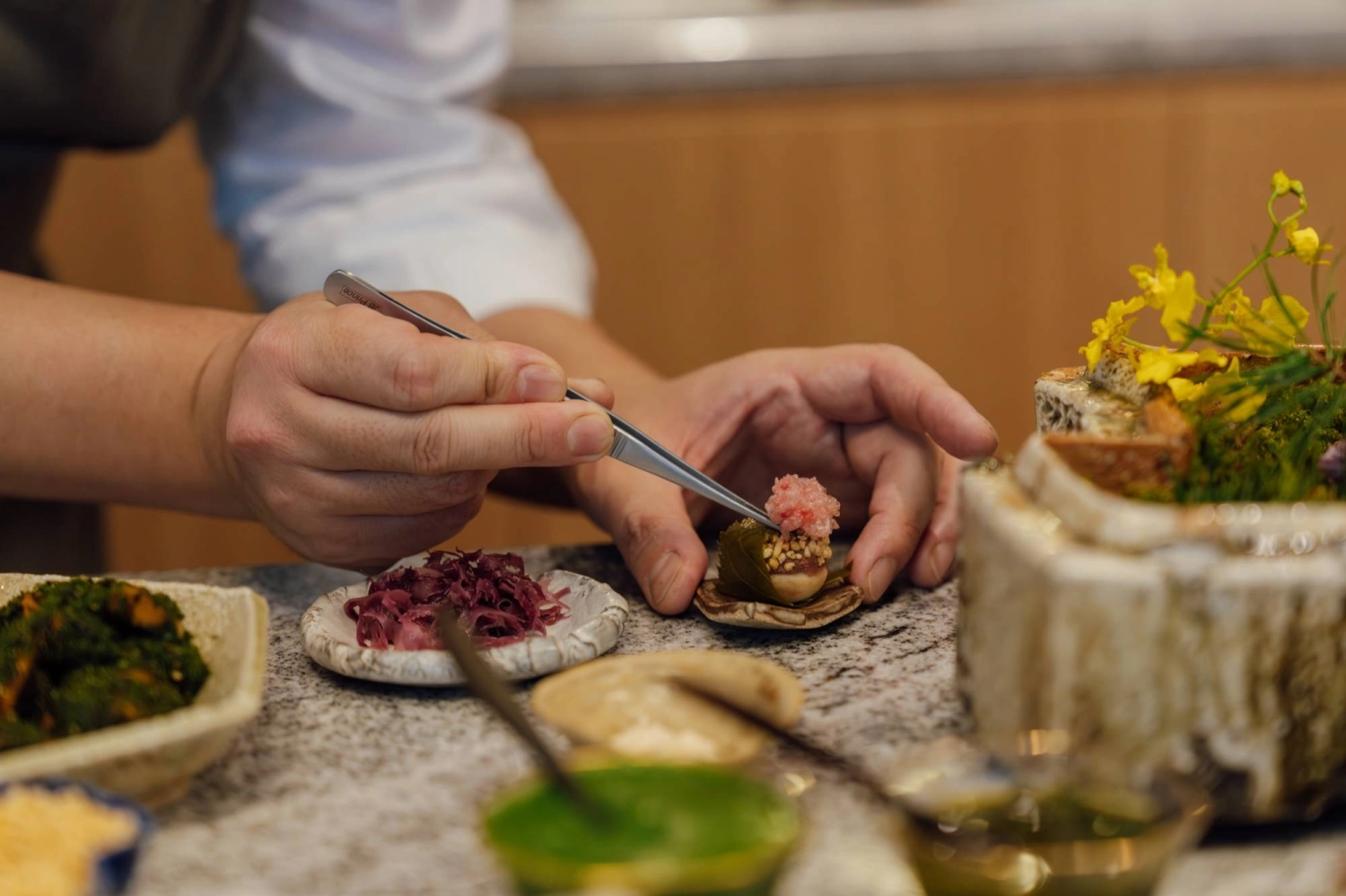
    Keita Tominaga assembles a morsel of lily bulb paste, duck liver parfait and fried cherry blossom.

    Keita Tominaga assembles a morsel of lily bulb paste, duck liver parfait and fried cherry blossom.
    | MITSURU WAKABAYASHI

    At The Fat Duck, the first dish I developed for the menu was called “Sound of the Sea” — it used miso, kombu (kelp) and curing techniques I’d learned in Japan, and (it) was paired with the sound of waves playing through a seashell. The idea was to evoke your personal memory of the seaside. At Kikunoi, the narrative tells the story of the seasons — conveyed through the kimono the okami-san (the restaurant’s hostess and manager) is wearing, the scroll and flowers in the tokonoma alcove, the presentation, the dish ware selected for that season. Heston was doing it in a very contemporary way, but both were really about the same thing: using every sense to bring the guest somewhere.

    After five years at The Fat Duck, you and Katina went back to California to start SingleThread. How did your experiences in Japan and England shape your approach there?

    The purpose of SingleThread, always, is to tell the story of today. Katina is harvesting every morning and the menu is seen through the eyes of a farmer — the flowers she’s growing, the wild things she’s gathering, what’s at its peak that day. We’re not trying to import kaiseki or replicate it. We’re taking the principles I learned in Japan and the multisensory approach I developed at The Fat Duck and using them to tell a story that’s authentic to Sonoma. My role as a chef is really to showcase the hard work Katina and the farmers do. If I overmanipulate an ingredient, I’m not honoring that. So the approach is more restrained — more Japanese, in that sense — but the story we’re telling is California.
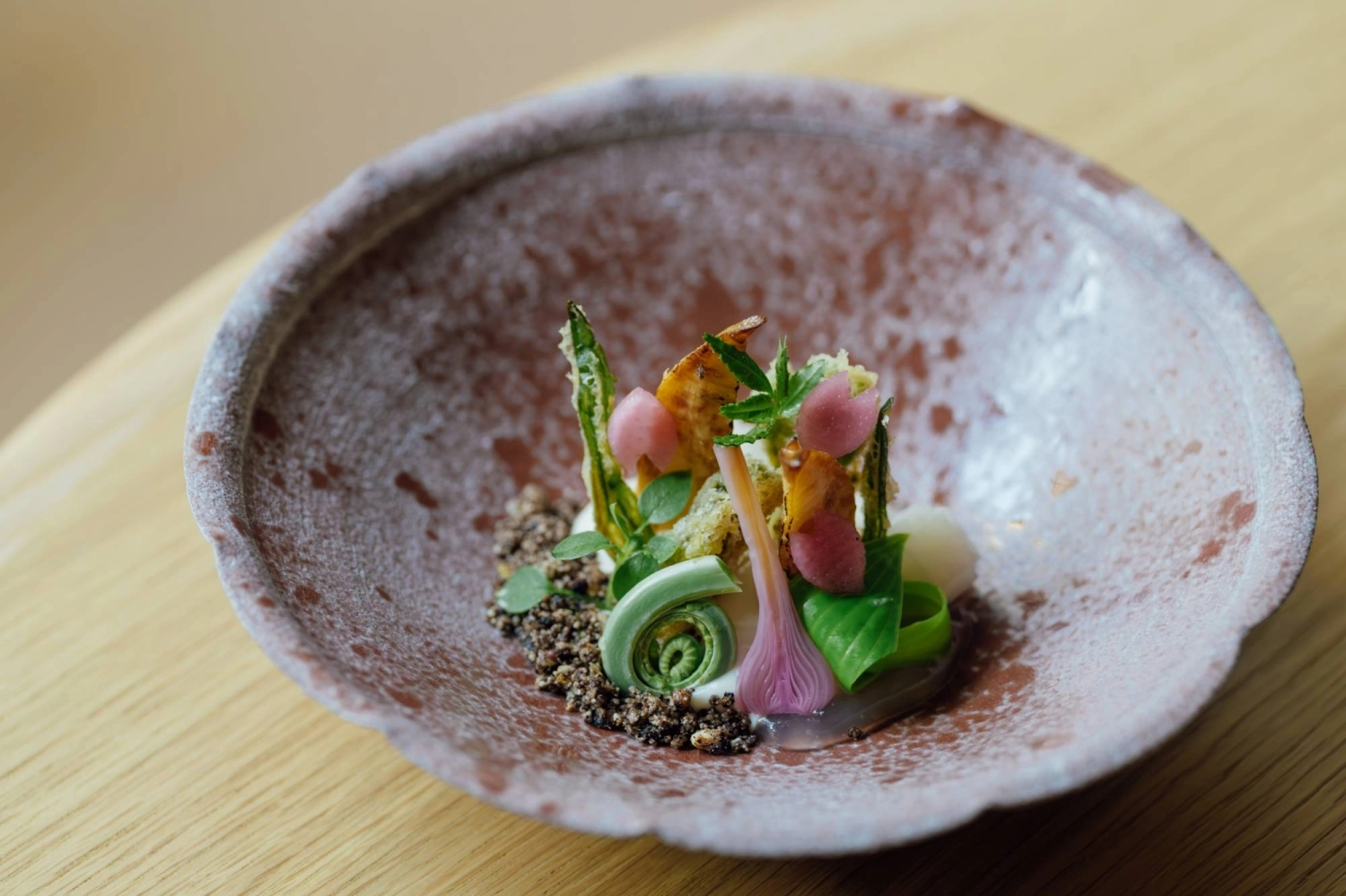
    SoNoMa’s take on

    SoNoMa’s take on “sansai” (wild mountain vegetables).
    | MITSURU WAKABAYASHI

    And now you’ve opened SoNoMa by SingleThread in Kyoto. Your co-owner Tony Greenberg has called it a “mirror” of SingleThread. What does that mean in practice?

    If SingleThread is a California restaurant with a Japanese sensibility, SoNoMa is a Kyoto restaurant with a California sensibility. At home, you’re experiencing Sonoma through a Japanese lens. Here, you’re experiencing Kyoto through a little bit of our California lens.

    Mostly you’re eating what’s in season right outside the door, but Katina is also working with farmers in the Kansai region to grow some California varieties she loves — tomatoes, peppers — alongside the Kyoto varieties we’ve been growing in Sonoma for years. It’s an agricultural exchange as much as a culinary one.

    You’re an American chef opening a restaurant in arguably the most venerated food city on Earth. How do you feel about what your presence here means?

    There’s a lot of weight to that. When you zoom in — Japan, then Kyoto, then Miyagawacho, then this particular building in the geisha district — you feel the responsibility. When the Capella team first approached us, they said, “We don’t want to do another Kyoto cuisine restaurant, because right outside the door are some of the greatest multigenerational restaurants in the world. And we’re not going to do a sushi bar or teppanyaki just for foreigners, because that says nothing about this neighborhood.” But I still needed to talk to people I trusted before I said yes.

    Who did you talk to?

    The first person was Murata-san. I was in Kyoto to cook with him, and I asked for a private meeting. I very deliberately didn’t ask him whether I should do it. I said, “Here is the situation, here is the opportunity. What would you advise me to do?” I wanted to give him a way to tell me no without it affecting our relationship. He didn’t hesitate. He said, “Do it. It’s time, and it should be you. You have my full support.”
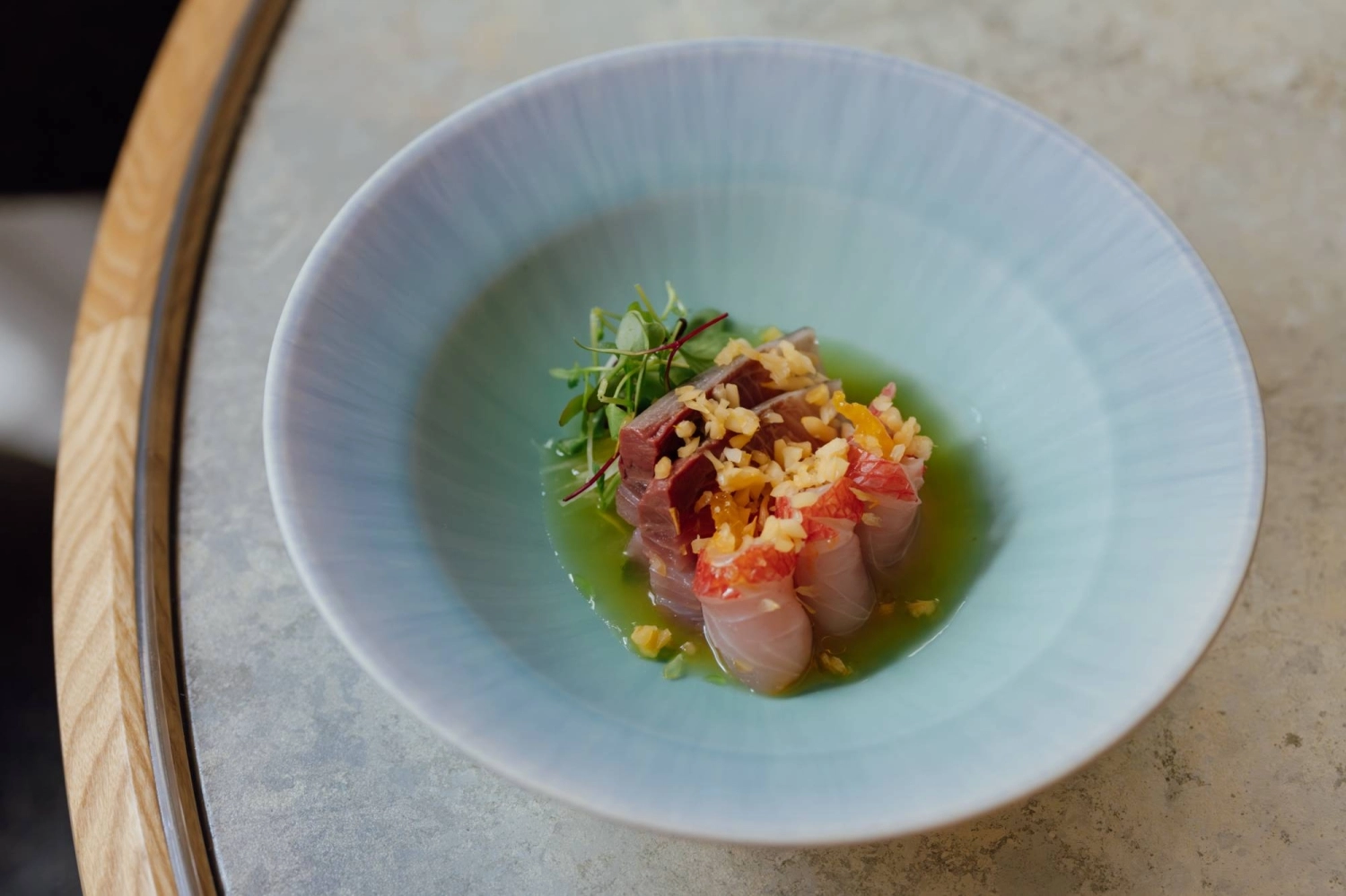
    Sashimi with kohlrabi and house-made ponzu using citrus from Japan’s western Setouchi region.

    Sashimi with kohlrabi and house-made ponzu using citrus from Japan’s western Setouchi region.

    | MITSURU WAKABAYASHI

    Tell me about the team you’ve built here.

    The head chef, Keita Tominaga, grew up in Sonoma — his father ran what winemakers there still call the best Japanese restaurant in the county. He then trained at Tenoshima in Tokyo under Ryohei Hayashi, who I knew from my Kikunoi days. Keita’s a unicorn: He has the Sonoma side and the Japan side in one person, and the pastry chef Miu Morita actually grew up in California. They’re the ones actually running this restaurant.

    You’ve described SoNoMa’s mission as being a kind of cultural bridge. What does that look like on any given night?

    At the counter, we might have a first-time visitor sitting next to a Kyoto local. They’re eating the same menu through entirely different lenses. Right now, it’s sansai (wild mountain vegetable) season. A visitor might have been eating these all week without context. We get to explain the “why” — the fleeting two-week window as a plant moves from kinome (young pepper leaf) to sanshō (the mature berry). For the Japanese diner, we’re offering a new interpretation of something they know intimately.
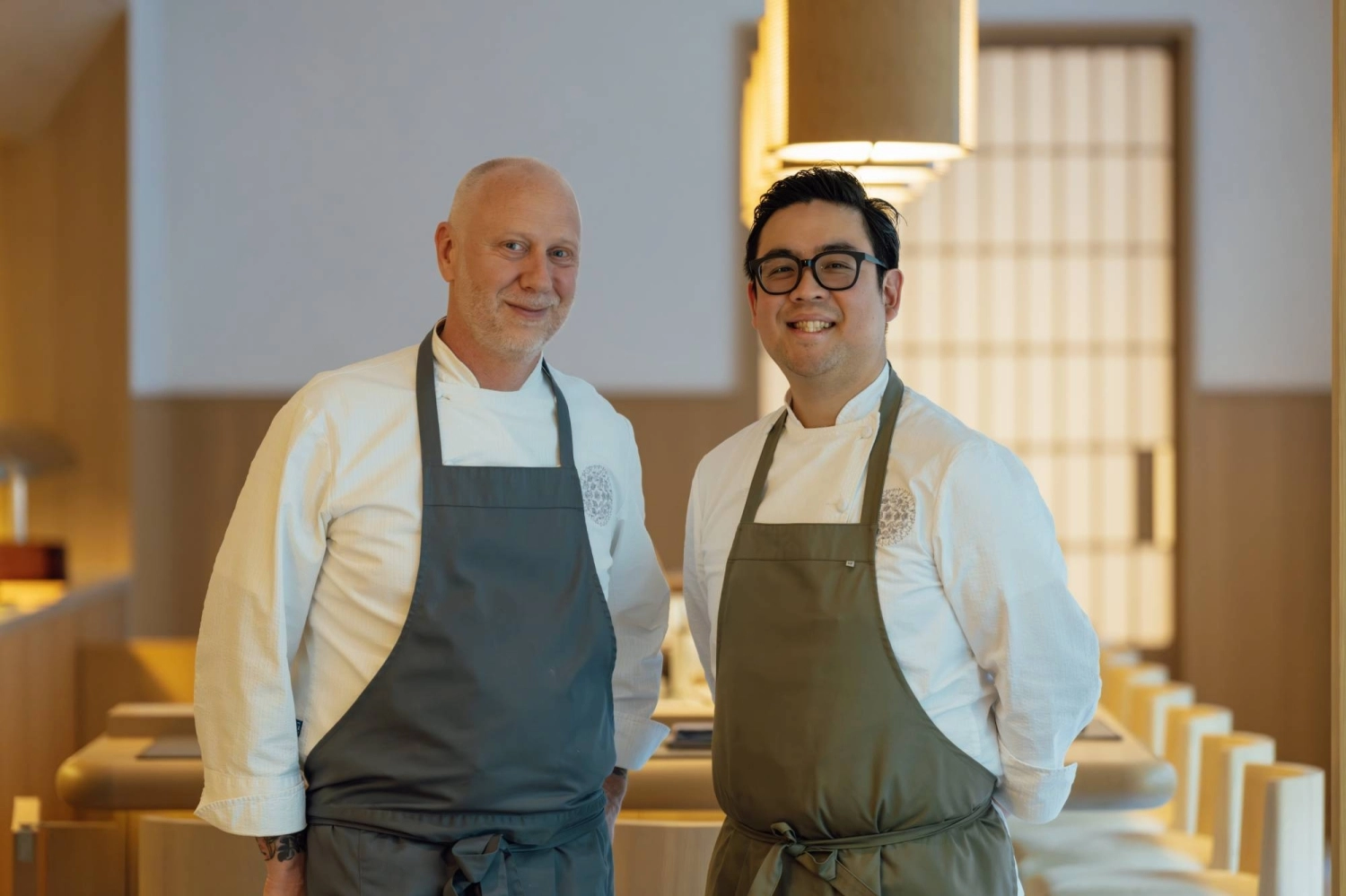
    Kyle Connaughton says his wife, Katina, put it best when she pointed out they've spent their whole lives taking things from Japan — inspiration, varieties, products, — and now they can give something back.

    Kyle Connaughton says his wife, Katina, put it best when she pointed out they’ve spent their whole lives taking things from Japan — inspiration, varieties, products, — and now they can give something back.
    | MITSURU WAKABAYASHI

    What excites you most about this project?

    Katina puts it very plainly: We’ve spent our whole lives taking things from Japan — inspiration, varieties, products, techniques. Now we finally have an opportunity to give something back. That’s how we think about what we’re doing here — not as importing California to Kyoto but as returning something to the place that gave us so much.

    Listening to you, I keep coming back to the same thought. This instinct to bridge two things that look very different — French and washoku in Hokkaido, Kikunoi and The Fat Duck, and now Sonoma and Kyoto — seems to run through your entire career.

    I’ve honestly never thought about it that way (laughs). But you’re right. All of these things that seem so different on the surface, they have so much common ground. I suppose that’s been the thread the whole time.



    Source link

    Related Posts

    99 accused in Japan in international crackdown on child sexual abuse material
    Japan

    99 accused in Japan in international crackdown on child sexual abuse material

    May 4, 2026
    Prosecutor who accused boss of rape to resign after request for probe rejected
    Japan

    Prosecutor who accused boss of rape to resign after request for probe rejected

    May 4, 2026
    Lower House approves bills to raise out-of-pocket costs for OTC-like drugs
    Japan

    Lower House approves bills to raise out-of-pocket costs for OTC-like drugs

    May 4, 2026
    Kim Kahan
    Japan

    Kim Kahan

    May 3, 2026
    Hokusai’s erotic art on display at a Kabukicho noh theater
    Japan

    Hokusai’s erotic art on display at a Kabukicho noh theater

    May 3, 2026
    China holds live-fire drills in waters near Luzon as Japan joins military exercises in Philippines
    Japan

    China holds live-fire drills in waters near Luzon as Japan joins military exercises in Philippines

    May 3, 2026
    Next Post
    China News – Headlines, Stories & Videos

    China News - Headlines, Stories & Videos

    POPULAR NEWS

    Justin Bieber fans flood Coachella festival for headlining show – Entertainment

    Justin Bieber fans flood Coachella festival for headlining show – Entertainment

    April 20, 2026

    Over 600 flee homes as Army, NPA clash in Negros Occidental

    April 21, 2026

    Ex-DPWH exec recalls P800-M ‘delivery’ to Zaldy Co 

    April 20, 2026

    Former PM Paluckas suspends party membership, to waive immunity over criminal probe

    April 24, 2026
    Pres. Ali challenges CARICOM to transform into health research powerhouse

    Pres. Ali challenges CARICOM to transform into health research powerhouse

    April 23, 2026

    EDITOR'S PICK

    There is clearly a communication vacuum existing in CARICOM

    There is clearly a communication vacuum existing in CARICOM

    April 16, 2026
    EU announces plan to mitigate energy crisis from war in the Middle East with consumption cuts and more renewables

    EU announces plan to mitigate energy crisis from war in the Middle East with consumption cuts and more renewables

    May 2, 2026
    Threats, corruption and intimidation: Is the Bishnoi gang calling shots at Cricket Canada?

    Threats, corruption and intimidation: Is the Bishnoi gang calling shots at Cricket Canada?

    April 17, 2026
    Attempted Assassination of U.S. President. Donald Trump on Iran Angle: “It Won’t Stop Me”

    Attempted Assassination of U.S. President. Donald Trump on Iran Angle: “It Won’t Stop Me”

    May 1, 2026

    Recent Posts

    • Ariadna Montiel rules out the use of Welfare registers by Morena
    • The United States dominates AI with thousands of data centers, but its chips are manufactured in Taiwan
    • Invertech Copán capta socios con permiso solo para Internet
    • Marisa Caichiolo: “It is extremely important that the calls are absolutely transparent”

      © 2026 Agentially - Navigating shifting sovereignties and global risk .

      Welcome Back!

      Login to your account below

      Forgotten Password?

      Retrieve your password

      Please enter your username or email address to reset your password.

      Log In
      No Result
      View All Result

        © 2026 Agentially - Navigating shifting sovereignties and global risk .

        This website uses cookies. By continuing to use this website you are giving consent to cookies being used. Visit our Privacy and Cookie Policy.