Madrid/The Iranian Revolutionary Guard (IRGC) shared this Thursday a map with alternative routes for transit in the Strait of Hormuz, a day after the president of the United States, Donald Trump, accepted the ten-point plan presented by Tehran and began a two-week ceasefire between both countries.
Due to the war, which began on February 28, and “given the presence of various types of anti-ship mines” in the area, the Tasnim agency, linked to the elite body of the Iranian armed forces, indicated that ships transiting the strait “must coordinate with the IRGC and, until further notice, use alternative routes for transit” through this strategic route.
According to Persian media, an entry route and an exit route will be established: the first will go from the Sea of Oman to the north, to the island of Larak, and from there to the Persian Gulf, while the second will follow the reverse route, both according to a map that Tasnim shared on Telegram.
After seeing drastic drops in traffic of up to 97% after the start of the war, movement in the Strait of Hormuz began to cautiously resume on Wednesday after the US and Iran agreed to a two-week truce that will allow “safe passage” through the waterway.
However, on the same Wednesday Tehran announced an interruption of the navigation of oil tankers in response to the massive surprise bombings that Israel launched against Lebanon, information that the White House has denied.
Hours before the agreement, Tehran assured that its plan stipulates a “security protocol” to guarantee Iranian “control” of this strategic step, through which about 20% of the world’s fossil energy circulated before the war.
The reopening of Hormuz has been a demand of the international community and, especially, of Trump, who has repeatedly threatened Iran with attacking and “razing” its power plants and bridges if it did not reopen the strait. He even claimed that the entire country could be “annihilated in a single night” and that it would return to “the Stone Age.”
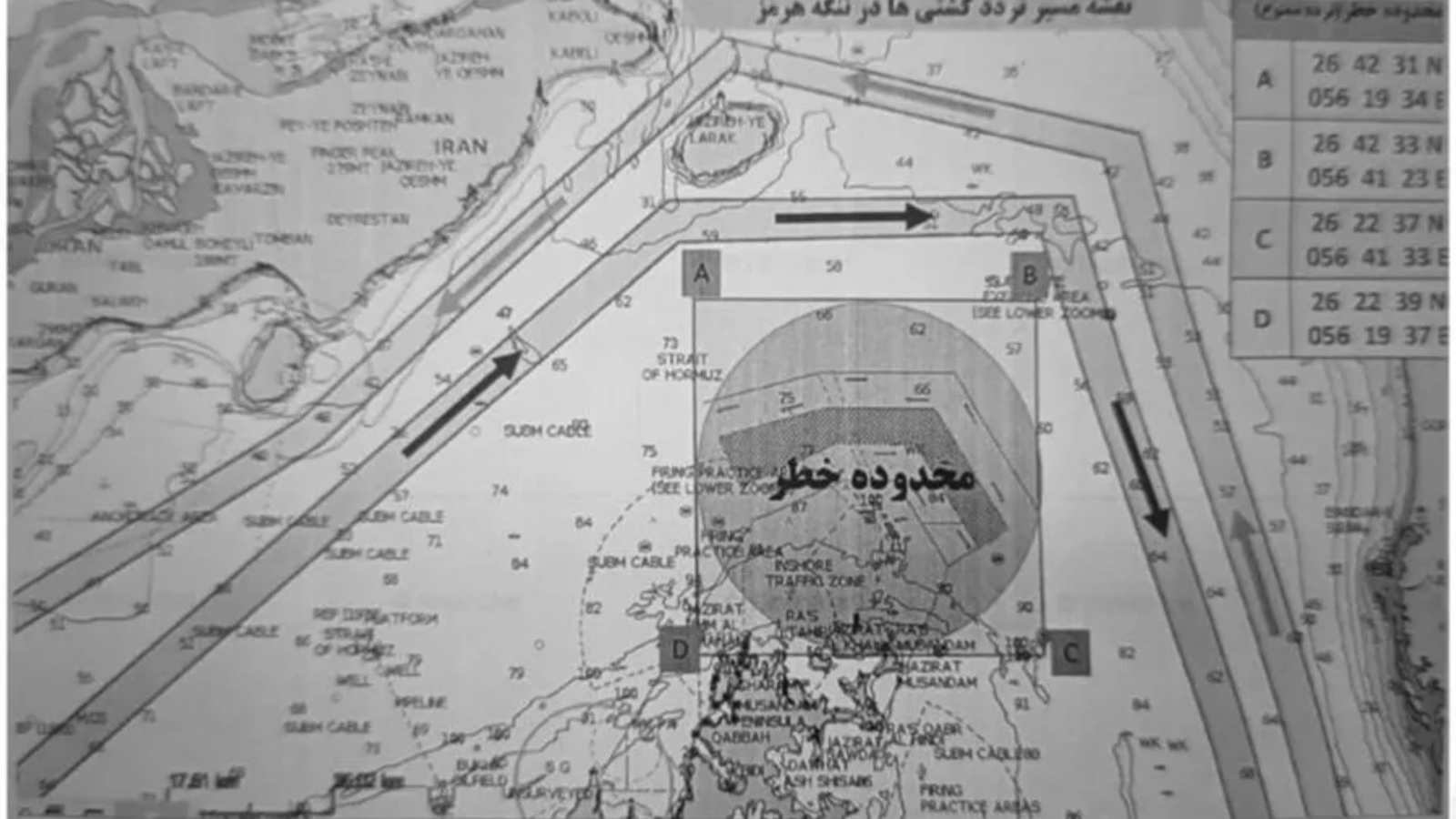
/ EFE/Tasnim
Two fully loaded Chinese oil tankers are heading from the waters of the Persian Gulf towards the Strait of Hormuz, which could make them the first two ships of that type to cross the waterway following the two-week ceasefire declared by the United States and Iran after more than a month of war.
According to the MarineTraffic tracking platform, ships Cospearl Lakeunder the Hong Kong flag and linked to the Chinese state shipping company Cosco, and He Rong Hai‘, flying the Chinese flag and owned by another minority operator, sailed eastward during the early hours of the morning.
In both cases, the location systems show messages declaring Chinese ownership and crew in the field where the navigation destination must appear, following the example of other ships from the Asian country that have managed to transit through Hormuz in the face of the ‘de facto’ blockade imposed by Iran.
According to BloombergIf they manage to cross this Thursday, these two ships would become the first non-Iranian large oil tankers to do so since the aforementioned ceasefire was announced, although the media clarifies that in recent weeks there have been multiple cases in which ships have turned around at the last moment.
In addition, Cosco has been cautious for weeks by keeping its tankers ‘trapped’ within the Gulf, only allowing some empty cargo ships to leave.
The European Commission, for its part, rejected Iran or the United States demanding any type of payment from the ships to allow them to cross the Strait of Hormuz.
“International law and the law of the sea are clear: the right to free navigation must always be guaranteed, and this is absolutely clear (…). It means that there is no type of payment or toll at all,” the European Commission’s Foreign Affairs spokesperson, Anouar El Anouni, said today at a press conference.
The spokesperson thus answered questions about a possible formula promoted by Iran to charge ships transiting through Hormuz in yuan or cryptocurrencies, which the President of the United States, Donald Trump, has also mentioned in relation to an alleged “joint venture.”
El Anoui stressed that transit through this maritime passage is “a public good for humanity.”